
Last updated November 21, 2026
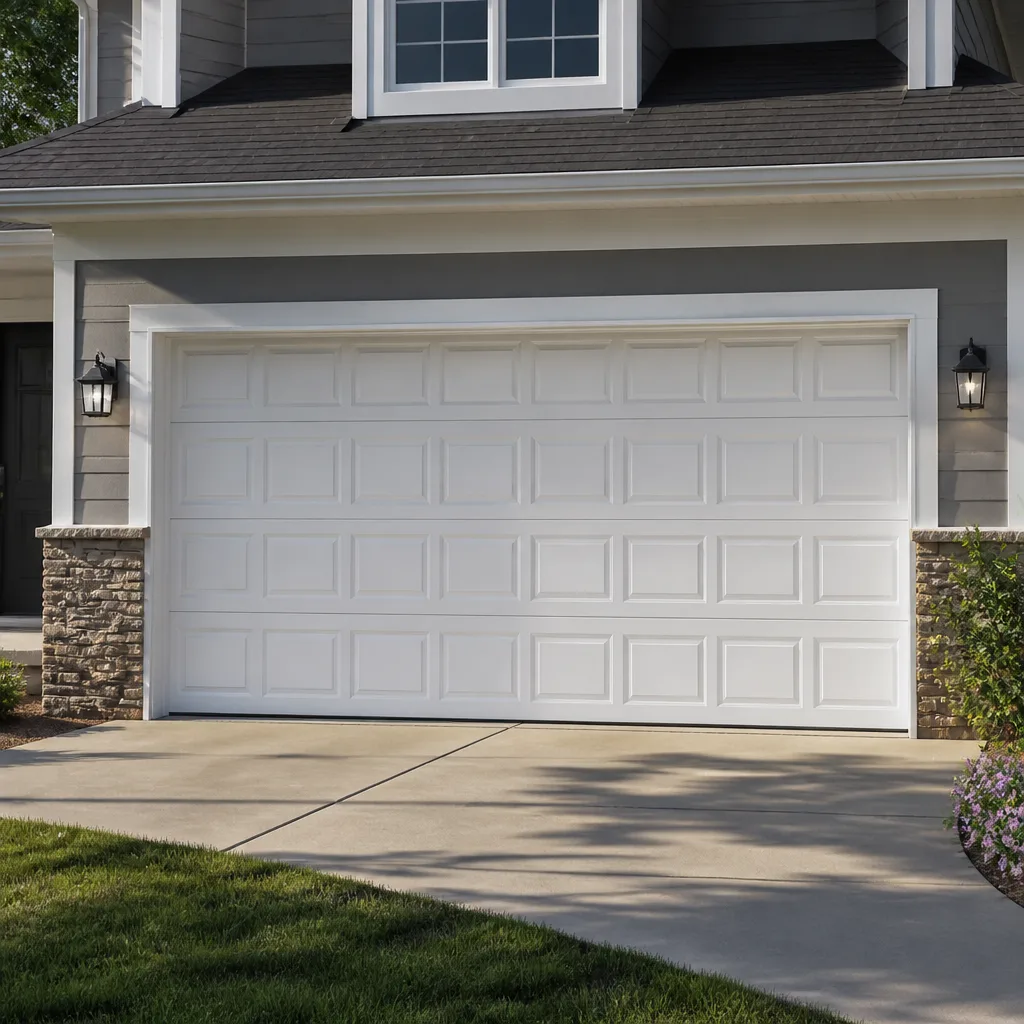 Raised-panel steel
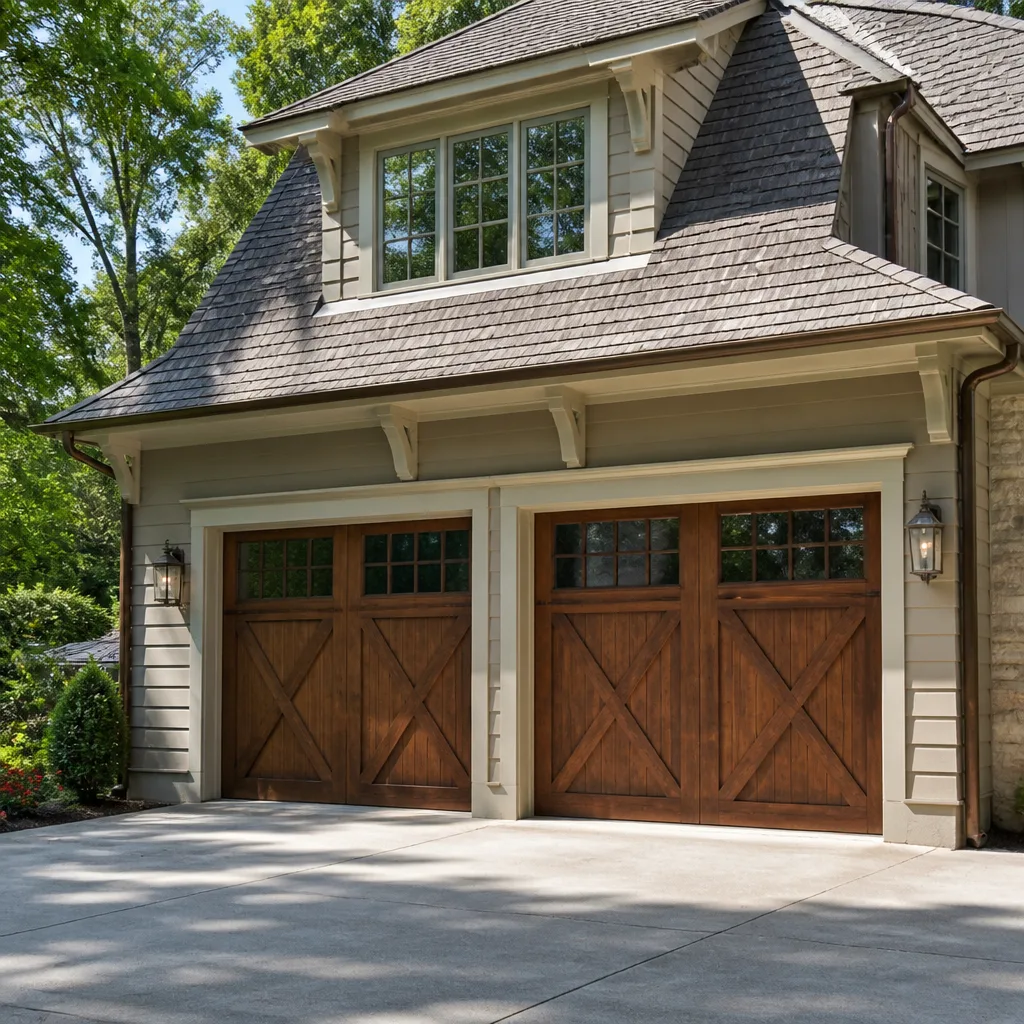 Carriage house
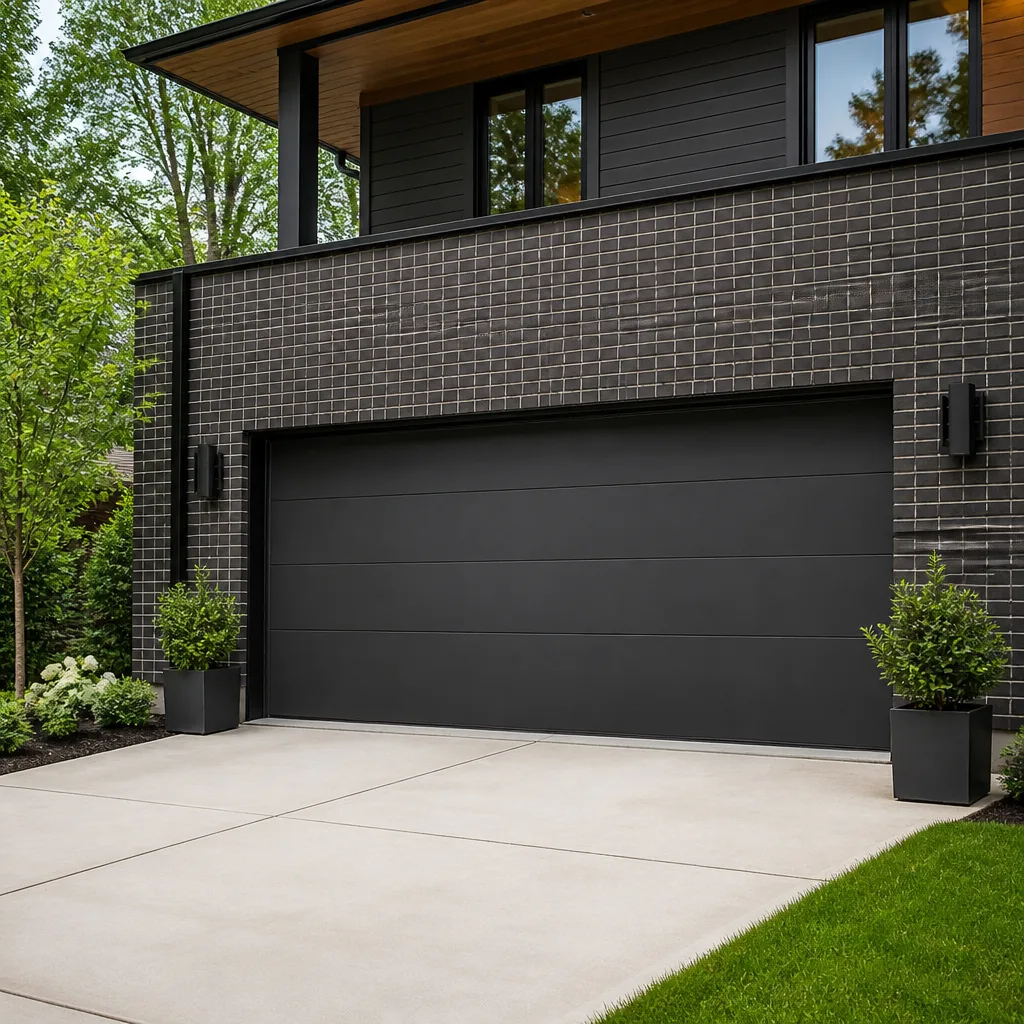 Modern flush
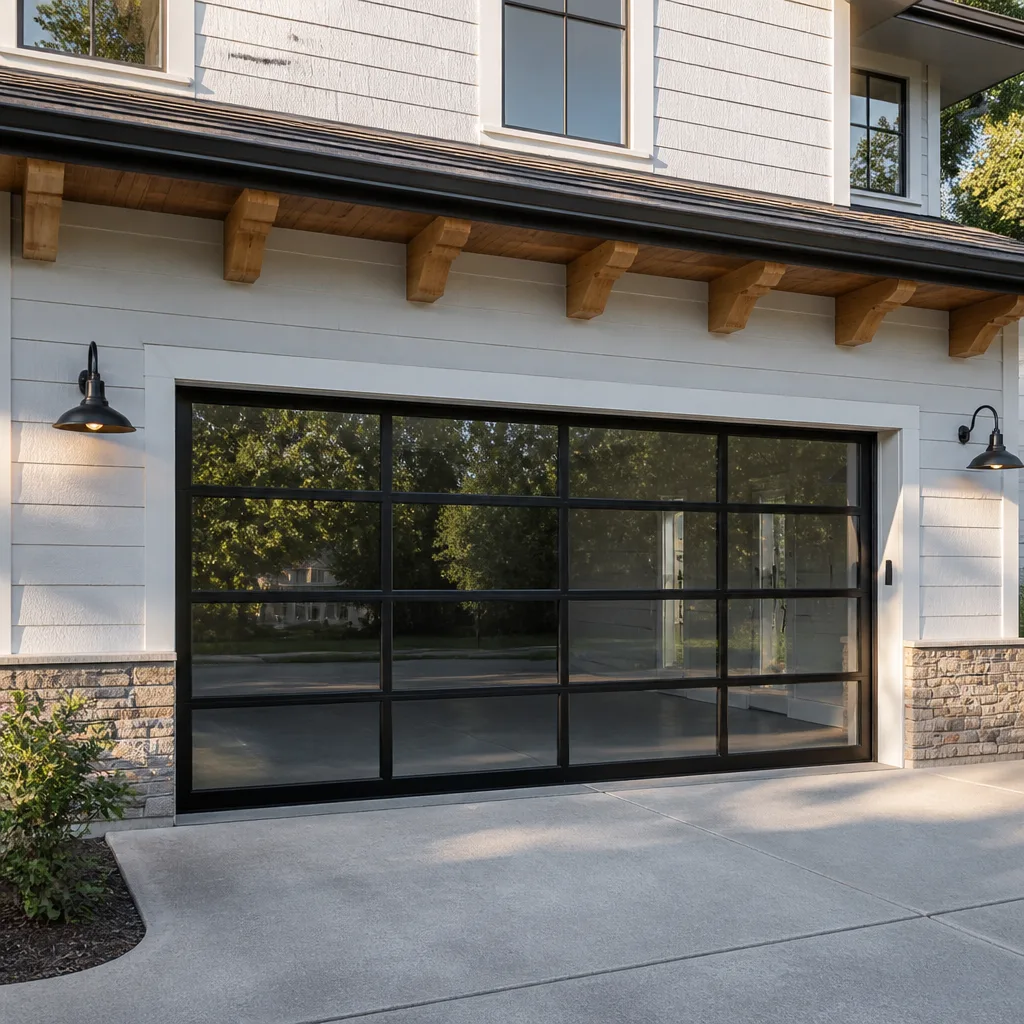 Full-view glass
 LiftMaster openers
 Chamberlain openers
Full 25-point door and opener safety check with every visit - springs, cables, rollers, tracks, and your LiftMaster or Chamberlain opener included
You get a price before we start. It does not change when the pro arrives.
Get your free estimateGarage Door Permits, Codes & Inspections in Bergen-Lafayette, NJ: What You Need to Know
A garage door swap feels like a straightforward swap-out. You measure, you order, a crew hangs the new door, and it’s done by afternoon. But in New Jersey, replacing structural components or changing a door’s wind-load rating without a permit can flag your property during a title search when you try to sell. Most homeowners in Bergen-Lafayette never hear about that part until a buyer’s attorney asks for the paperwork. This guide covers the triggers under the state construction code, what a Jersey City garage door inspection actually looks at, how wind-load rules here differ from nearby states, and the paper trail worth keeping whether or not a permit was ever pulled.
Quick Answer
In New Jersey, a garage door repair – new springs, a fresh opener, new rollers, a section swap – generally does not require a permit. A full replacement that changes the door’s structural components or its wind-load rating usually does, and that falls under the state Uniform Construction Code administered through Jersey City’s construction office. When in doubt, call Jersey City’s building department directly and describe the job; the answer takes a few minutes and settles the question.
Styles & brands we work with
- Raised-panel steel
- Carriage house
- Modern flush
- Full-view glass
- LiftMaster openers
- Chamberlain openers
Table of Contents
- What Triggers a Permit Under the NJ Uniform Construction Code
- Repair vs. Replacement: Where the Line Falls
- What Jersey City’s Permit Office Reviews in an Inspection
- Wind-Load Compliance in NJ and Why It Matters for Insurance
- The Paper Trail to Keep From Any Door Replacement
- Unpermitted Work From a Previous Owner: How to Fix It Before Listing
- Bergen-Lafayette Specifics: Housing Stock and Weather
- The Permit Process, Step by Step
What Triggers a Permit Under the NJ Uniform Construction Code
New Jersey runs on a statewide construction code, which means the rule set is the same in Bergen-Lafayette as it is in Burlington or Sussex. What differs is how each municipality’s construction office interprets and administers it. The code classifies work into three buckets: ordinary maintenance, minor work, and work that needs a full permit. Garage doors land in different buckets depending on what you’re actually doing.
The triggers most commonly tied to a garage door project are:
- Structural changes to the opening. Widening the rough opening, changing the header, adding framing, or altering the tracks in a way that modifies how the door transfers load to the building.
- Replacing the door with a different wind-load rating. Wind-load rating is part of a door’s compliance profile. Swapping a rated door for one with a different rating is a code question, not just a model question, and it’s the one homeowners miss most often.
- Electrical work tied to a new opener install. If the opener’s circuit has to be added or moved, the electrical portion of the job can require its own permit. A straight swap of an existing opener on an existing circuit usually doesn’t.
- Structural changes inside the garage when the door project is bundled with something bigger – converting the space, adding a loft, reinforcing framing.
What generally does not trigger a permit: replacing torsion or extension springs, changing rollers, hinges, cables, or drums, swapping a LiftMaster or Chamberlain opener for a like-for-like unit, replacing a single damaged panel with an identical section, and adjusting tracks. Those are classified as ordinary maintenance or minor work.
Bergen-Lafayette has a lot of early-1900s two- and three-family homes where the garage is detached or tucked into a basement level. Detached structures can carry different permit treatment than an attached garage, and the age of the framing sometimes makes the municipal reviewer look closer at a door change. That’s a reason to have the conversation with the building department up front rather than guess.
Repair vs. Replacement: Where the Line Falls
The easiest way to think about it: if the door that comes down is the same door that goes back up, you’re doing repair. If a different door goes back up, you’re probably doing replacement, and replacement is where the permit questions start. Below is a rough map of how jobs sort out.
- Spring replacement (torsion or extension): repair. No permit. This is the single most common garage door job we handle, and also the most dangerous one to attempt without training.
- Opener replacement, same unit family: repair. No permit if the existing circuit is reused. Genie, LiftMaster, and Chamberlain swaps on an existing outlet are routine.
- Panel replacement: repair if the section matches the original profile and doesn’t alter the door’s rated performance. Replacement if it changes the door’s structural profile.
- Full door replacement, same size and same rating: often requires a permit. Jersey City’s construction office is the authority here; ask specifically whether a “like-for-like” swap is exempt.
- Full door replacement with a different model or rating: permit territory. The rated design is changing, and that’s a code review.
- Track or header modifications: permit territory. You’re altering the structure, not just the door.
When a homeowner isn’t sure, the right move is the same every time: call Jersey City’s construction office and describe exactly what’s changing. Don’t describe the job as “a door replacement” and hope for the best – describe the door size, the rating, the framing, and whether the opening itself is being touched. The review is faster and the answer is more accurate when the description is specific. On our side, when we do garage door installation in Bergen-Lafayette, we tell homeowners what’s changing in writing so they can have that conversation with a clear picture.
What Jersey City’s Permit Office Reviews in an Inspection
A residential garage door inspection in Jersey City typically checks a specific set of items, not a full re-review of the house. It’s a targeted inspection, and knowing what the inspector looks at helps you avoid a correction notice. Typical items reviewed:
- That the installed door matches the permit application. Make, model, size, and wind-load rating. If the paperwork says one thing and the installed door is another, the inspection fails.
- That the rough opening is unchanged unless the permit approved a change. Width, height, and header.
- That mounting and fastening are correct for the door’s weight. Tracks, brackets, and spring mounting plates secured per the manufacturer’s installation instructions.
- That the safety devices work. Photo-eye alignment and the reverse-on-contact function. An opener installed without working safety eyes is a common correction.
- That the electrical work was done under the electrical subcode if a new circuit was part of the job.
How long the process takes varies by season and by the construction office’s volume, so we won’t hand you a number we can’t stand behind. What we can say is that the two things that stretch out a timeline are an incomplete application and a mismatch between what was permitted and what was installed. Getting the application right the first time is the single biggest time saver. When we handle the install, we hand over the door’s specification sheet so the numbers on the permit and the numbers on the door agree.
If you’re in the middle of a repair rather than a replacement, the process is entirely different – there’s no inspection for a spring swap. If your door is stuck or off-track, that’s a garage door repair conversation, not a permit conversation. Call us and describe the symptom; we’ll tell you which one it is.
Wind-Load Compliance in NJ and Why It Matters for Insurance
New Jersey’s building code incorporates wind-load design requirements, and garage doors are one of the components designers pay attention to because they present a large opening in a wall. A door that’s properly rated and anchored performs very differently from one that isn’t, and the difference matters most in the kind of wind event that damages neighborhoods like Bergen-Lafayette’s row-house blocks.
Wind-load requirements aren’t uniform across the Northeast. Neighboring states set their own thresholds and adoption timelines, and a door that meets one state’s standard doesn’t automatically satisfy New Jersey’s. That’s the practical wrinkle for homeowners who buy a door out of state, order online without checking the spec sheet, or inherit a door from a previous owner who bought on price. The door has to be right for the code that governs the property, not the code that governed the purchase.
The insurance angle is less about a penalty and more about documentation. When a claim involves wind damage to a garage door, an adjuster’s first question is what door was supposed to be there and whether it met code. If you can answer that with the spec sheet and the permit, the claim is straightforward. If you can’t, the adjuster has to reconstruct it, and that’s where claims get slow and contested.
We’re a garage door specialist, not an insurance advisor, so treat this as a conversation to have with your carrier. But the practical takeaway is simple: know your door’s rating, keep the spec sheet, and if you’re replacing the door, choose a model whose rating is confirmable in writing. This is where brand familiarity pays off. Door lines from Clopay and Amarr publish clear rating data, which makes both the permit application and the insurance conversation easier.
The Paper Trail to Keep From Any Door Replacement
Regardless of whether your project required a permit, keep a file. It costs you nothing now and saves a pile of explaining later. Here’s the list we’d hand to any homeowner at the end of an install:
- The manufacturer’s specification sheet for the installed door – make, model, size, and rated performance data.
- The installation instructions as issued by the manufacturer for that model.
- The permit application and the approved permit, if one was pulled, plus the inspection sign-off.
- Photos of the rough opening and the finished installation, taken during the job. A handful of clear photos documents more than a page of description.
- The written invoice showing what was installed, including the opener model if one was replaced.
- The warranty documentation for both the door and the opener, and the contact path for service.
- Any electrical paperwork if a new circuit was involved.
The reason this matters in Bergen-Lafayette specifically is the housing stock. A lot of the neighborhood’s homes have been through multiple renovations over the decades, and a title search in a tight, older market tends to surface every paper trail that exists. If a permit was pulled and closed, the file reflects it. If nothing shows up and a buyer’s attorney asks, you want a record that shows what was done and when. That’s true whether the job was permitted or not – the documentation is what closes the question.
Unpermitted Work From a Previous Owner: How to Fix It Before Listing
Buying a house in Bergen-Lafayette, you inherit whatever the previous owner did, permitted or not. A garage door that was swapped out at some point with no record of a permit is common, and it’s not a crisis. It’s a disclosure and documentation exercise, and it’s much easier to handle before you list than during a closing.
Here’s the sequence we’d recommend if you’re facing this:
- Order a records search through Jersey City’s construction office for the property’s permit history. This tells you what exists on paper and what doesn’t.
- Have the installed door evaluated to identify make, model, and rating if the paperwork is missing. A technician can usually identify the door and document what’s installed. If the door is a Clopay or Raynor, the model data is usually findable.
- Contact the municipal construction office and describe the situation honestly. Ask what, if anything, they need to close out the file – sometimes it’s a retroactive permit, sometimes an inspection, and sometimes the answer is that no action is needed because the work is classified as ordinary maintenance.
- Get the resolution in writing – a closed permit, an inspection report, or documentation showing no permit was required. Emails from the construction office count.
- Disclose and document in the listing. Attorneys on both sides of a sale are far more comfortable with a documented history than an absence of one.
This is exactly the kind of question to raise early, not late. The cost of documenting a door that’s already installed is far lower than the cost of an eleventh-hour question at closing. If you’ve just moved into a Bergen-Lafayette home and the garage door is a mystery, we’re happy to look at it and tell you what’s on it.
Bergen-Lafayette Specifics: Housing Stock and Weather
Bergen-Lafayette is a neighborhood of narrow lots, tight streets, and a lot of homes that predate the standard garage door entirely. The garage situation varies more here than in a newer subdivision. You’ll see:
- Detached single-car garages on the rear of a lot, often reached by an alley or a narrow driveway. Detached structures can carry different framing and different permit treatment than attached garages, so the conversation with the construction office should specify which one you have.
- Built-in garages at the basement level of older row houses and two- and three-family buildings. These openings are often narrower and shorter than a modern standard size, which matters because a replacement door may not be a stock item. It also means the framing around the opening is often original, and that’s exactly where a code reviewer looks.
- Conversions where a garage has been walled off or repurposed over the years. If you’re reversing a conversion or replacing a door on a converted structure, that’s a code question for the city, not something to sort out afterward.
The weather piece is straightforward. Bergen-Lafayette sits in a region with humid summers, cold winters, and a seasonal swing wide enough to work on hardware year after year. Springs fatigue faster in a climate that goes from hot to cold and back. That’s not a code issue, but it’s the reason spring replacement shows up on so many Bergen-Lafayette maintenance lists. When your door starts sounding different in the fall, it’s usually the spring, not the opener. That’s a repair, no permit involved. If it’s an opener fault, that’s a garage door opener repair call – we work on LiftMaster and Chamberlain units regularly.
The Permit Process, Step by Step
If your project does require a permit, the sequence is more predictable than the code language suggests. Here’s how a residential garage door replacement typically runs in Jersey City:
- Confirm the trigger. Call the construction office, describe the proposed work, and ask directly whether a permit is required for this scope. Note the name of the person who gave the answer and the date.
- Get the door specification sheet. The application will need the make, model, size, and rated performance data. If your door isn’t chosen yet, choose it before you apply.
- Submit the application. The construction office will tell you what documents, drawings, and fees the application needs. Fees are set by the municipality, so confirm the number with the office rather than assuming.
- Wait for approval before installing. This is where homeowners get tripped up. Installing before the permit is approved can turn an ordinary replacement into a correction exercise.
- Install, then request the inspection. The inspector verifies that the installed door matches the application. Have the spec sheet on hand and the safety devices working.
- Close the permit. Once the inspection passes, the permit is signed off. Get a copy and keep it in the file described earlier.
If the answer at step one is that no permit is needed, get that in writing too – an email is enough. That email is the paper trail if a question ever comes up later.
We handle the installation side of this for Bergen-Lafayette homeowners. Our technicians have up to 12 years of experience across LiftMaster, Chamberlain, Genie, Clopay, Amarr, Wayne Dalton, Craftsman, and Raynor – meaning the specification sheet we hand you has the right model and rating data for the application. From opener to panel, we work on the whole system.
Common Mistakes to Avoid
- Assuming a full replacement is exempt because the size is the same. Size isn’t the only variable – the rated performance of the door matters, and Jersey City’s office decides the classification. Ask before you buy, not after.
- Buying a door online without checking the rating. A door that meets the standard for another state may not meet New Jersey’s. The spec sheet is the only thing that settles it.
- Installing before the permit is approved. Installing first and applying second turns a routine project into a correction exercise. Get the approval, then install.
- Throwing away the manufacturer’s paperwork. The spec sheet and installation instructions are the exact documents a permit application, an insurance adjuster, and a future buyer will ask for. Keep them with the property records, not in a junk drawer.
- Handling older Bergen-Lafayette openings without a closer look. In this neighborhood’s stock, a rough opening can be original framing that hasn’t been reviewed in decades. Look at it before ordering a replacement door.
- Confusing a repair with a replacement. Spring, roller, hinge, cable, and opener changes are repair work with no permit. Calling a repair a “door replacement” on a permit application creates paperwork nobody needed.
- Not disclosing unpermitted work from a prior owner. Owners who track down the history early close their sales smoothly. Owners who discover it at closing scramble. Do the records search before listing.
See the difference
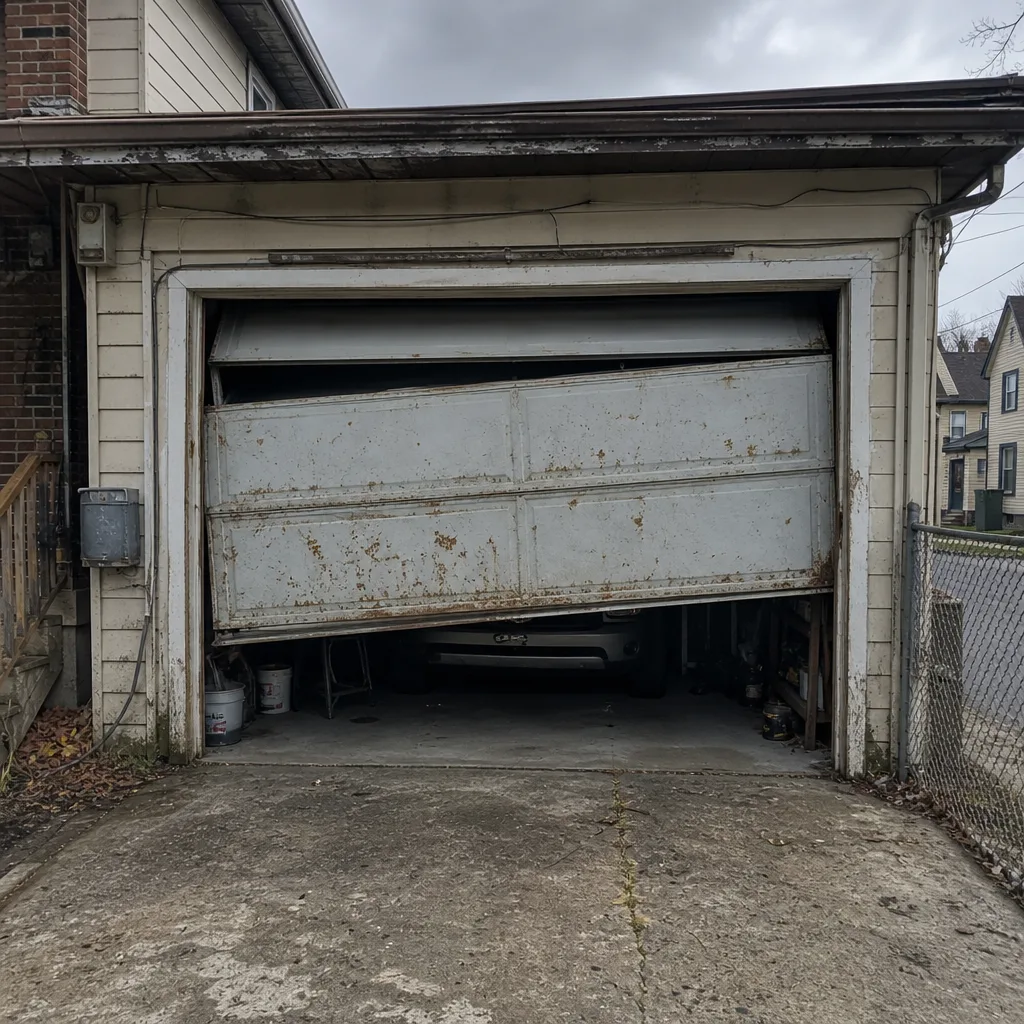 Before
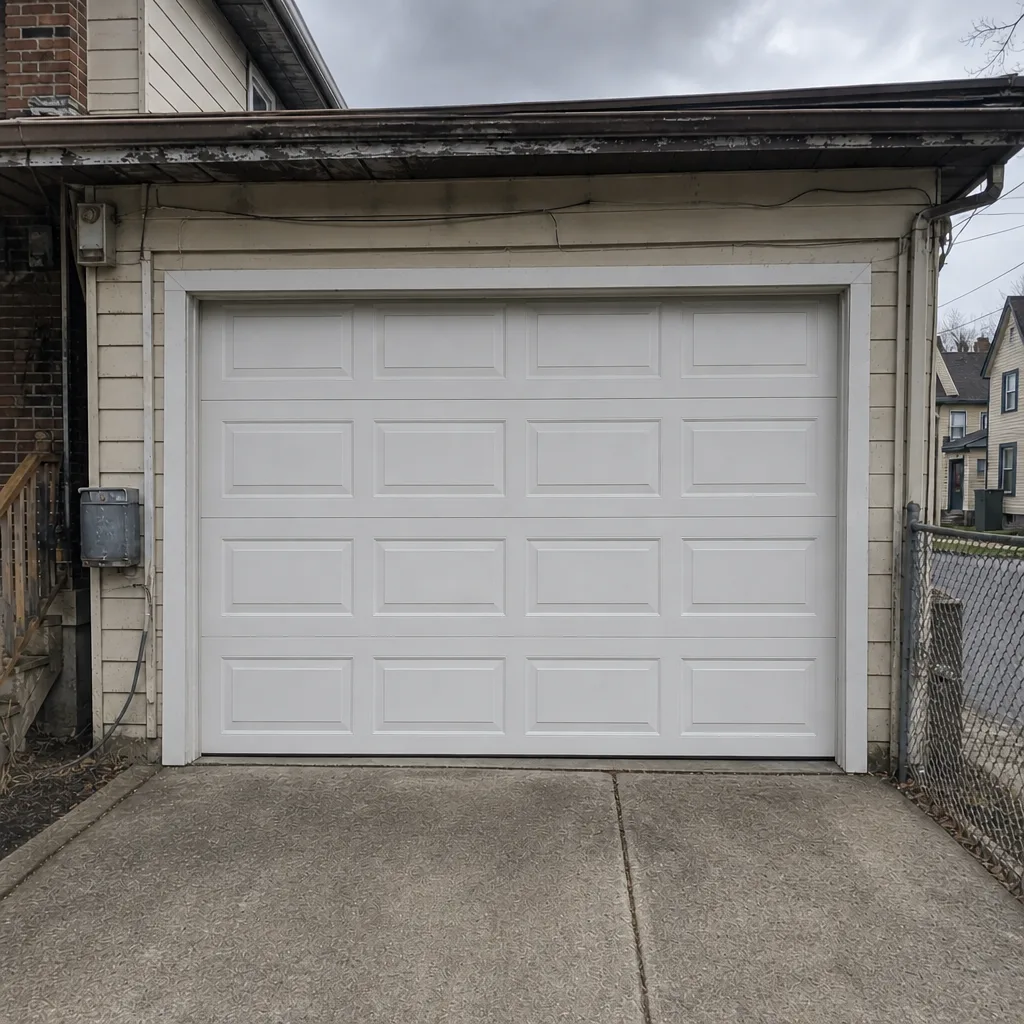 After
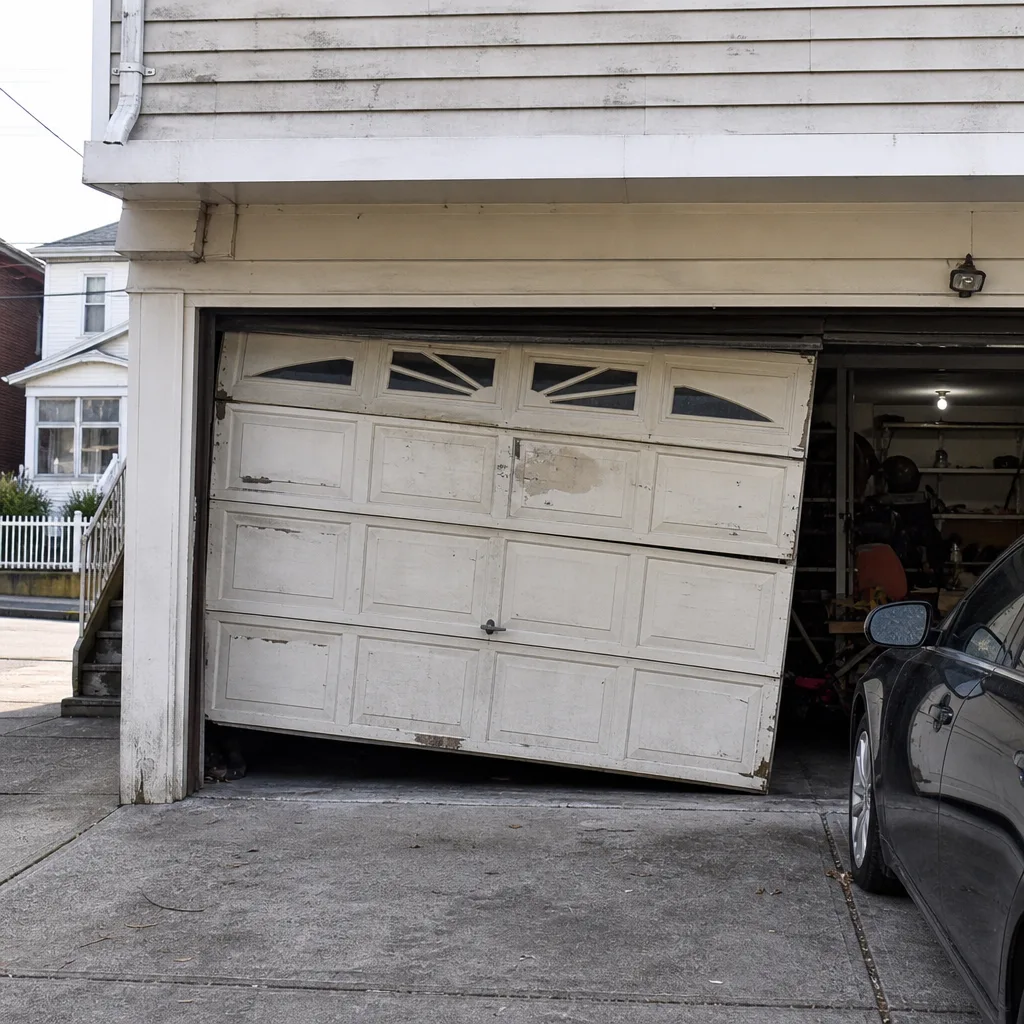 Before
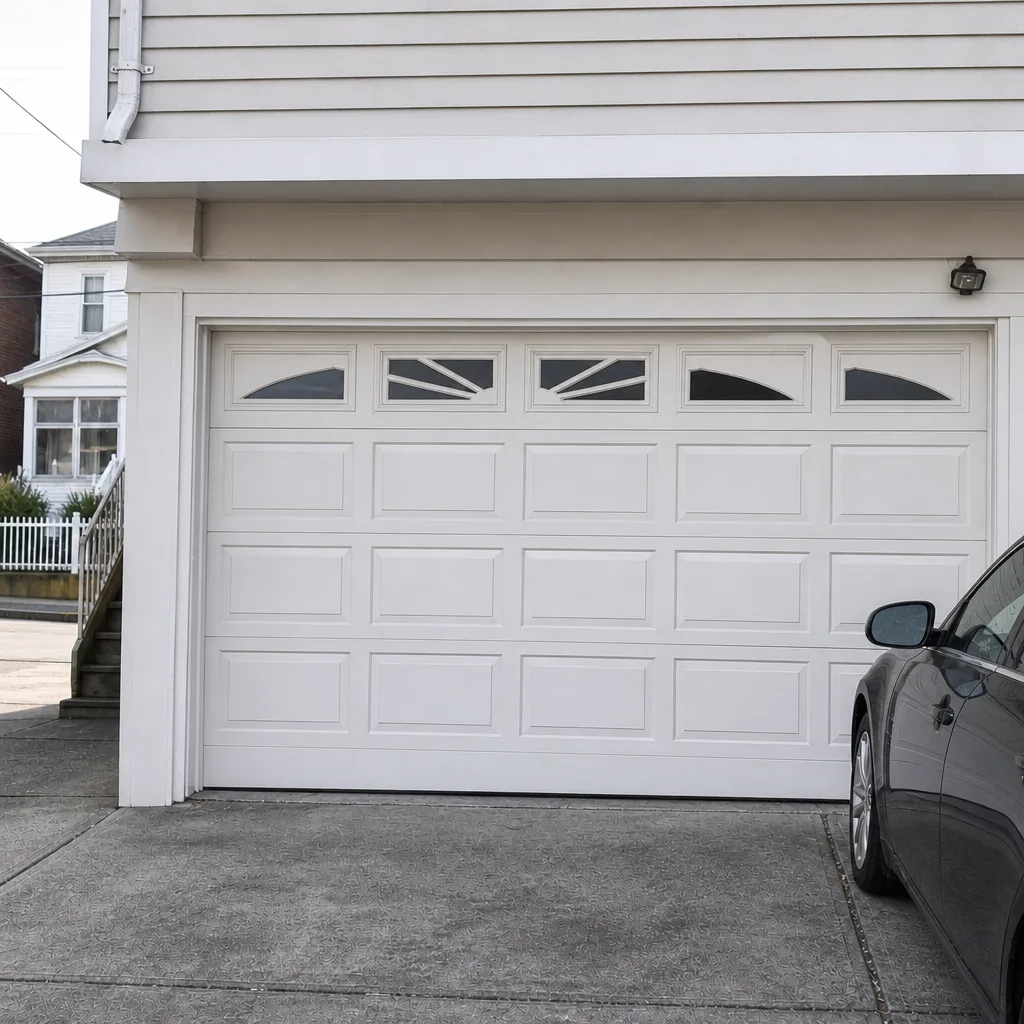 After
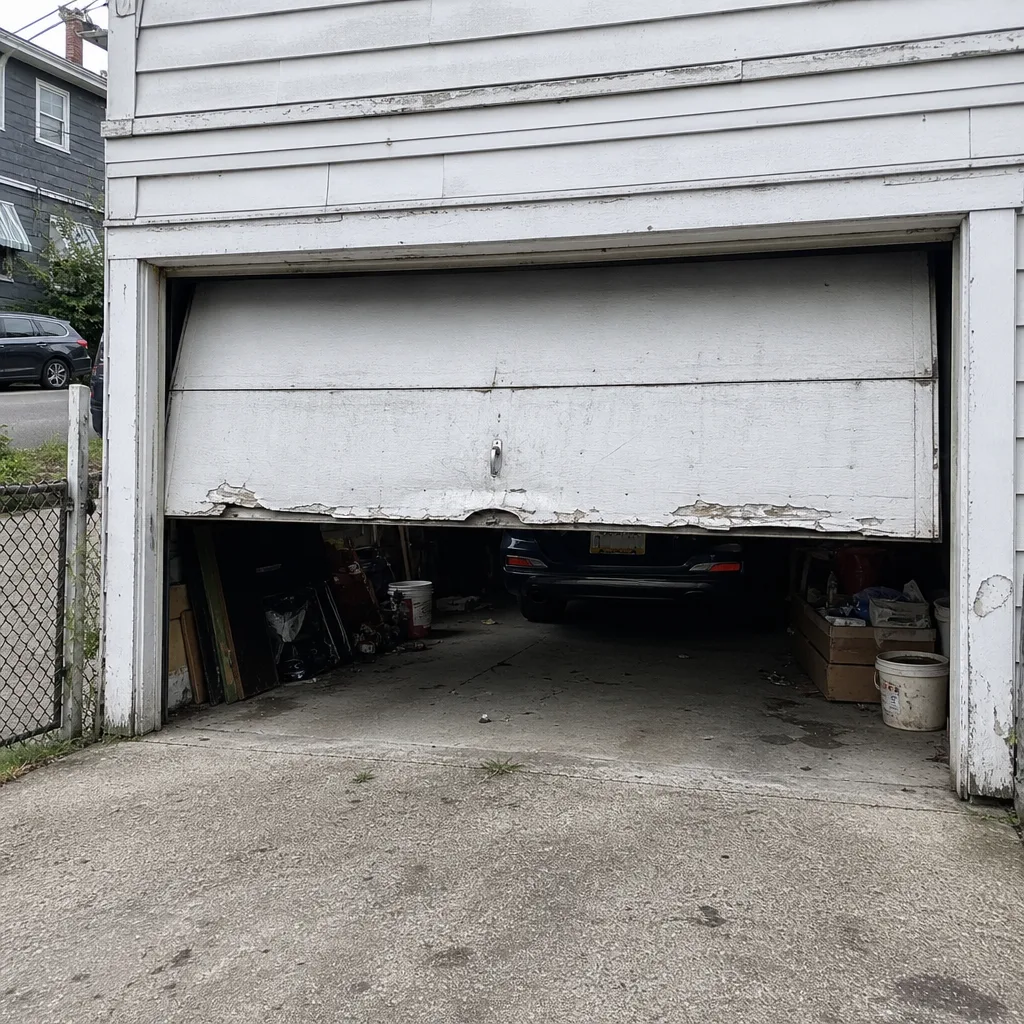 Before
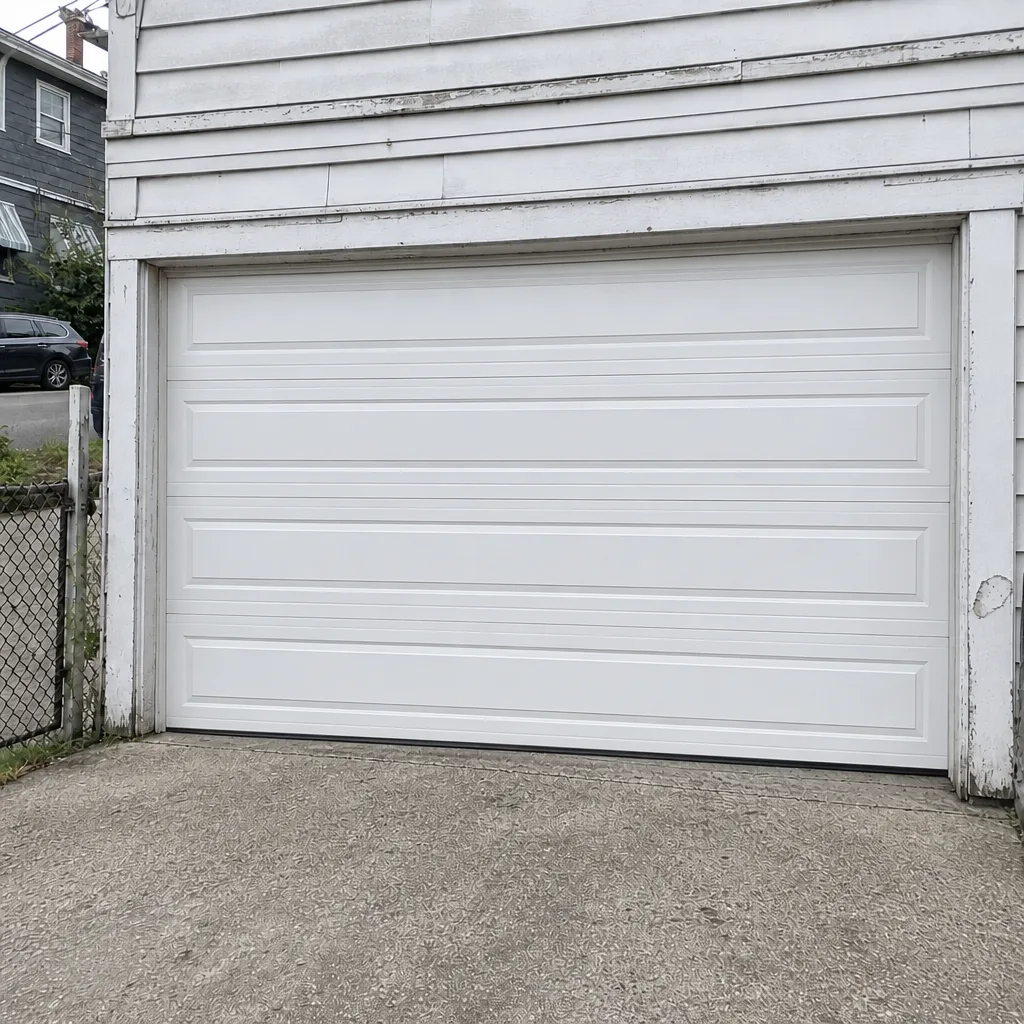 After
When to Call a Professional
Some garage door work is genuinely a professional job, and the list is shorter than the industry usually admits. Springs and cables are at the top. A torsion spring holds serious stored energy, and releasing it by accident can cause real injury to hands, face, and shoulders. That’s not a warning to add drama; it’s why we treat spring work as a named core service rather than a side job. Track replacement, panel replacement, opener diagnostics, and any structural change call for a trained technician too. Jersey City’s inspection process assumes the work followed the manufacturer’s instructions, so DIY installs that skip fastening requirements can fail inspection outright. Garage Door Repair Bergen-Lafayette offers free estimates in Bergen-Lafayette – call (844) 960-3603.
Frequently Asked Questions
Usually yes, if the project is a full replacement or changes the door’s structural components or rated performance. Straight repairs – springs, opener swaps, rollers, hinges, panel replacement with an identical section – generally don’t require a permit. The final word comes from Jersey City’s construction office; describe the exact scope and get their answer in writing. Call (844) 960-3603 for a free estimate – we’ll tell you what’s changing so you can ask the right question.
It varies by season and by the construction office’s current volume, so we won’t quote a number we can’t stand behind. The two things that reliably stretch a timeline are an incomplete application and a mismatch between what’s permitted and what gets installed. Get the spec sheet right up front and the rest of the process runs on the office’s normal schedule. Call (844) 960-3603 – estimates are free.
It checks that the installed door matches the permit application – make, model, size, and rated performance – that the rough opening is unchanged unless the permit approved a change, that mounting and fastening follow the manufacturer’s instructions, and that the opener’s safety devices work. If electrical work was part of the job, that subcode gets checked too. Call (844) 960-3603 for a free estimate before you apply.
Yes – New Jersey’s building code incorporates wind-load design requirements, and a garage door is a large opening in a wall, so its rated performance matters. New Jersey’s thresholds aren’t uniform with surrounding states, so a door that meets another state’s standard doesn’t automatically satisfy this one. Confirm the rating on the spec sheet before you buy. Call (844) 960-3603 for an exact quote – estimates are free.
It’s common and it’s fixable. Start by ordering a permit history from Jersey City’s construction office, then have the installed door identified so you know the make, model, and rating that exist on paper. Call the construction office, describe the situation honestly, and find out what they need to close the file. Get the answer in writing, and disclose it in the listing. Call (844) 960-3603 if you need the door identified first.
No. The written estimate is the price, and it’s quoted and agreed before any work starts. If we find something during the visit that changes the scope – which can happen on older Bergen-Lafayette openings – we stop, explain what’s changed, and quote again before proceeding. You approve the number, then we work. Call (844) 960-3603. We answer 24/7. Fast dispatch from 7am to 7pm, Sunday through Friday.
The Bottom Line
A garage door repair in Bergen-Lafayette is ordinary maintenance – no permit, no inspection. A full replacement is a code question, and the answer depends on whether the door’s structural components or wind-load rating are changing. Jersey City’s construction office makes that call, and the safest sequence is to ask first, get the specification sheet before you apply, install after approval, and keep the whole file. Document the door even when no permit is required, because the paperwork is what carries you through a future sale or claim. And leave spring and cable work to a trained technician – it’s the one part of this job where an error can put you in the hospital.
If you’re not sure where your project falls, or you’re looking at a Bergen-Lafayette door with a mysterious history, we’re glad to take a look. Our technicians work on LiftMaster, Chamberlain, Genie, Clopay, Amarr, Wayne Dalton, Craftsman, and Raynor systems, and we specialize in garage doors only – not a general handyman service. Garage Door Repair Bergen-Lafayette offers free estimates and upfront pricing set by a written estimate before any work begins. Call (844) 960-3603. We answer 24/7. Fast dispatch from 7am to 7pm, Sunday through Friday. Same-day service is available for urgent repairs, and the local pros we connect you with are licensed and insured as the state requires.
Written by the team at Garage Door Repair Bergen-Lafayette.