
Last updated November 21, 2026
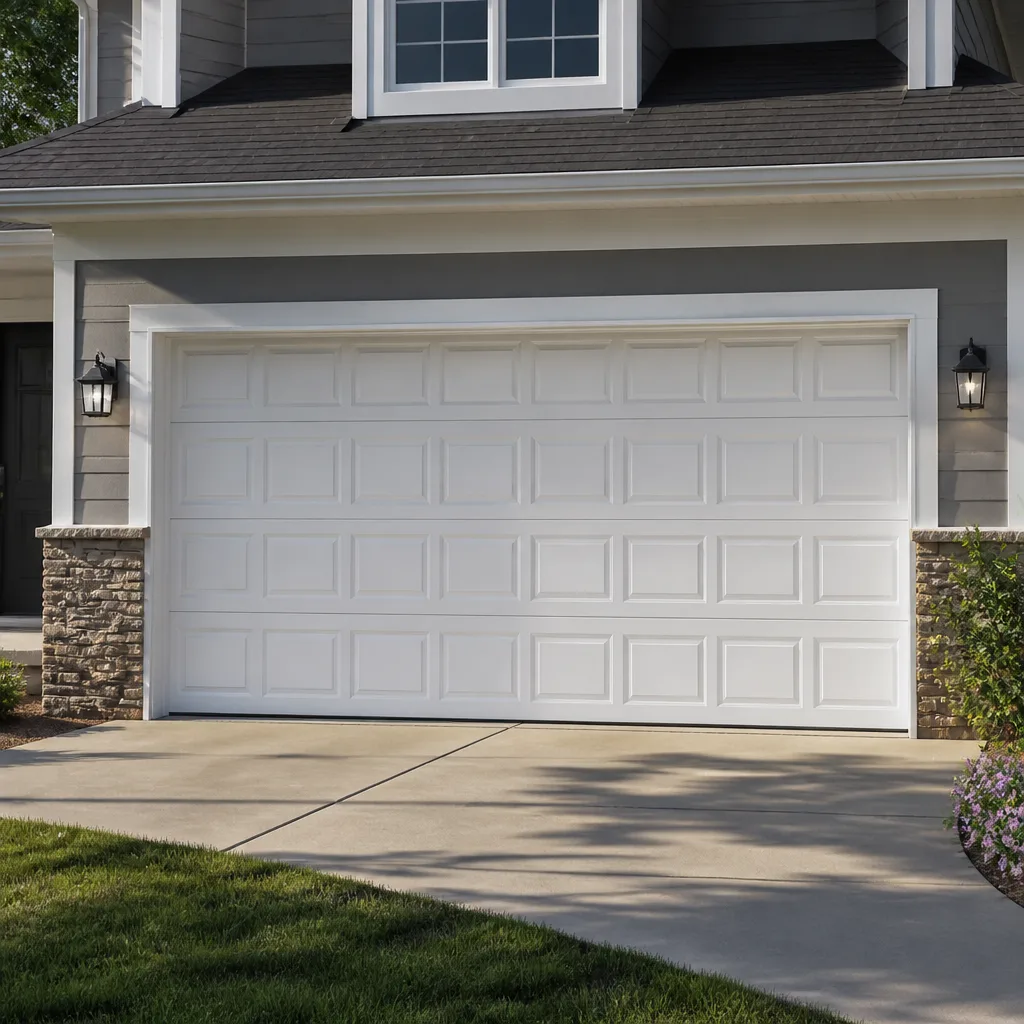 Raised-panel steel
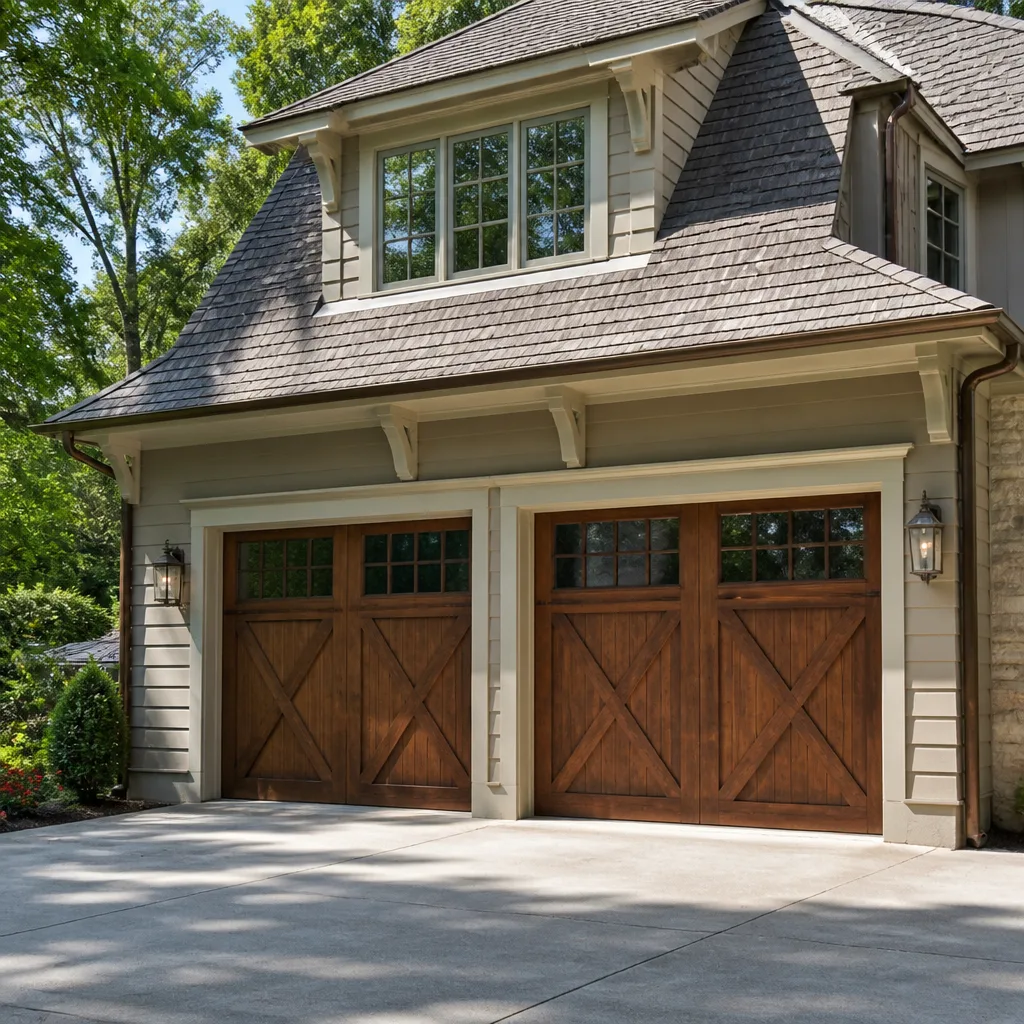 Carriage house
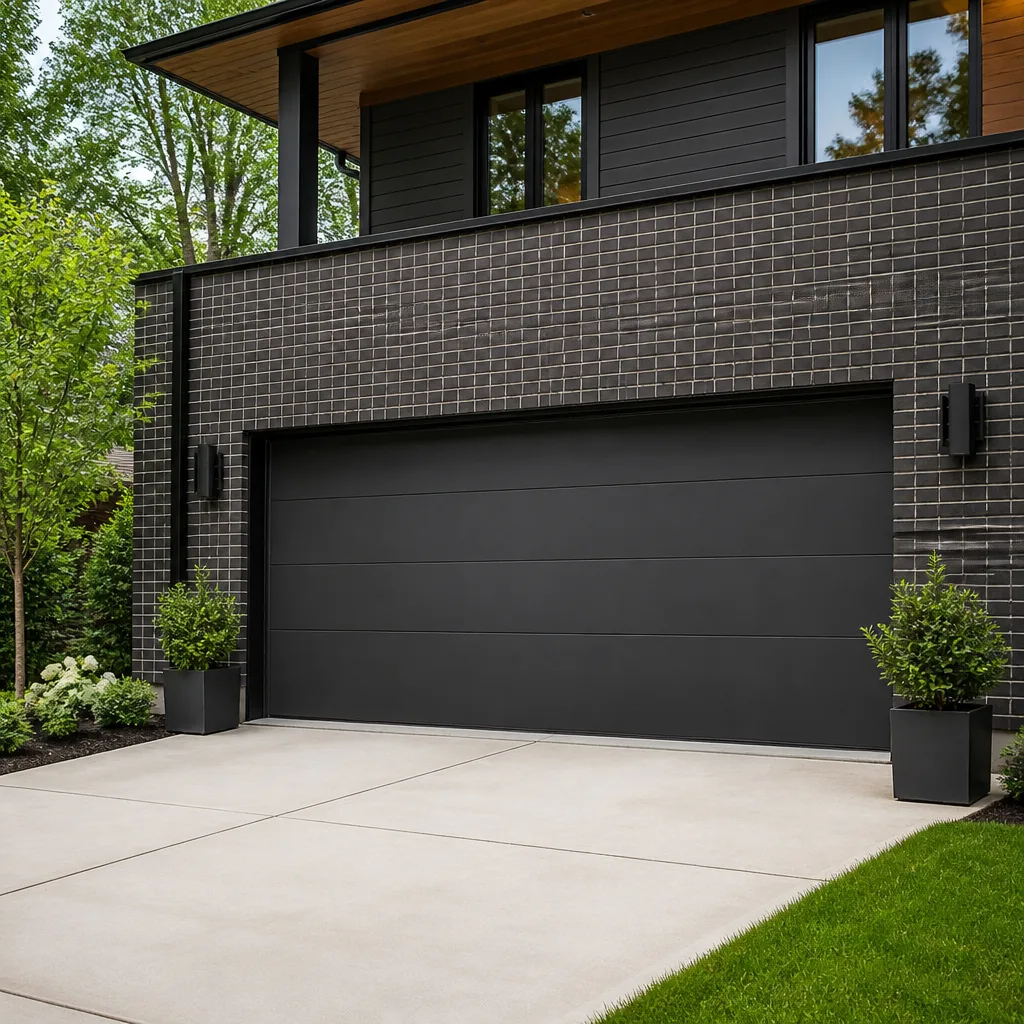 Modern flush
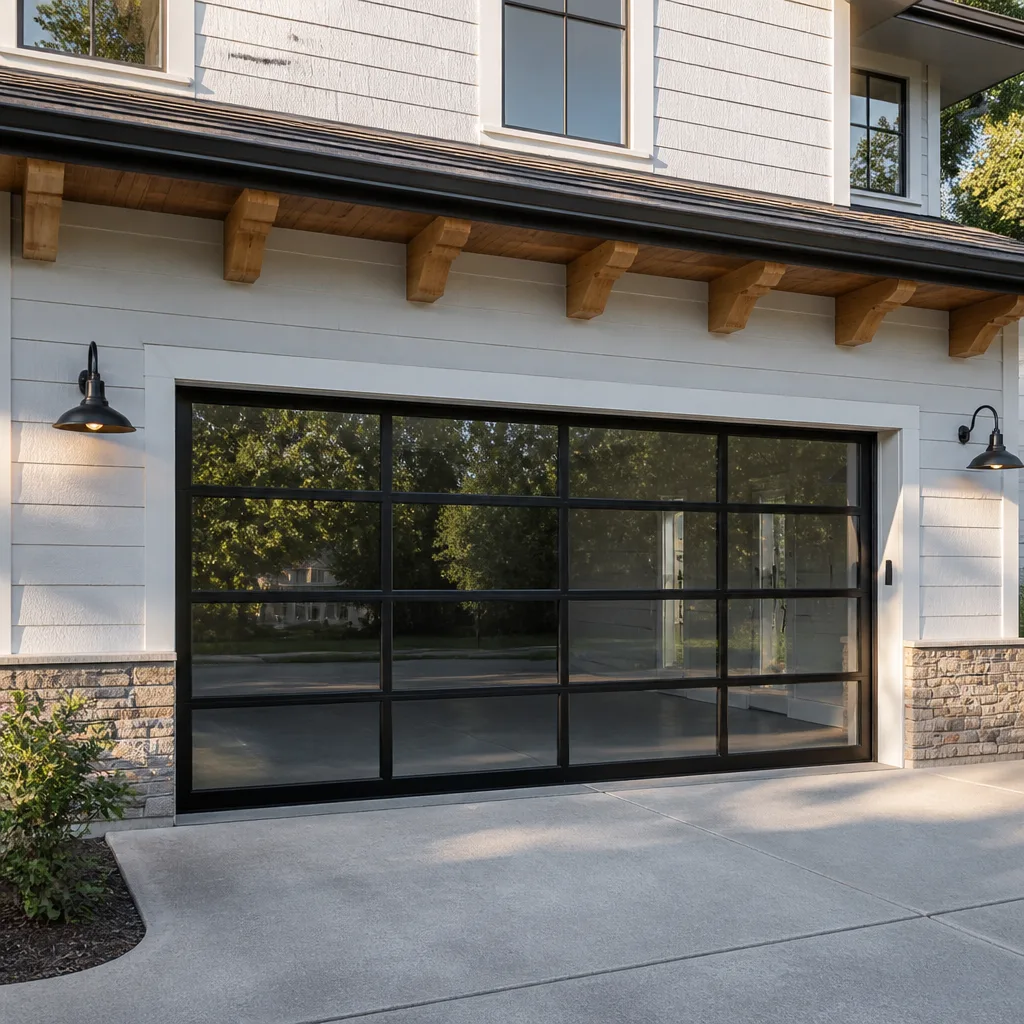 Full-view glass
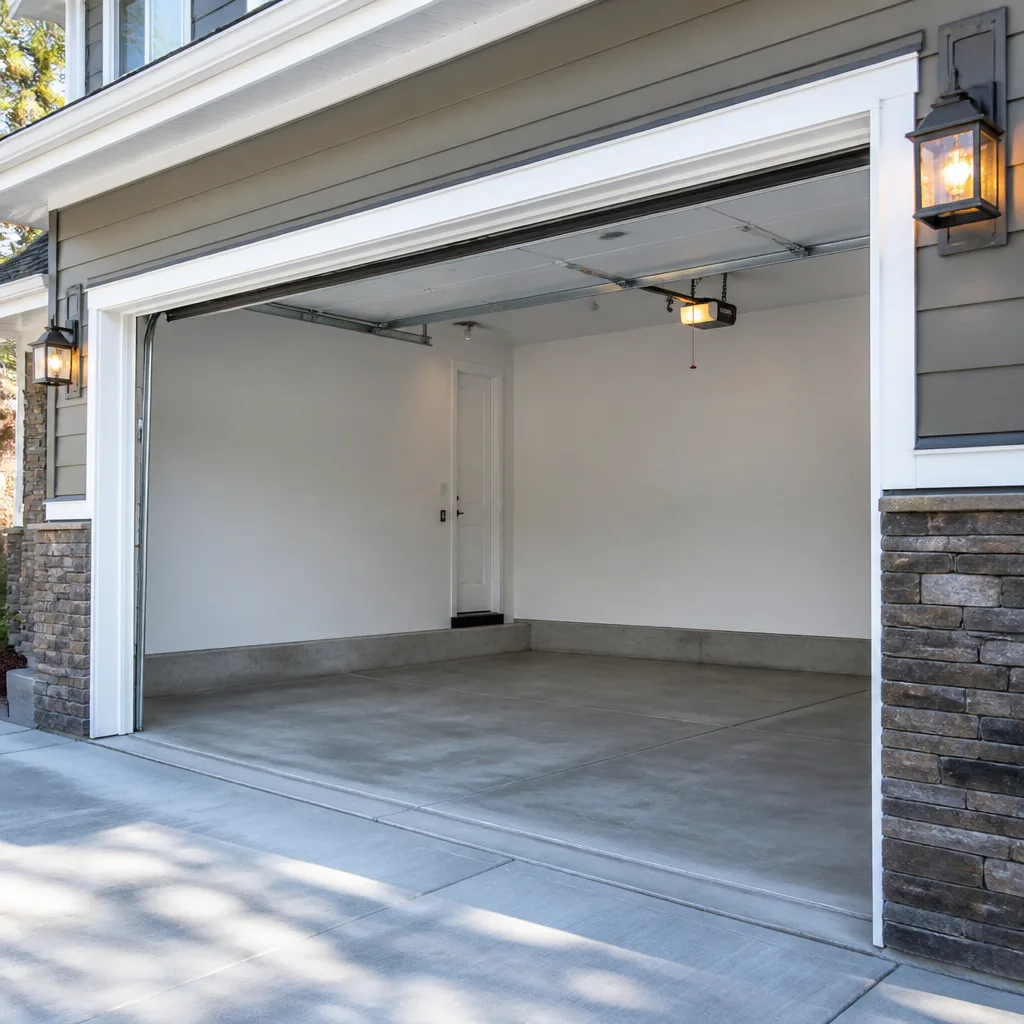 LiftMaster openers
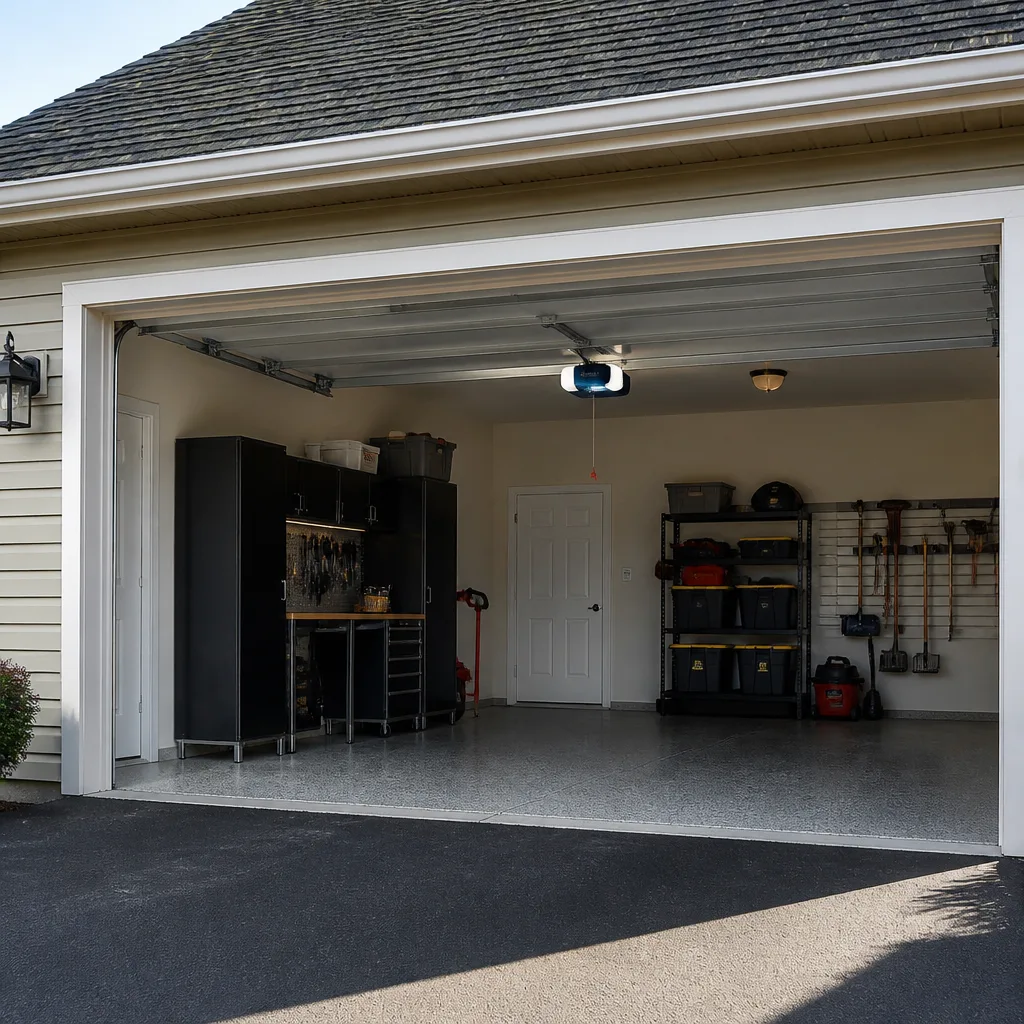 Chamberlain openers
Full 25-point door and opener safety check with every visit - springs, cables, rollers, tracks, and your LiftMaster or Chamberlain opener included
You get a price before we start. It does not change when the pro arrives.
Get your free estimateThe Complete Guide to Garage Doors in Bergen-Lafayette
Most garage doors in this neighborhood were hung before automatic openers were common. That single fact throws off almost every measurement in the national buying guides. A “standard” seven-foot door height assumes a garage built to modern clearances, and plenty of the bays in Bergen-Lafayette were never built that way. Headroom above the opening is often tighter than the manuals expect. Side room beside the track can be a few inches where the guide says a foot. What follows maps those local realities to the right door, the right opener, and what a service call actually looks like on these streets. You’ll get door types that fit narrow urban bays, opener compatibility across the systems installed in Hudson County, and a clear way to tell when existing tracks and springs can take an upgrade.
Quick Answer
In Bergen-Lafayette, the right garage door is the one that fits the actual opening, not the catalog’s standard size. Pre-war rowhouse bays and converted industrial buildings usually need a measured fit: low headroom, tight side room, and a torsion or extension spring sized to the real door weight. Start by measuring your opening and headroom, then choose a door style and opener that work with those constraints rather than fighting them. The written estimate should set the final price before any work begins.
Styles & brands we work with
- Raised-panel steel
- Carriage house
- Modern flush
- Full-view glass
- LiftMaster openers
- Chamberlain openers
Table of Contents
- How Bergen-Lafayette’s Building Stock Changes the Measurements
- Which Door Styles Work on Narrow Urban Bays
- Opener Compatibility Across the Most Common Systems
- What Same-Day Service Means in a Dense Urban Neighborhood
- Can Your Existing Tracks and Springs Support a Door Upgrade?
- Springs: The Part That Deserves a Specialist
- Safety Checks Worth Doing Before You Call
- What Garage Door Work Costs in Bergen-Lafayette
How Bergen-Lafayette’s Building Stock Changes the Measurements
A garage door is a system of clearances. The opening height and width are the two you can see. The two that cause trouble are headroom (the space above the door opening) and side room (the space beside the vertical track). National guides assume a low-rise garage or a full-depth bay with generous structure above and beside it. Bergen-Lafayette’s housing mixes rowhouses built before the 1940s, former industrial buildings converted into residential use, and newer infill construction, and none of those three share the same clearances.
Here’s what that means in practice:
- Pre-war rowhouse bays: The opening is often narrower than a modern single-car door, and the header sits lower. Low-headroom situations mean a standard torsion setup may not fit vertically, and a low-clearance or rear-mount torsion system becomes the practical route.
- Converted industrial buildings: Ceiling heights can be high, but columns, ductwork, and old structural beams cut into the space above the door. A door that needs a straight, uninterrupted horizontal track run may not have one.
- Newer infill: The build is more conventional, so catalog sizes usually apply. But infill lots are tight, which makes the approach and turning space in front of the door smaller than a suburban driveway.
None of this is a reason to settle for a door that doesn’t open cleanly. It’s a reason to measure the actual site. The opening height and width, the headroom to any obstruction, the side room to the nearest wall or column, and the depth of the horizontal track run are the four numbers that matter. When we quote a new door for a Bergen-Lafayette home, those numbers decide which door styles and operators are realistic before price enters the conversation.
Which Door Styles Work on Narrow Urban Bays
Narrow single-car bays in Bergen-Lafayette can still take an insulated, secure door. The constraint isn’t insulation itself; it’s the panel structure that carries it. On a tight width, a sectional door with a modest panel count and a reinforced strut tends to fit and hold up better than a wide-panel design that needs more side room for the track geometry.
Three styles do most of the work here:
- Standard raised-panel sectional steel. The most forgiving fit on a narrow opening. Insulation is available in the panel core, so you get thermal separation without a thicker door that eats into track clearances.
- Flush or ribbed sectional steel. Cleaner lines suit industrial-conversion facades, and the flat face resists the denting that raised panels can take when the bay is tight.
- Carriage-style sectional with reduced-width panels. Where a rowhouse front requires a traditional look, a sectional built with narrower panels can carry the look without the swing clearance a true swing-out door needs.
What doesn’t fit well in a tight urban bay is a true one-piece tilt-up door or a swing-out carriage door. Both need clearance in front of the opening or inside the garage to swing, and side-by-side driveways in Bergen-Lafayette rarely leave enough room. Plan for those constraints before you fall for a style. A door that can’t cycle cleanly in the space is not a door you want.
Opener Compatibility Across the Most Common Systems
Opener compatibility comes down to three things: the power source, the mounting method, and the safety sensor setup. A door built for a screw-drive opener can take a belt-drive unit, but the rail and mounting hardware differ. A jackshaft opener, which mounts to the side of the torsion bar instead of overhead, is a real solution on low-headroom bays where a rail-mounted opener would hit the ceiling. That’s why an opener swap in an older Bergen-Lafayette garage isn’t always a straight like-for-like replacement.
In this neighborhood we see three opener families most often: LiftMaster, Chamberlain, and Genie. They’re related in places (LiftMaster and Chamberlain share a lot of design and remote frequencies) and distinct in others. Genie’s logic boards and travel-limit setups run differently, and a remote from one won’t pair with the other. That’s the practical value of testing and pairing the actual unit rather than assuming.
Before choosing an opener, confirm these:
- The existing outlet near the opener runs on a circuit that’s actually live and rated for the motor draw.
- Headroom above the door clears the opener rail and the door’s high-arc travel.
- Safety reversing sensors have a clean line across the opening, which matters when the garage is shallow or the door path is near a wall.
If your opener is failing rather than the door, the faster route is usually garage door opener repair. If you’re replacing the door at the same time, the opener and the door need to be specified together, because the weight of the new door changes what the motor should be set to do.
What Same-Day Service Means in a Dense Urban Neighborhood
Same-day service in Bergen-Lafayette means something different from same-day in a suburb with wide driveways and lots of curb space. A technician has to park, find the right unit among row-house conversions, and work in a bay that may be tighter than the van’s turning radius. Realistic scheduling accounts for that rather than promising a flat arrival time that ignores it.
Here’s what actually affects whether a repair happens the same day:
- Access to the garage. A rear-alley bay or an interior garage in a converted building may need the homeowner on-site with keys or a code. That coordination often is the time cost, not the repair.
- Parking near the door. Narrow streets with one side parking are common near Bergen-Lafayette. The technician needs a spot within reasonable carry distance of tools and a replacement door or spring.
- Parts fit. A spring sized for a specific door weight is the most common part that isn’t universal. That’s a scheduling factor, not a location factor.
Where the repair is straightforward and the access is ready, a same-day repair is realistic. When it isn’t, a clear arrival window and a written estimate are more useful than a promise nobody can keep. If you’re stuck with a door that won’t close, the phone line is where to start: call (844) 960-3603. We answer 24/7. Fast dispatch from 7am to 7pm, Sunday through Friday. If you call outside dispatch hours, we’ll book you into the next opening, Sunday through Friday, 7am to 7pm.
Can Your Existing Tracks and Springs Support a Door Upgrade?
Sometimes the honest answer is that the door can be upgraded, and sometimes it can’t. The deciding factors are the condition of the tracks, the weight rating of the springs, and whether the framing can carry the new door’s load. On Bergen-Lafayette’s older housing stock, track condition is often the tightest constraint, because a track that has been bent and re-bent to fight a sticky door is no longer straight enough to guide a heavier panel cleanly.
Use this sequence to figure out where you stand:
- Check the track line. Stand at the door and look down each vertical track. A visible kink or bow means the track has lost its reference line. Straightening helps only if the distortion is minor; a dented section below the roller is usually a replacement.
- Weigh the new door against the old spring. Springs are sized to door weight and cycle life, not to a generic rating. If the new door is heavier (often the case when adding insulation or moving to steel), the existing springs cannot be reused with it. Springs must match the new door.
- Check the headroom against the new door. A low-headroom door can be done, but only with the right vertical and horizontal track configuration. Confirm this before ordering anything.
- Inspect the framing that holds the track brackets. In a converted industrial building, that means checking whether a beam is taking the load or whether the bracket was lagged into a surface that wasn’t designed for it.
If the track and spring setup checks out, a door swap is straightforward. If it doesn’t, the correct call is a full assembly replacement as part of a garage door installation. A new door hung on failing tracks will develop the same problems in a year.
Springs: The Part That Deserves a Specialist
Torsion and extension springs store enough energy to move a door weighing a few hundred pounds. That’s the whole point, and it’s also the danger. When a torsion spring breaks or a cable comes under tension, the release can injure anyone working under it. We treat spring work as its own core service for that reason, not as a quick job folded into a general repair call. A spring that is sized wrong, or a cable that is improperly seated, will fail again, and it will fail with the same energy the first time.
Describe the symptom rather than trying to fix it: the door feels too heavy when you lift it half a foot, it slams down instead of lowering slowly, you heard a sharp crack from the torsion bar, or the door rises partway and stops. Any of those are spring or balance signs and none of them require you to touch the spring assembly. The trained route is an inspection with the door weight measured and a spring matched to it.
In Hudson County’s climate, temperature swings do affect spring tension and door balance. The door may work smoothly in one season and feel uneven in another, and that drift is normal. What isn’t normal is a door that suddenly is hard to lift or won’t hold its position at mid-travel. Both signs point to spring or balance, and both are worth a call rather than a ladder.
Safety Checks Worth Doing Before You Call
Some checks protect you and some checks tell the story for the technician. The safety reversal test falls in the first group. With the door open, place a solid object on the ground in the door’s path and close the door with the remote. The door should reverse on contact or before it reaches the object. If it doesn’t, stop using the opener and treat it as a repair. The photoelectric sensors mounted a few inches off the floor should have a clear line of sight to each other, and a small obstruction in that line will keep the door from closing.
The checks that help the technician arrive prepared:
- The remote works when you’re close to the door but not from the street, which usually points to a battery or antenna issue.
- The wall button works while the remote doesn’t, which isolates the problem to the remote or receiver.
- The door rises a foot or so, stops, and the opener flashes, which points to a force-setting or travel-limit issue.
What you shouldn’t do is step under a partially open door held up by an opener or a broom, or adjust the spring assembly or cable drum by hand. Those are the calls that turn a repair into an injury. If the door is stuck open and you can’t safely close it, call for a professional and keep people and vehicles clear of the path until then.
What Garage Door Work Costs in Bergen-Lafayette
Garage door pricing here has two variables most national price lists don’t account for: the actual door weight and the site constraints. Here are typical estimates for the work we’re called for most often in Bergen-Lafayette. The written estimate sets the final price before any work starts, and the estimate is free.
| Job | Typical Estimated Range |
|---|---|
| Spring repair or replacement (one spring) | $180 – $340 |
| Matched spring pair | About twice the one-spring figure |
| Opener repair or replacement | $150 – $450 |
| Track or cable repair | $120 – $300 |
| New door installation, single-car | $1,000 – $3,500 |
Springs are usually replaced in matched pairs, since a pair that has cycled together is likely to fail together. That’s why the pair figure is double the single-spring range rather than a separate discount. If your quote seems low for a heavier insulated door, the spring may be under-rated for the weight, which is a problem worth catching before the install.
For an exact figure, call (844) 960-3603. We’ll measure the opening, check the headroom and side room, and give you a free written estimate. What you agree to is what you pay.
Common Mistakes to Avoid
- Ordering a door from a catalog size before measuring. Bergen-Lafayette’s pre-war bays and conversions rarely match the “standard” in the brochure. Measure the opening, headroom, and side room first, or the door won’t fit.
- Replacing springs one at a time. Springs installed and cycled together wear together. Replace the pair so the door stays balanced and you’re not paying for a second call shortly after.
- Cutting a spring to change tension. Springs are rated by wire size, inside diameter, and length. Cutting one changes the stored energy unpredictably and turns a repair into a safety problem.
- Bypassing the safety sensors because the door “works fine.” A door that closes without a reverse test is a door that can close on a person or a vehicle. Fix the sensor alignment, don’t defeat it.
- Assuming a new opener fixes a slow or heavy door. If the door is heavy because of the springs or the tracks, a newer opener will carry that strain until the motor or the door gives out. Fix the mechanical side first.
- Forgetting the noise factor on an attached rowhouse. A belt-drive opener on a secured door is quieter than a chain drive, which matters when the garage shares a wall with a neighboring unit.
- Ignoring a bent track to make the door fit. Bending the track to force a door back on its line works for a short time and throws off the travel every time the door cycles.
See the difference
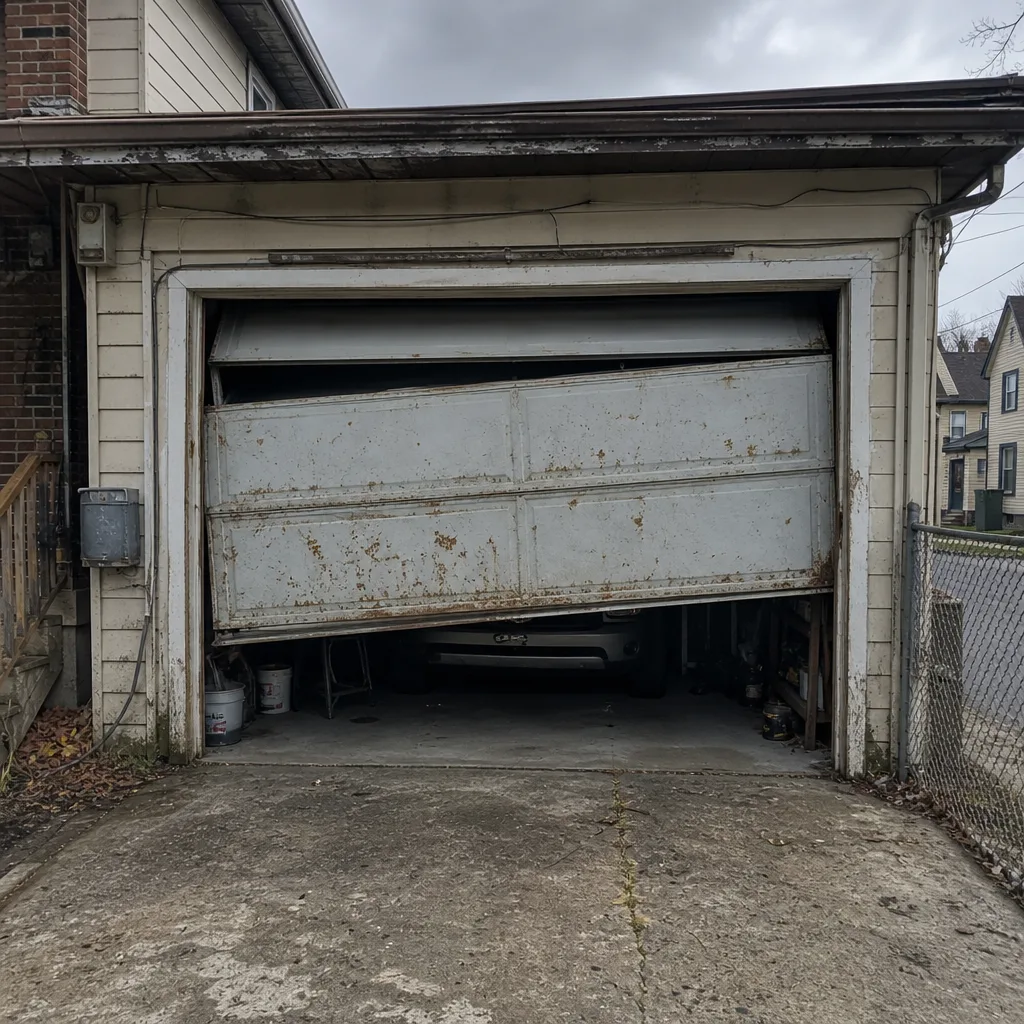 Before
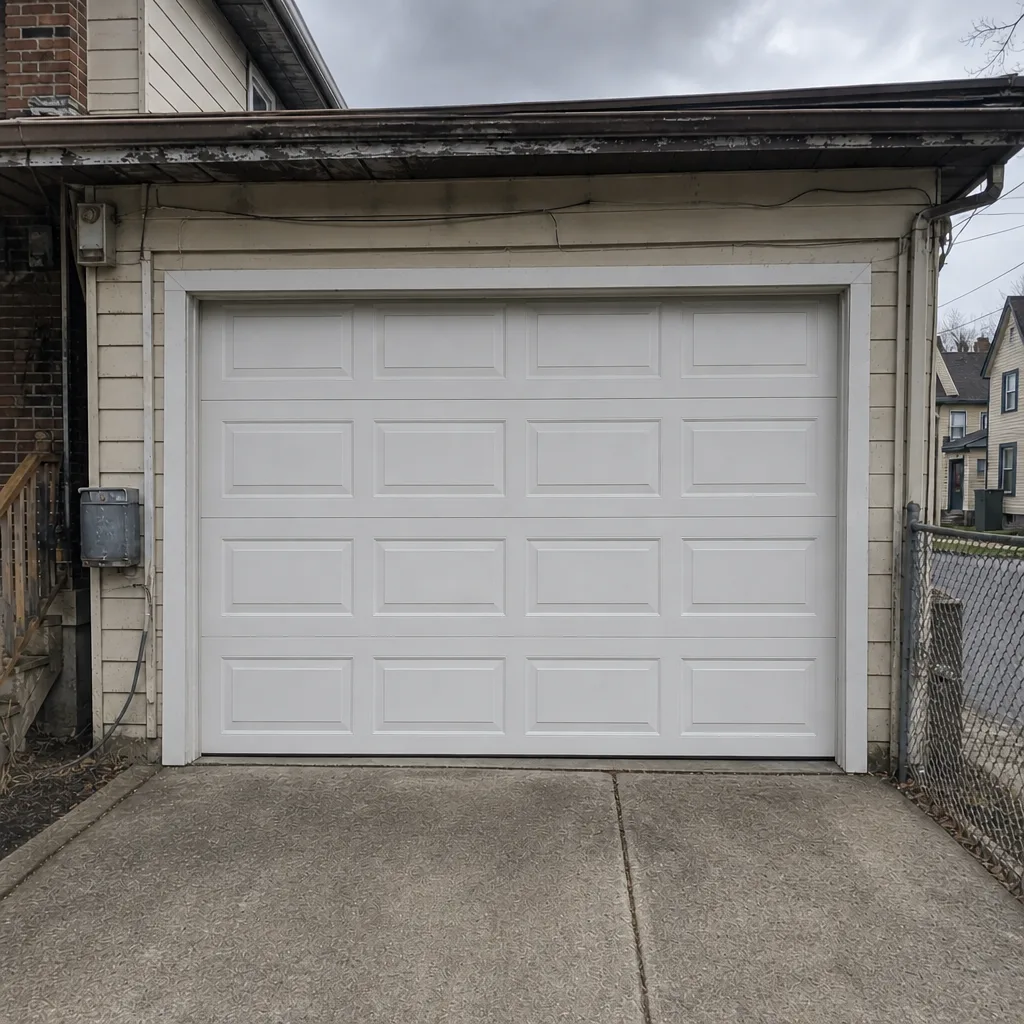 After
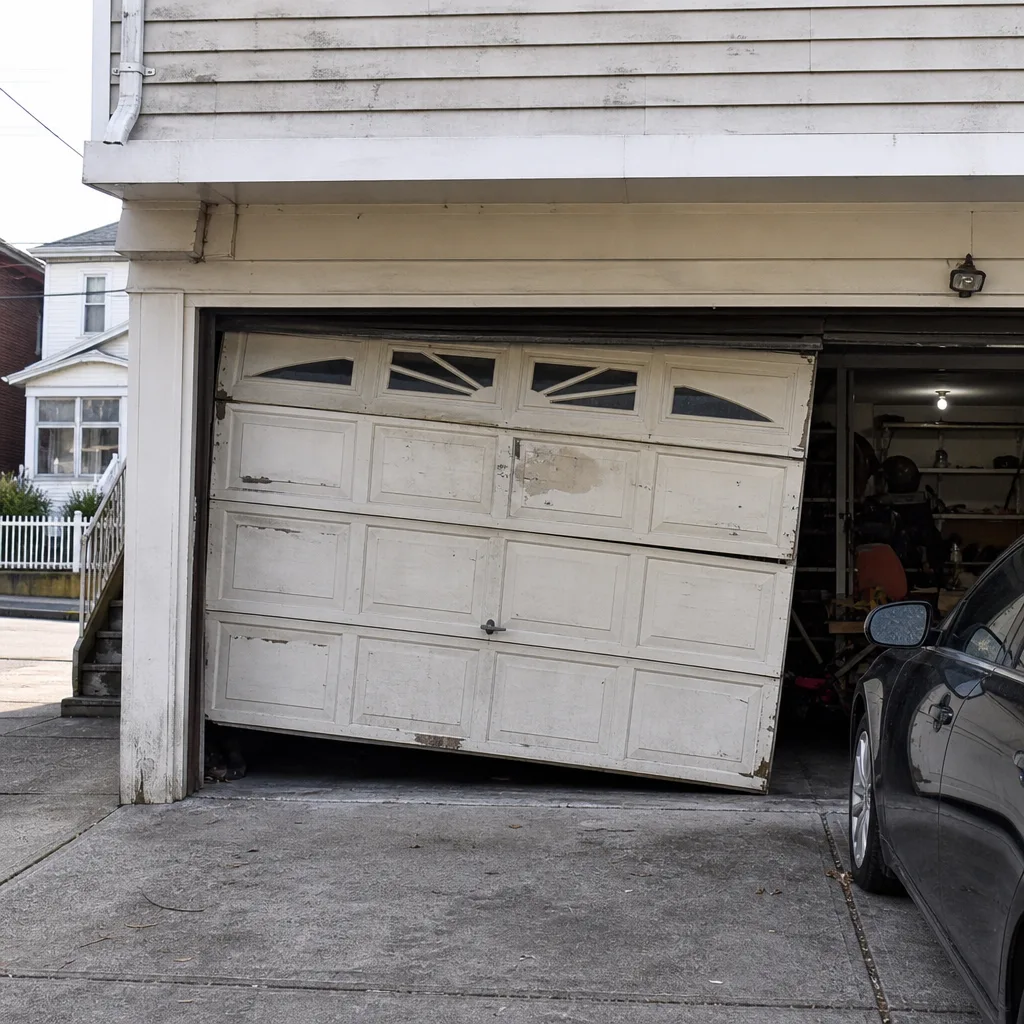 Before
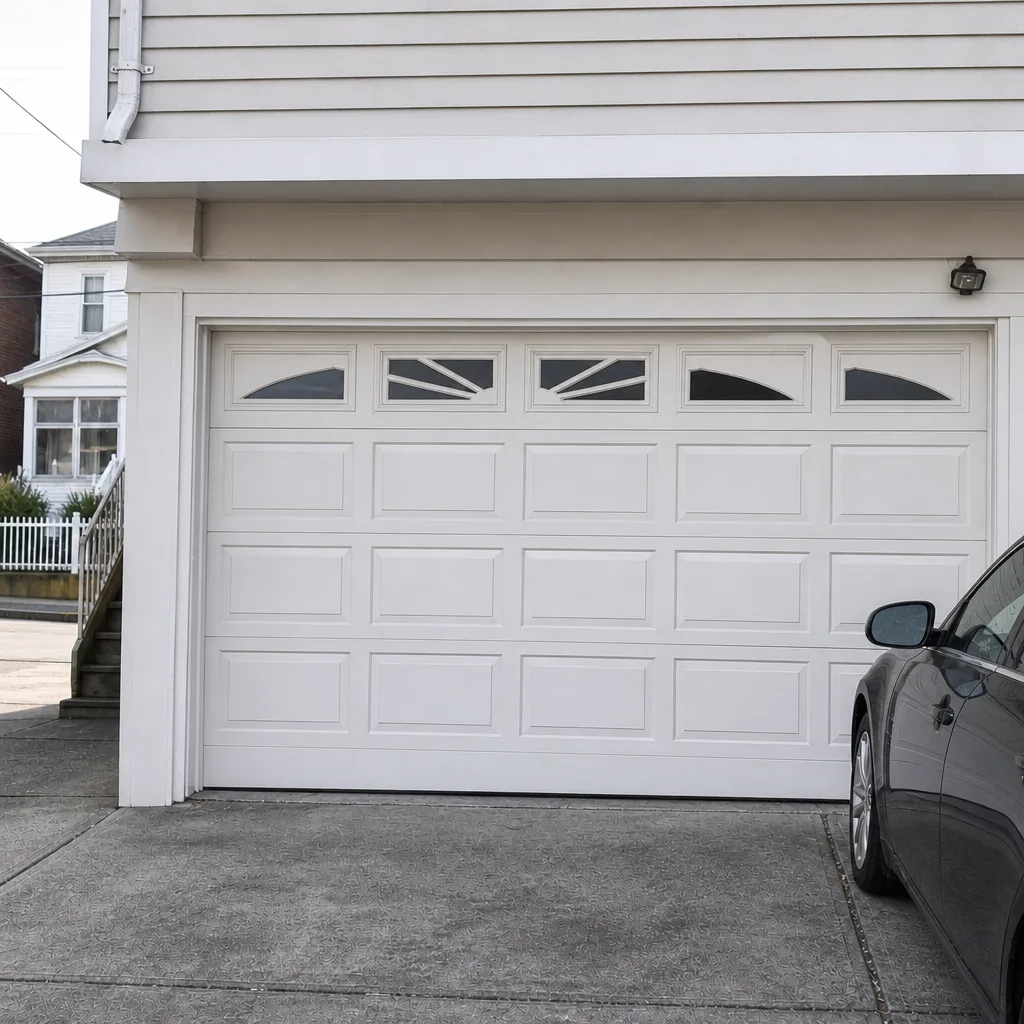 After
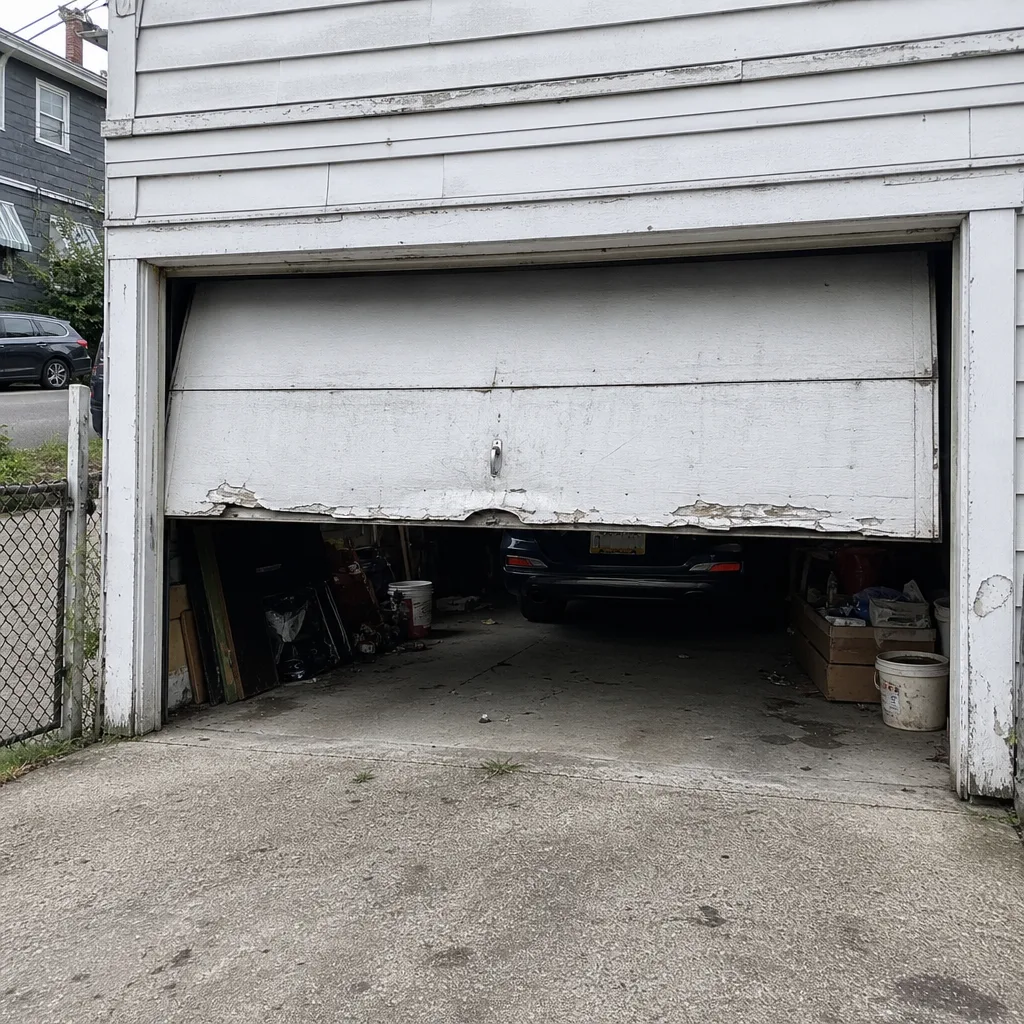 Before
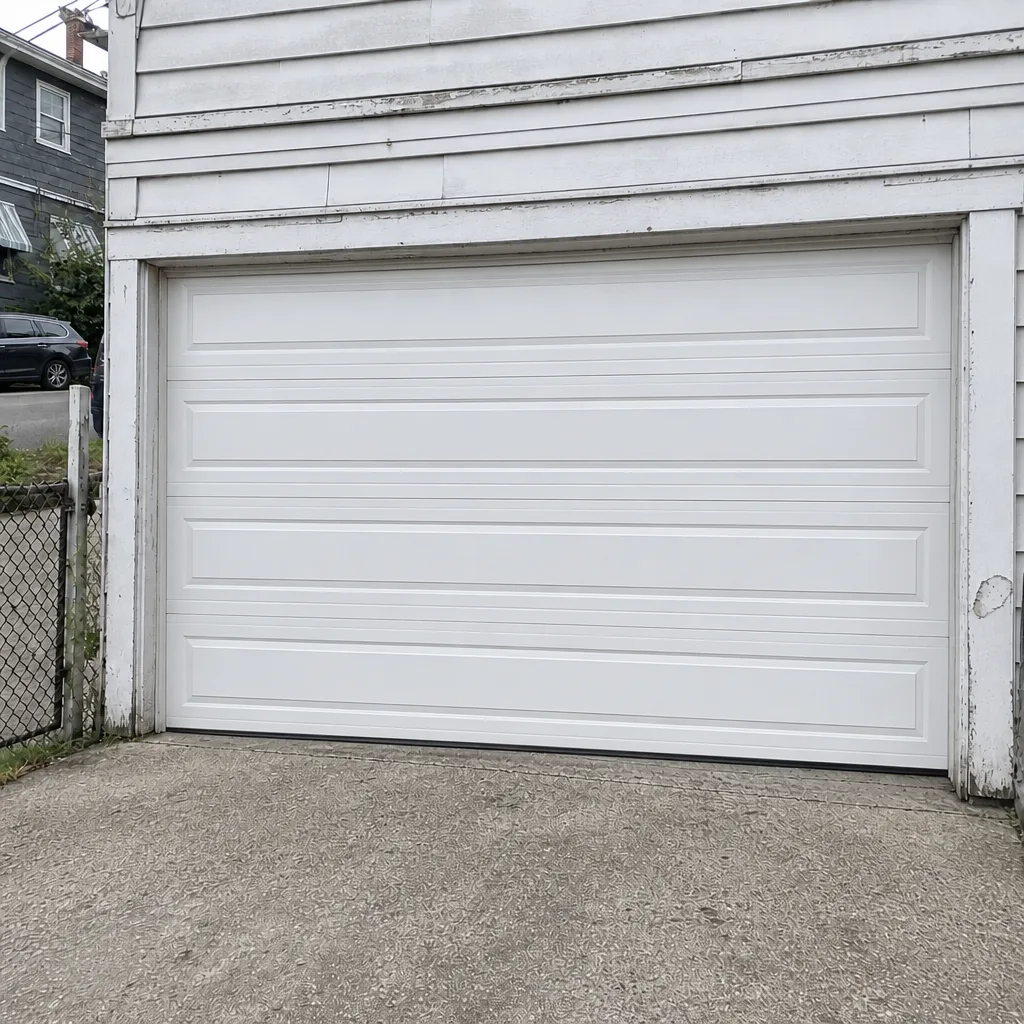 After
When to Call a Professional
Call for help when the door won’t close securely, when a spring has visibly broken, when the opener runs but the door doesn’t move, or when the door comes off its track. Call before you lift anything heavy or reach for the spring hardware. Heavy door work, spring and cable work, and opener electrical work are the tasks that most often turn a small problem into an injury, and they’re the ones we handle as a dedicated service rather than as a side category. Our technicians have up to 12 years of experience, and we work across the eight most common systems in the market, including LiftMaster, Chamberlain, Genie, Clopay, Amarr, Wayne Dalton, Craftsman, and Raynor. Garage Door Repair Bergen-Lafayette offers free estimates in Bergen-Lafayette. Call (844) 960-3603. We answer 24/7. Fast dispatch from 7am to 7pm, Sunday through Friday. If you’re closed out of dispatch hours, the next opening is booked Sunday through Friday, 7am to 7pm.
If you’re dealing with a broken door right now, the Garage Door Repair Bergen-Lafayette page is where the repair service starts. For a door that needs more than a fix, a new door system is a scheduling job, not a same-day one, and a free measure and written price come before any order.
Frequently Asked Questions
Sometimes, yes. Pre-war rowhouse bays and converted industrial buildings in Bergen-Lafayette often have openings that fall outside the standard catalog sizes, and a low header height can rule out some door styles entirely. Measure the opening, headroom, and side room first, then confirm the style before ordering. A door that doesn’t clear the geometry will fight the track every cycle.
Often, yes, depending on access and the spring size needed. Spring work is a core service for us, and the technician measures the door weight so the replacement spring matches it rather than guessing. Call (844) 960-3603 for an exact quote. We answer 24/7. Fast dispatch from 7am to 7pm, Sunday through Friday. Estimates are free.
No. We’re closed Saturday. We dispatch Sunday through Friday, 7am to 7pm. If your door fails on a Saturday, call (844) 960-3603. The phone line answers 24/7, and we’ll book you into Sunday, the next day we dispatch. A fixed non-urgent job can be scheduled for a weekday or Sunday.
No. The written estimate is the price, and we don’t start work until you’ve agreed to it. If the inspection turns up something the estimate couldn’t cover, like a bent track or a spring that’s the wrong size for the door weight, we’ll explain it and re-quote before touching anything. Nothing happens without your approval.
We work on LiftMaster, Chamberlain, Genie, Craftsman, and Raynor openers, along with the doors from Clopay, Amarr, and Wayne Dalton. If your opener is on that list, we can diagnose the board, the safety sensors, the travel limits, and the remote pairing on the actual unit. A remote from one brand won’t pair with another, so the specific model matters.
Only if they’re straight and rated for the load. A bent vertical track has lost its reference line, and a spring sized for a lighter door can’t be reused with a heavier one. Both must be checked and usually replaced as part of a door upgrade, which is why a door swap and a full assembly replacement get quoted differently.
The Bottom Line
Bergen-Lafayette’s garage doors don’t fit the national buying guide’s assumptions, and that’s the one thing to carry away from this page. The order to remember: measure the opening, headroom, and side room; match the door style to the bay; confirm the opener will fit the geometry; inspect the tracks and springs before ordering a heavier door; and call before you touch spring or cable hardware. If you want the whole garage door repair scope handled by a single-trade specialist who works across the eight most installed brands, that’s the call. Everything else is a measurement, a written estimate, and a door that fits.
Free estimate, set per job. Call (844) 960-3603. We answer 24/7. Fast dispatch from 7am to 7pm, Sunday through Friday. A written estimate sets the final price before any work starts.
Written by the team at Garage Door Repair Bergen-Lafayette.