
Last updated November 21, 2026
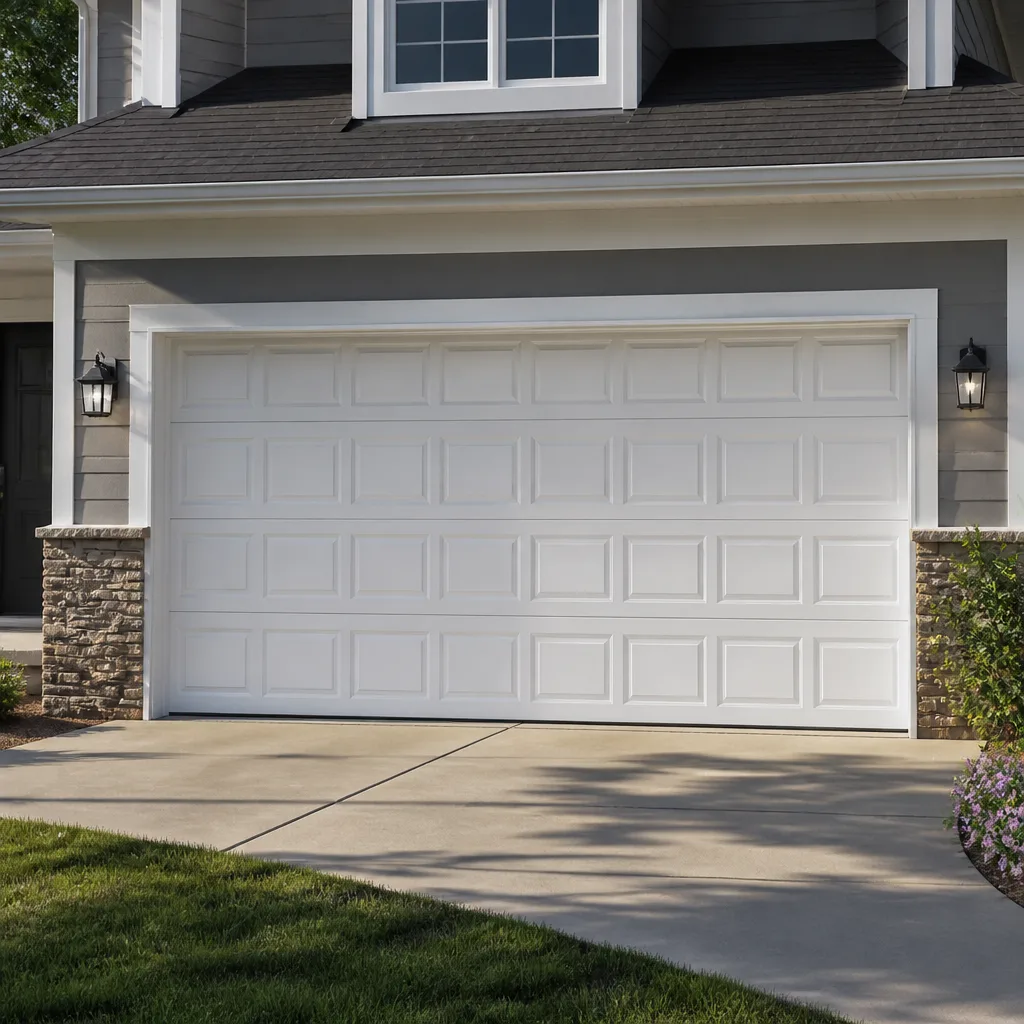 Raised-panel steel
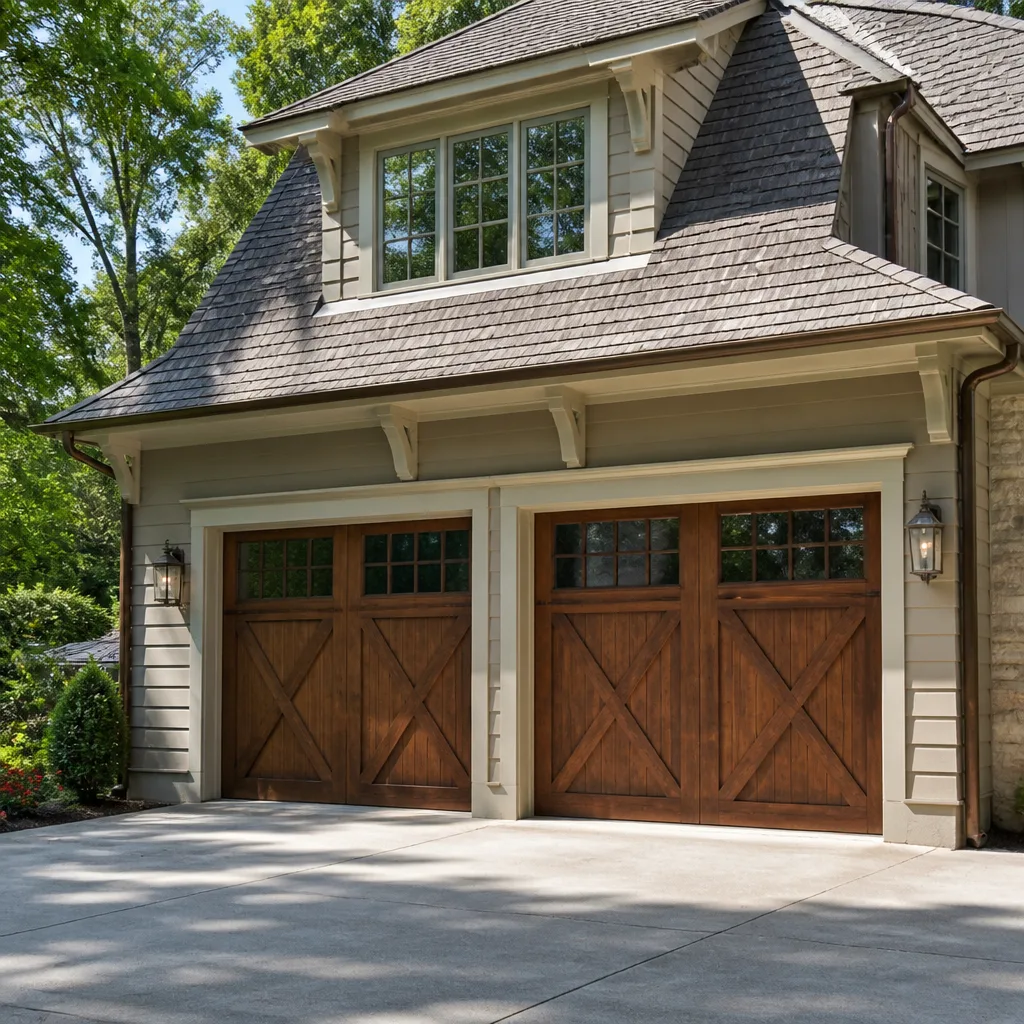 Carriage house
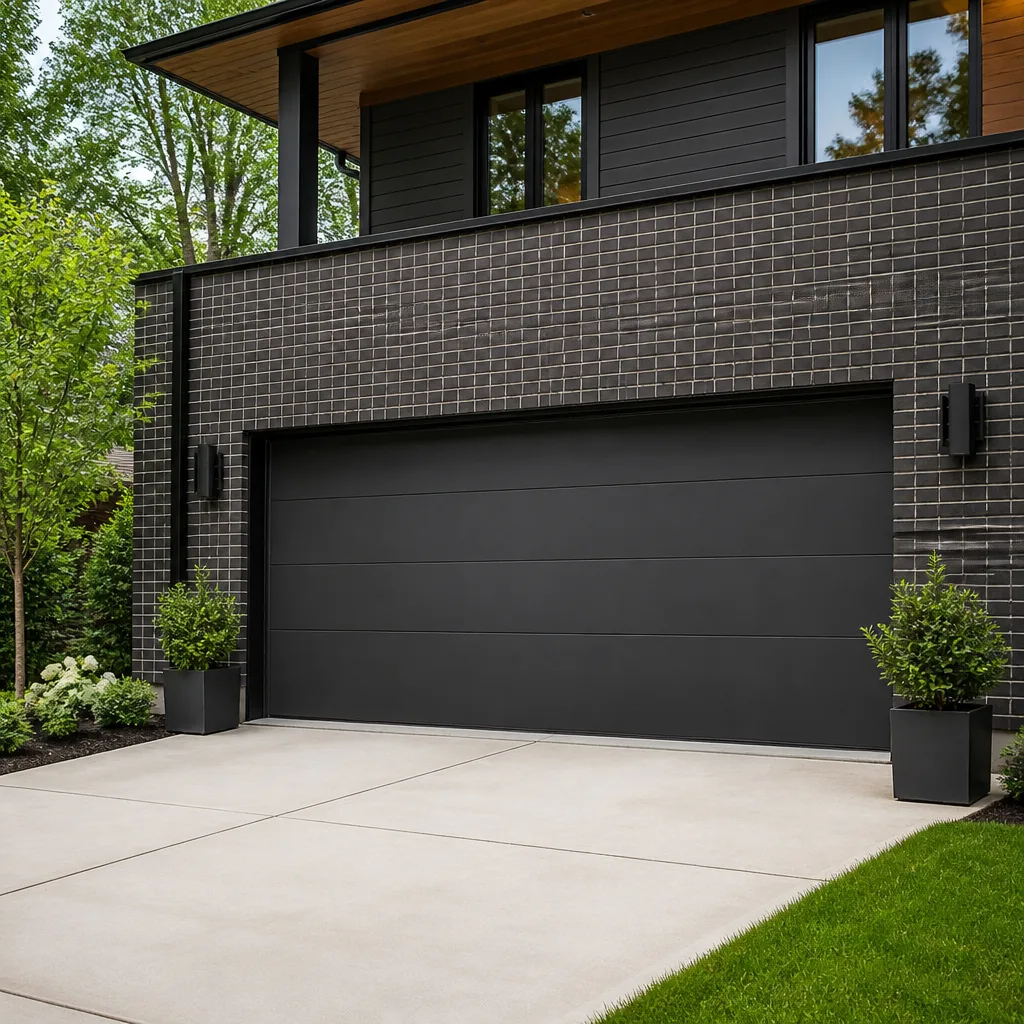 Modern flush
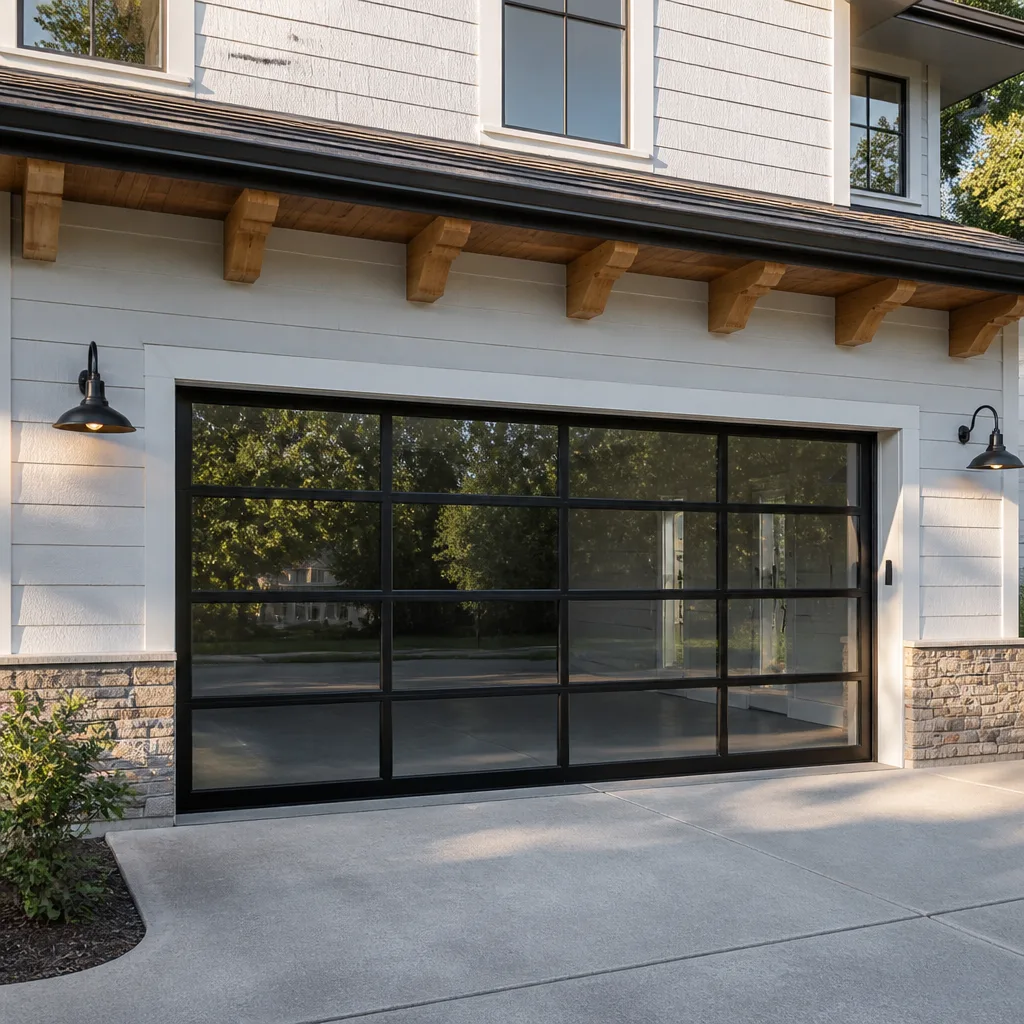 Full-view glass
 LiftMaster openers
 Chamberlain openers
Full 25-point door and opener safety check with every visit - springs, cables, rollers, tracks, and your LiftMaster or Chamberlain opener included
You get a price before we start. It does not change when the pro arrives.
Get your free estimateGarage Door Warning Signs: A Bergen-Lafayette Homeowner’s Reference Guide
A garage door that takes two seconds longer to open than it did last month is not “getting old.” It’s telling you that spring tension is declining and that you’re closer to a failure than you think – one that will leave the door stuck mid-travel, often with a car trapped inside. Most warning signs don’t announce themselves dramatically. They show up as small sounds, slight timing changes, or cosmetic details homeowners have trained themselves to ignore. This guide names those specific signals, explains what mechanical failure each one predicts, and separates the ones that mean “schedule service this week” from the ones that mean “stop using the door today.” If you own or manage a home in Bergen-Lafayette, this is the reference to keep handy.
Quick Answer
The most reliable garage door warning signs are a door that opens or closes slower than it used to, a loud bang from the torsion bar, grinding or popping during travel, a door that drifts or won’t hold halfway, frayed or hissing cables, and visible bending at the panels, hinges, or track. If you hear a bang or see a snapped spring or a frayed cable, stop using the door and call a specialist. Everything else is a schedule-this-week signal, not an emergency – but none of them fix themselves.
Styles & brands we work with
- Raised-panel steel
- Carriage house
- Modern flush
- Full-view glass
- LiftMaster openers
- Chamberlain openers
Table of Contents
- Two Lists Every Homeowner Should Know: “This Week” vs. “Stop Today”
- The 90-Second Test That Catches Four Failure Precursors
- Sounds Decoded: Grinding, Popping, Scraping, and the Cable Hiss
- Visual Signs That Mean Structural Fatigue, Not Cosmetic Wear
- Warning Signs Unique to Older Bergen-Lafayette Garages
- Opener Warning Signs: When the Problem Is Electronics, Not Hardware
- How Bergen-Lafayette Weather Works on Your Door
- What Happens When You Call
Two Lists Every Homeowner Should Know: “This Week” vs. “Stop Today”
The single most useful thing you can learn about garage door warning signs is which category they fall into. Most lists online lump everything together, which leads homeowners to either panic over a cosmetic scuff or ignore a cable that’s about to let go. Here’s the split we use when a Bergen-Lafayette homeowner describes symptoms over the phone.
Signs that mean schedule service this week:
- The door opens or closes slower than it did a month ago
- Grinding, squealing, or rhythmic scraping during travel
- A door that drifts down a few inches after you let go of it halfway
- Loose hinges, rattling panels, or a track that flexes when you push on it
- An opener that reverses for no clear reason or stops short of the floor
- Weatherstripping that’s torn, flattened, or pulling away from the frame
Signs that mean stop using the door today:
- A loud bang from above the door, followed by the door not lifting
- A visible gap in the torsion spring above the door, or a stretched, tangled extension spring
- A cable that’s frayed, kinked, hanging loose, or off its drum
- A door hanging crooked, with one side visibly higher than the other
- Panels separated from the frame, or a track bent far enough that the rollers have jumped out
- Any situation where the door is the only barrier between an attached garage and the living space, and it won’t close
The distinction matters because the “stop today” list involves stored mechanical energy or a door that could come down uncontrolled. A torsion spring under tension or a cable carrying the door’s weight is not something to test, tap, or adjust. Those are the situations where we send a technician rather than talk a homeowner through it, and where a same-day visit is the right call.
The 90-Second Test That Catches Four Failure Precursors
You can check the four most common failure precursors on a residential door in about 90 seconds, without tools and without touching the springs or cables. Do this monthly, and again any time the door sounds different than it did the week before. It’s a check, not a repair – if something fails the test, that’s your signal to call, not to start adjusting.
- The balance test. Close the door, then pull the opener’s release cord to disconnect it. Lift the door by hand to about waist height and let go. A healthy door stays put or drifts less than a few inches. A door that drops quickly, or that you can barely lift, has a spring tension problem – possibly a spring that’s already broken and you didn’t hear it go.
- The listen test. With the door disconnected, open and close it by hand slowly. Listen for grinding, popping, or a rhythmic scrape at the same point in travel. Grinding usually points to rollers or bearings; a single pop at one spot usually points to a hinge, a roller binding in the track, or a panel that’s twisted.
- The sight-line test. Stand inside the garage and look up at the torsion bar and springs, and along both vertical tracks. Look for a visible gap in a spring, a cable that’s frayed or off its drum, a track that’s bent or pulled away from the frame, and hinges that are cracked or missing screws. Do this with the door closed and the opener disconnected so nothing moves while you’re looking.
- The travel-time test. Reconnect the opener and time a full open and close. Compare it to what you remember from a month ago. A door that’s noticeably slower, or that hesitates at the same point every cycle, is telling you something is binding or losing tension. Timing changes are the earliest signal most homeowners miss because nothing sounds wrong yet.
Those four checks catch balance problems, spring decline, track and roller issues, and opener strain – which together account for most of the failures we’re called out for in Bergen-Lafayette. None of them require you to touch a spring, a cable, or the opener’s internal components. If a check turns up something, note what you saw and when, and call. A description like “pops once at about chest height on the left side” saves diagnostic time and often lets us bring the right part on the first visit.
Sounds Decoded: Grinding, Popping, Scraping, and the Cable Hiss
Every sound a garage door makes has a mechanical cause, and most of them point to a specific component. Here’s how we translate the four sounds homeowners describe most often when they call garage door repair in Bergen-Lafayette.
Grinding. Grinding is metal-on-metal contact, and it usually comes from the rollers, the hinges, or the opener’s gear and rail. On a door with steel rollers, grinding often means the bearings have dried out or seized. On an opener, grinding at the motor housing often means a worn drive gear – common on older units and one of the reasons we keep brand-specific parts on hand for LiftMaster, Chamberlain, Genie, and Craftsman systems. Grinding doesn’t stop on its own; it accelerates wear on whatever’s grinding against what.
Popping. A single pop at the same point in travel is usually a roller binding in the track, a hinge that’s cracked, or a panel that’s twisted enough that the sections bind against each other. A pop near the springs can also mean a torsion spring is catching on a worn bearing plate. Popping is one of the easier sounds to pin down because it’s repeatable – note exactly where in the door’s travel it happens.
Scraping. Scraping is usually the door’s edge or a panel rubbing against the frame, the weatherstripping, or a track that’s out of alignment. It’s often worse in one season than another, which points to the door or frame moving with temperature rather than a part failing outright. Scraping left alone wears through the paint and eventually the panel edge.
The cable hiss. This is the one most homeowners miss because it’s almost inaudible over the opener. A faint hiss or ticking from a cable means strands are breaking inside the cable jacket and rubbing as the cable moves. A cable carries the door’s weight on one side, so a cable that’s down to a few strands is a “stop today” sign. Don’t test it by pulling. Call, and keep the door closed until a technician looks at it.
One more sound deserves its own line: the loud bang. If you hear a bang from above the door and the door won’t lift afterward, a torsion spring has likely failed. That’s the most common spring failure pattern we see, and it’s the one where a homeowner should stop using the door immediately. Spring work is one of the highest-risk jobs on a garage door because the springs hold the door’s full weight under tension, and it’s a job for a trained technician, not a homeowner with a winding bar and a video. Our spring repair is handled as a core service, not subcontracted out.
Visual Signs That Mean Structural Fatigue, Not Cosmetic Wear
Not every mark on a garage door matters. Scuffs, small dents from a bicycle, and faded paint are cosmetic. But a handful of visual signs point to structural fatigue – the door’s frame, panels, or hardware losing the ability to carry load – and those are worth acting on before they turn into a door that won’t operate.
- Bowing or a visible curve across a panel. A panel that’s bowed, even slightly, has lost stiffness. On steel doors from Clopay, Amarr, and Wayne Dalton, a bowed section usually means the panel’s internal structure has been compromised and the door is flexing more than it should on every cycle.
- Cracks at the hinge points or around the bottom bracket. These are the load-bearing points on the door. A crack there means the fasteners are working loose and the door is moving more than it should.
- A gap between the door and the frame that changes. If the gap on one side is wider than the other, or if it changes from day to day, the door or the frame is out of square. That puts uneven load on the springs and the opener.
- Track that’s bent, dented, or pulling away from the wall. A small bend in a track can be enough to make a roller jump out. Track that’s separated from the frame is a “stop today” sign.
- Rust streaks running from hinges or the bottom bracket. Rust at a fastener means moisture is getting in and the fastener is losing grip. On a door with a bottom seal that’s failed, water sits at the bottom panel and starts the process there.
- Weatherstripping that’s flattened or torn. This one is often treated as cosmetic, but a failed bottom seal lets water and cold air in and lets the door sit unevenly against the floor, which loads the opener differently on every close.
Any one of these is worth a look. Two or more together, especially a bowed panel plus a bent track, usually means the door needs more than a tune-up. If the door is older and the panels are tired, garage door installation may cost less over the next few years than repeated repairs – we’ll tell you honestly which way the math points when we see the door.
Warning Signs Unique to Older Bergen-Lafayette Garages
Bergen-Lafayette has a lot of older housing stock, and the garages that came with those homes have their own set of warning signs. Some of the most common ones we see aren’t on any generic checklist.
Extension springs instead of torsion. Many older Bergen-Lafayette garages still run extension springs that stretch along the horizontal tracks. Extension springs fail differently than torsion springs – they stretch, lose tension unevenly, and when they break they can travel. A stretched extension spring, or one that’s visibly longer than its pair on the other side, is a “stop today” sign. If a door has extension springs without a safety cable running through them, that’s worth addressing as its own item, because a broken extension spring with no containment is a hazard.
Track that’s out of plumb with an older frame. Older garages often settled or had their frames adjusted over the years, and the track may no longer be perfectly vertical. A door on out-of-plumb track binds at the same point every cycle, wears rollers unevenly, and puts extra strain on the opener. It’s a slow failure that shows up first as a rhythmic scrape.
Opener units past their service life. Older chain-drive openers from Craftsman and Genie are common in Bergen-Lafayette garages, and they often outlive their gears. The warning sign is a change in sound: a chain-drive opener that starts grinding or running louder than it used to is usually telling you the drive gear or the chain is worn. garage door opener repair on an older unit is often worth doing if the motor is sound, and often not worth doing if it isn’t – we’ll tell you which.
Original wood frames and headers. Wood frames in older garages absorb moisture and move with the seasons, which changes the door’s clearances. A door that scrapes in one season and doesn’t in another is often reacting to the frame, not the door itself.
Single-car doors with narrow clearances. Many older Bergen-Lafayette garages were built for narrower cars. A door on a narrow opening has less margin for a track that’s slightly out of alignment, so a small bend that would be harmless on a wide door turns into a binding roller.
Opener Warning Signs: When the Problem Is Electronics, Not Hardware
Not every warning sign comes from the door. The opener has its own set of signals, and they often get misread as door problems. Here’s how to tell them apart.
- The door reverses before it reaches the floor. On most openers, this is either an obstruction in the safety sensor’s path or a travel-limit setting that’s drifted. If the sensors are clean and aligned and it still reverses, the opener’s logic board or limit switch is the likely cause.
- The door stops short on the way up. Usually a travel limit or a force setting, but on older units it can also be a failing capacitor or a worn gear.
- The opener runs but the door doesn’t move. That’s often a stripped drive gear or a broken trolley – the opener is fine, the connection to the door isn’t.
- The remote works only up close. Usually a battery, an antenna, or a logic board issue, and often brand-specific. We work on LiftMaster, Chamberlain, Genie, and Craftsman openers regularly and know where each brand tends to fail first.
- Intermittent operation. On a door that works sometimes and not others, the cause is often a loose connection, a failing sensor, or a logic board on its way out. Intermittent problems are worth diagnosing sooner rather than later because they tend to fail completely at the least convenient moment.
If the opener is the problem and the door itself is sound, the repair is usually straightforward. If the door is the problem and the opener is straining to move it, repairing the opener alone won’t fix the underlying issue – the door will keep loading the opener until something gives. That’s why we check both before quoting.
How Bergen-Lafayette Weather Works on Your Door
Garage doors are outdoor equipment mounted on a building, and they respond to the weather. In Bergen-Lafayette, the pattern that matters most is the swing between humid summers and freezing winters. Wood frames and older steel panels expand and contract with that swing, which changes clearances and puts seasonal load on the springs and the opener.
What that means for warning signs: a scrape or a bind that appears in one season and disappears in another is often the frame or panel moving, not a part failing outright. It’s still worth checking, because a door that binds seasonally wears its rollers and track unevenly over time. The other pattern worth watching is moisture. A bottom seal that’s failed lets water sit against the bottom panel through wet stretches, and that’s where rust at the bottom bracket starts. A quick look at the bottom seal after a wet week tells you a lot about whether the door is shedding water the way it should.
Springs are also sensitive to temperature. A spring that’s been losing tension through the summer can let go on the first cold morning of the year, which is why the bang is so often reported in winter. If the door is noticeably harder to lift by hand in cold weather than it was in the fall, that’s a spring tension signal worth acting on before the first hard freeze.
What Happens When You Call
Here’s how a service call works when you’ve spotted one of the warning signs in this guide. Describing what you saw or heard when you call saves time and often lets us bring the right part on the first visit.
- You describe the symptom. Which sound, where in the door’s travel, when it started, and whether anything changed in the weather or after a power outage. If you’ve done the 90-second test, tell us which check failed.
- We tell you whether to stop using the door. If it’s a spring, cable, or track sign, we’ll say so directly and book a same-day visit. If it’s an opener or a tune-up item, we’ll book it in the next available slot.
- We inspect the whole system, not just the symptom. Springs, cables, tracks, rollers, hinges, panels, and the opener. A grinding roller is often a symptom of a track problem, and fixing the roller alone doesn’t solve it.
- We give you a written price before any work starts. Not a range over the phone that changes at the door. The written estimate is the price, and nothing starts until you’ve agreed to it.
The full scope matters here. We work on the opener, the springs, the tracks, the panels, and the door as a whole system, which means a warning sign that looks like one problem often traces back to another. Our technicians have up to 12 years of experience, and we’re factory-familiar with eight major brands, including Clopay, Amarr, Wayne Dalton, and Craftsman, so the diagnosis accounts for how that particular system tends to wear.
Common Mistakes to Avoid
- Treating a slower door as normal aging. A door that opens slower than it did last month is losing spring tension. Waiting for it to “get worse” usually means waiting for it to fail with a car inside the garage.
- Greasing everything that squeaks. Grease on a track attracts grit and makes grinding worse. Lubricant belongs on hinges, rollers, and the spring, not on the track surface.
- Adjusting the springs yourself. Torsion and extension springs hold the full weight of the door under tension. This is the one part of the system that should always go to a trained technician, and it’s the reason spring repair is a core service for us rather than an add-on.
- Ignoring a scrape because it only happens in one season. Seasonal scraping points to a frame or panel moving, and it wears the door unevenly over time. It’s worth a check even if it’s not urgent.
- Replacing the opener when the door is the problem. A new opener on a door with a failing spring will strain and wear out faster. Diagnose the door before spending on electronics.
- Skipping the monthly balance test. It takes 90 seconds and catches most spring problems before they become a bang and a stuck door. It’s the single highest-value habit in this guide.
- Waiting for the bottom seal to fail completely. A torn or flattened bottom seal lets water sit against the bottom panel in Bergen-Lafayette’s wet stretches, and that’s where rust at the bottom bracket begins. Replace it when it starts to flatten, not after the panel rusts.
See the difference
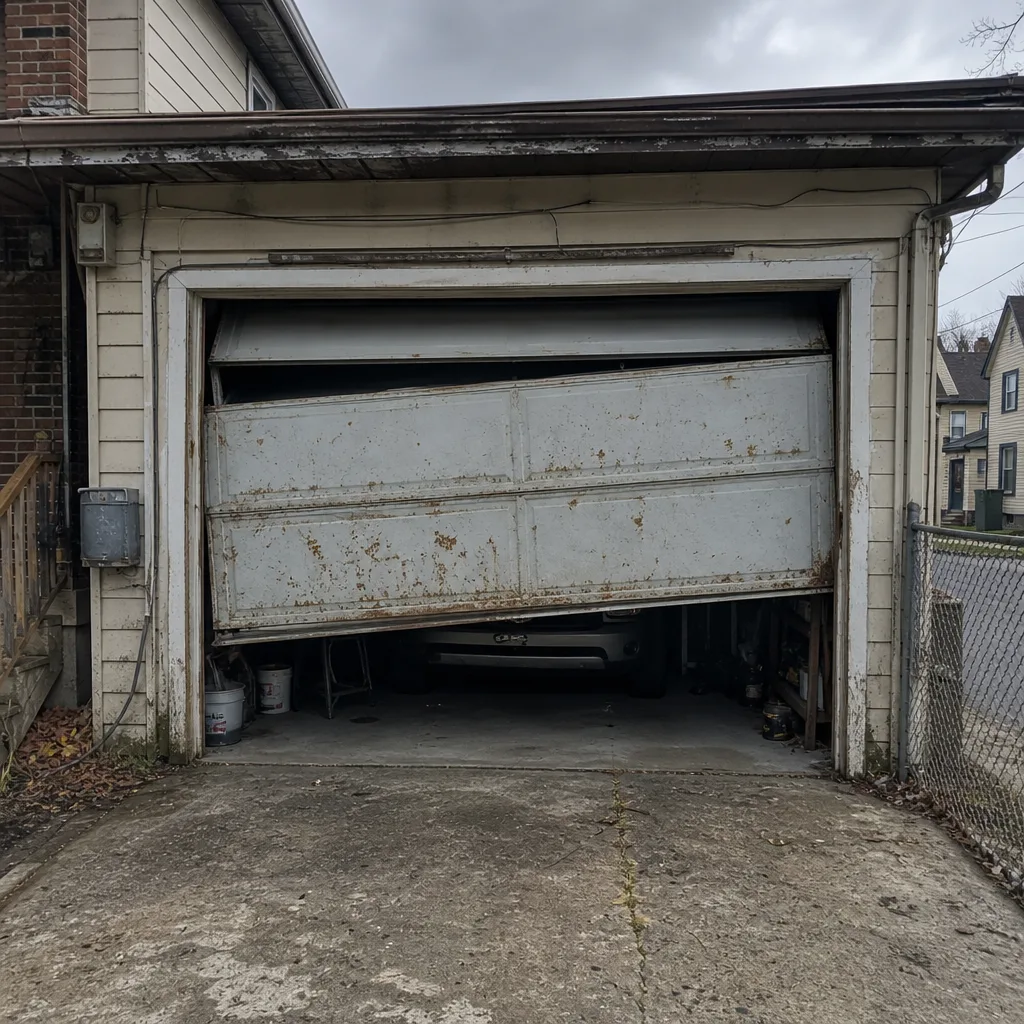 Before
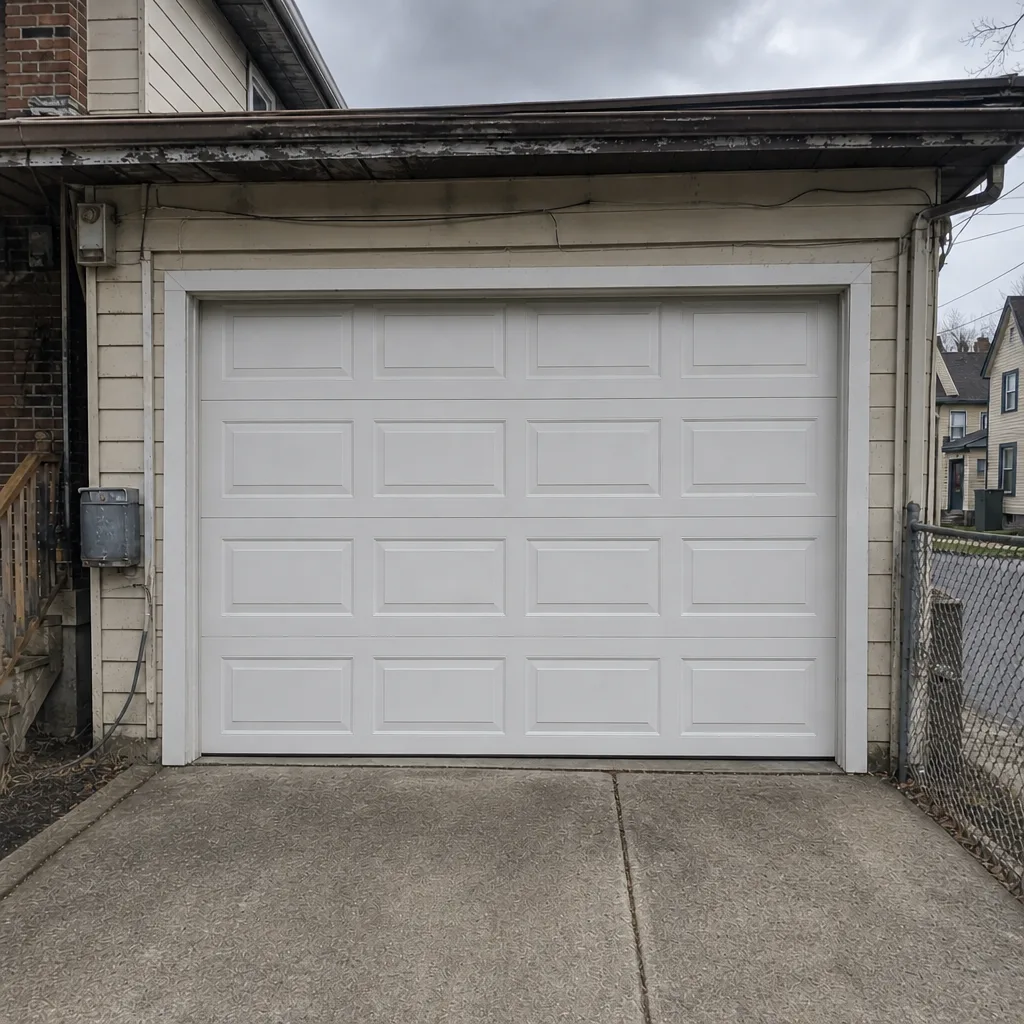 After
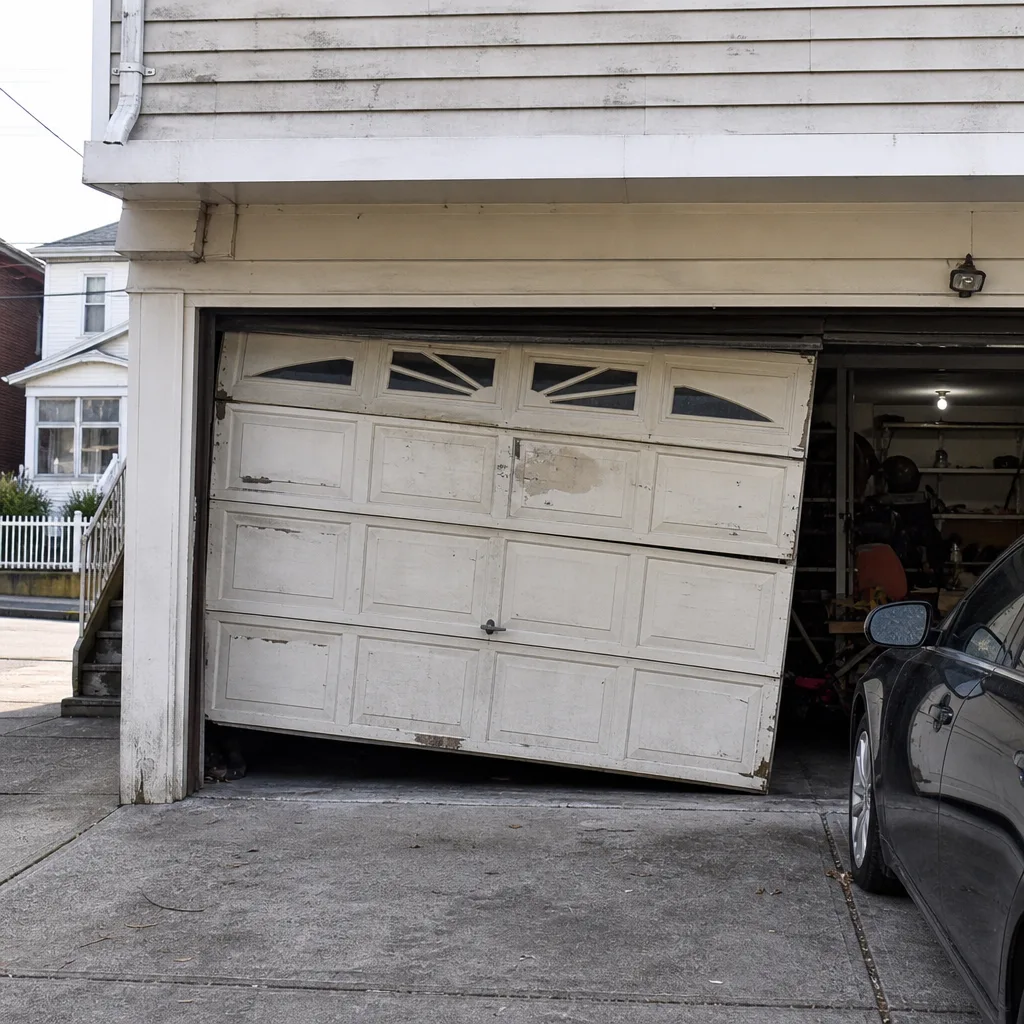 Before
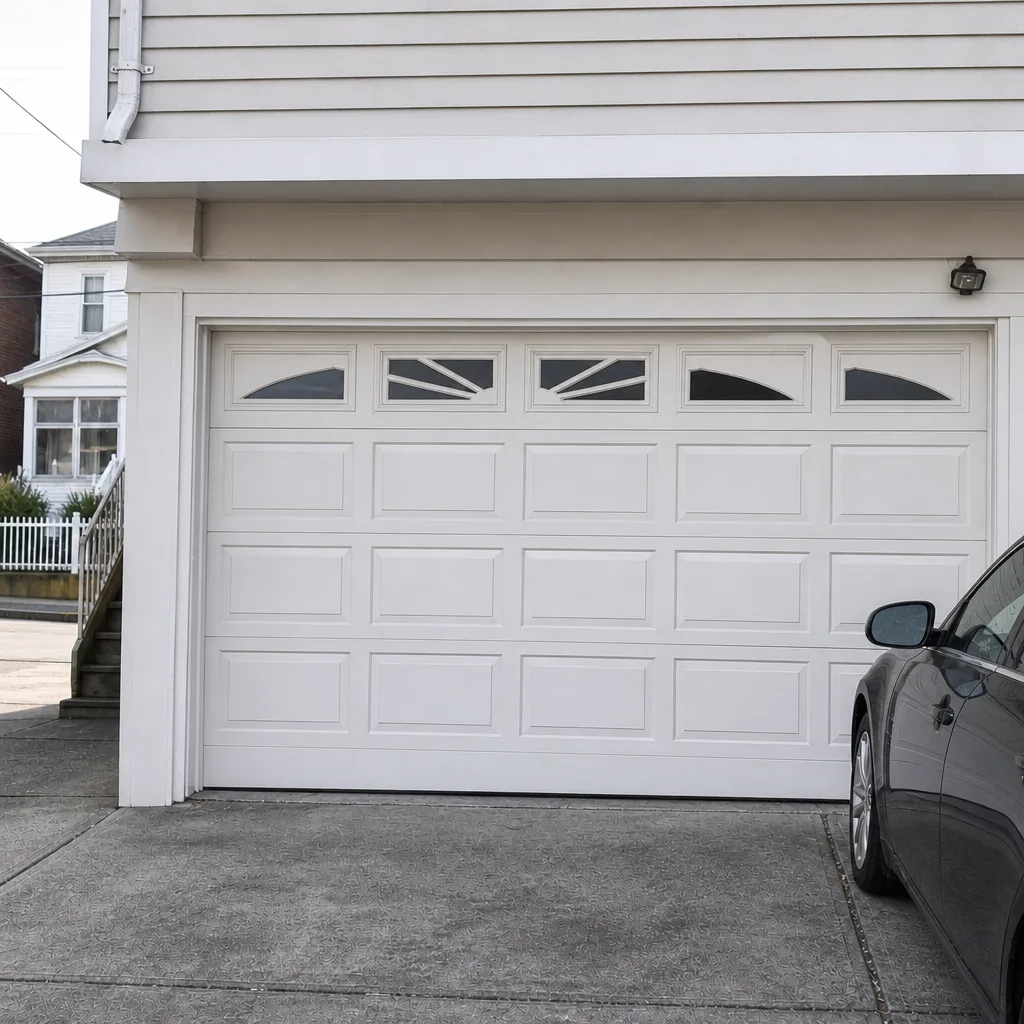 After
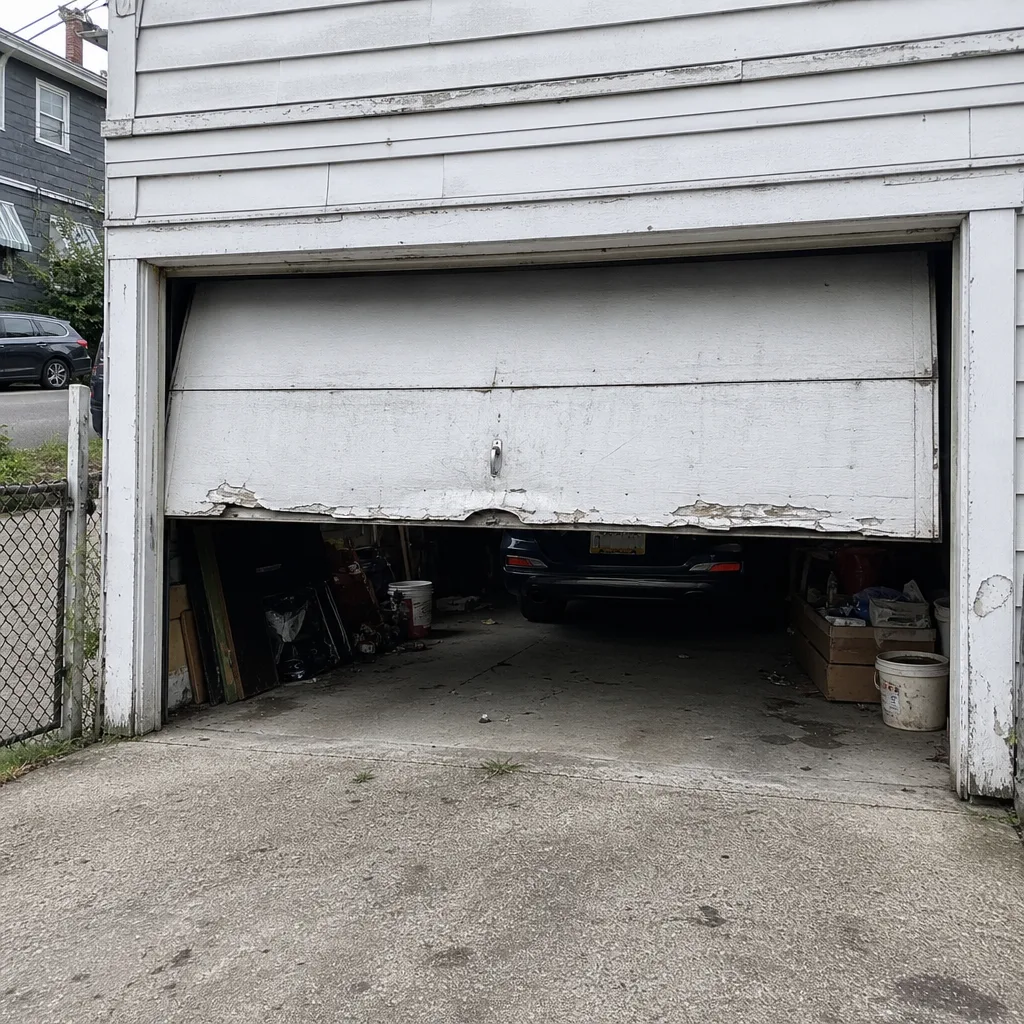 Before
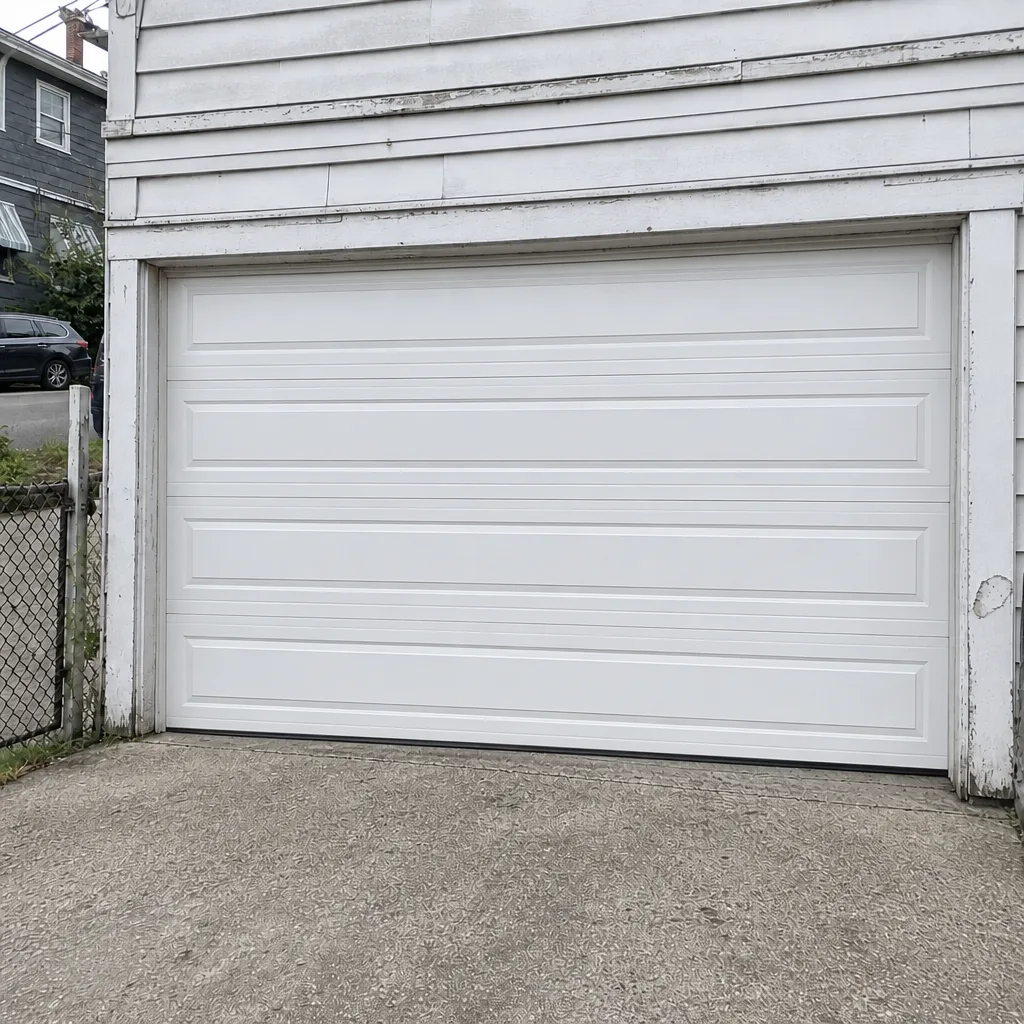 After
When to Call a Professional
Call a professional the moment you hear a bang from the springs, see a frayed or off-drum cable, notice the door hanging crooked, or find a track bent far enough that a roller has jumped out. Those are the “stop today” signs, and they involve stored energy or a door that could come down uncontrolled – don’t test them, don’t tap them, don’t try to adjust them. For the “schedule this week” signs, a slower door, grinding, popping, a failing balance test, or a bowed panel, book a visit before the symptom becomes a failure. And if the door is your only barrier between an attached garage and the living space and it won’t close, that’s urgent regardless of cause. Garage Door Repair Bergen-Lafayette offers free estimates in Bergen-Lafayette – call (844) 960-3603. We answer 24/7. Fast dispatch from 7am to 7pm, Sunday through Friday.
Frequently Asked Questions
A door that opens or closes slower than it used to is the most common early warning sign, and it usually points to declining spring tension. It’s easy to miss because nothing sounds wrong yet, but timing changes show up before grinding, popping, or a visible spring problem. If you’ve noticed it, call (844) 960-3603 for a free estimate.
A bang from the springs, a frayed or off-drum cable, a door hanging crooked, or a bent track that’s let a roller jump out all mean stop using the door today. A slower door, grinding, popping, or a bowed panel mean schedule service this week. When in doubt, keep the door closed and call – we’ll tell you over the phone which category you’re in.
No. Torsion and extension springs hold the full weight of the door under high tension, and a spring that lets go during a DIY repair can cause serious injury. This is the one part of a garage door system that should always go to a trained technician who has the right winding bars and the experience to do it safely. Call (844) 960-3603 for spring repair done safely.
Grinding is metal-on-metal contact, and it usually comes from worn rollers, dry bearings, or a worn drive gear in the opener. On an older chain-drive unit, grinding near the motor often means the drive gear is going. Grinding doesn’t resolve on its own and it wears down whatever’s making contact, so it’s worth diagnosing promptly. Call (844) 960-3603 for a free estimate.
First, check whether something is in the path of the safety sensors at the bottom of the tracks, and clean the sensor lenses. If the sensors are clear and the door still won’t close, it’s likely a travel limit, a force setting, or a logic board issue. Keep the door closed and call (844) 960-3603 – we answer 24/7 and dispatch from 7am to 7pm, Sunday through Friday.
No. We give you a written price before any work starts, and the written estimate is the price. We inspect the full system – springs, cables, tracks, rollers, hinges, panels, and the opener – so the estimate accounts for what’s actually wrong rather than a guess based on one symptom. The estimate is free, and nothing starts until you’ve agreed to it. Call (844) 960-3603.
The Bottom Line
Garage door warning signs are quiet before they’re loud. A door that’s a couple of seconds slower, a pop at the same point in travel, a scrape that only shows up in one season – those are the signals that give you time to act. The 90-second month” – the balance test, the listen test, the sight-line test, and the travel-time test – catches four of the most common failure precursors, and knowing the difference between “this week” and “stop today” keeps you from either ignoring a real problem or panicking over a scuff. Bergen-Lafayette’s older garages have their own set of signals, particularly extension springs, out-of-plumb tracks, and aging openers, and they’re worth checking on a schedule. When something fails one of the checks in this guide, call Garage Door Repair Bergen-Lafayette at (844) 960-3603 for a free estimate. We answer 24/7. Fast dispatch from 7am to 7pm, Sunday through Friday, closed Saturday.
Written by the team at Garage Door Repair Bergen-Lafayette.