
Last updated November 21, 2026
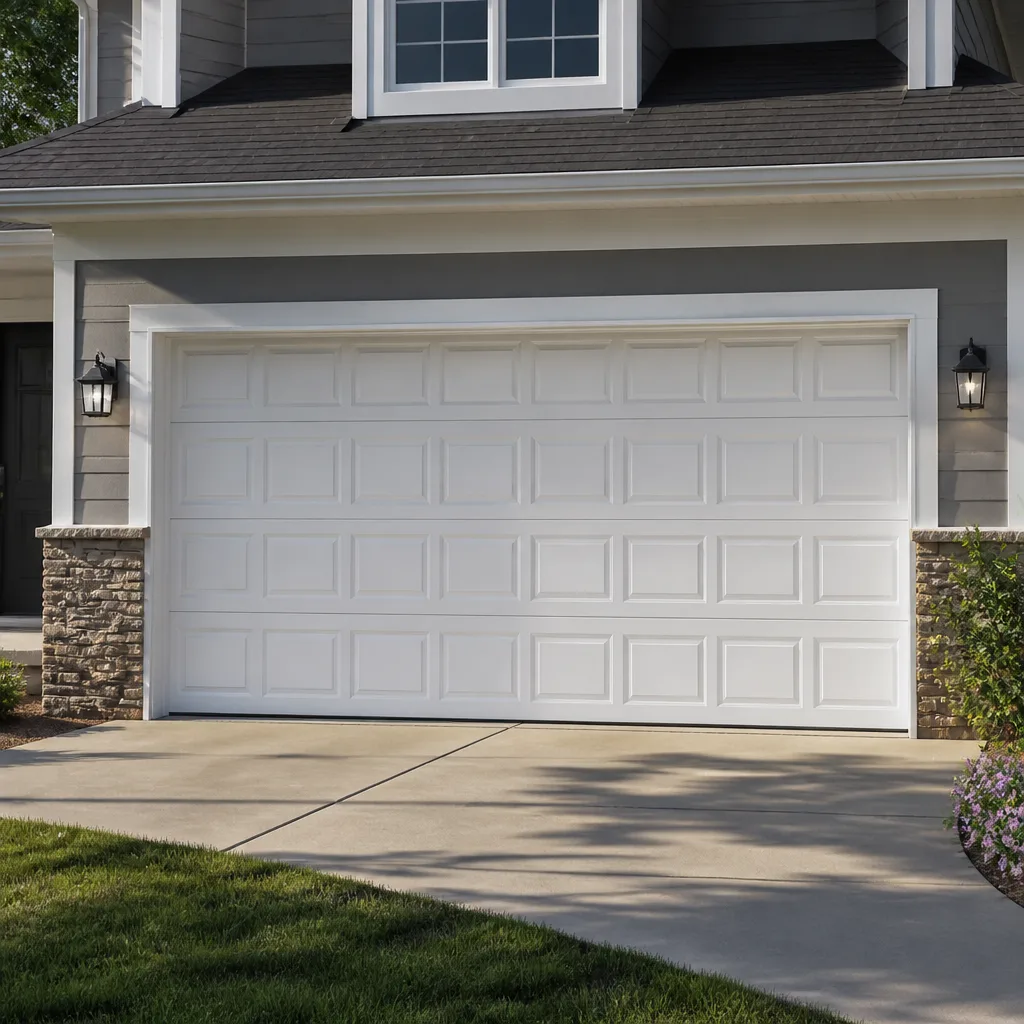 Raised-panel steel
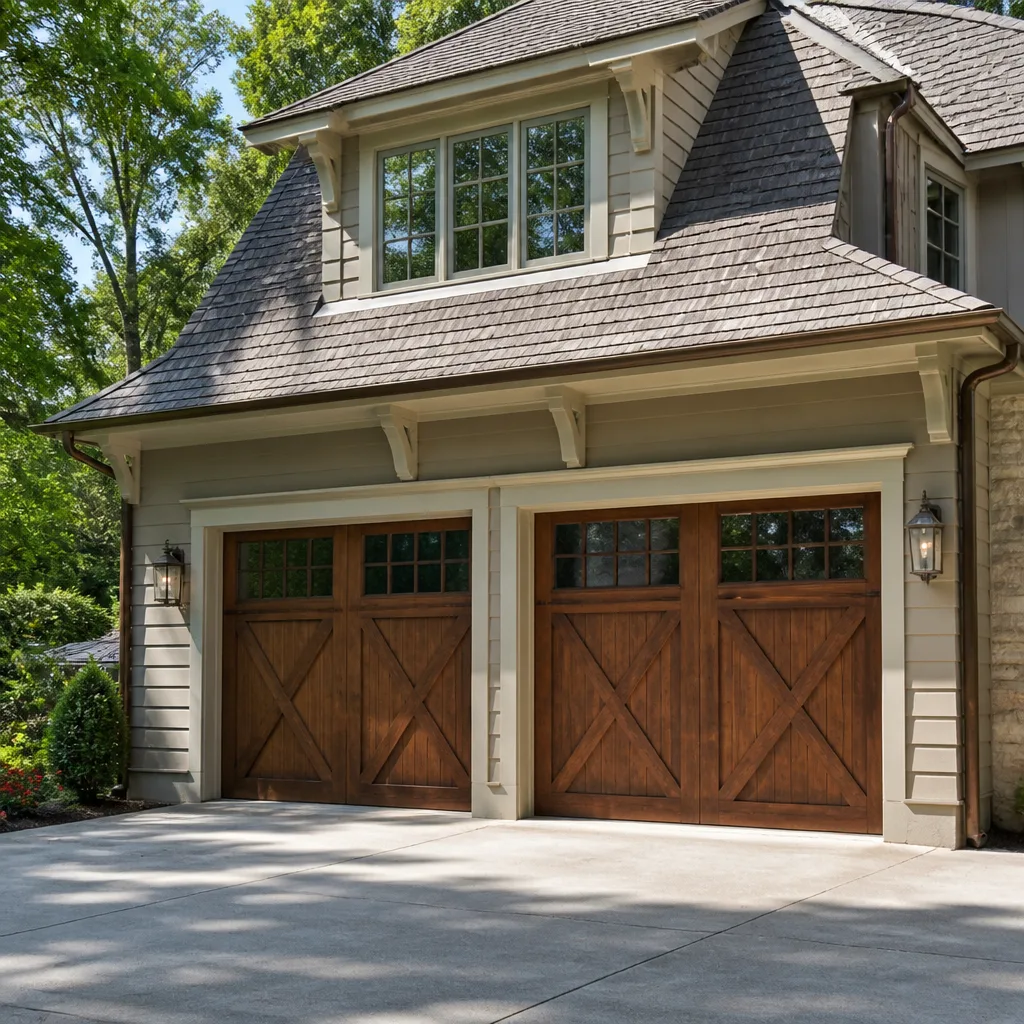 Carriage house
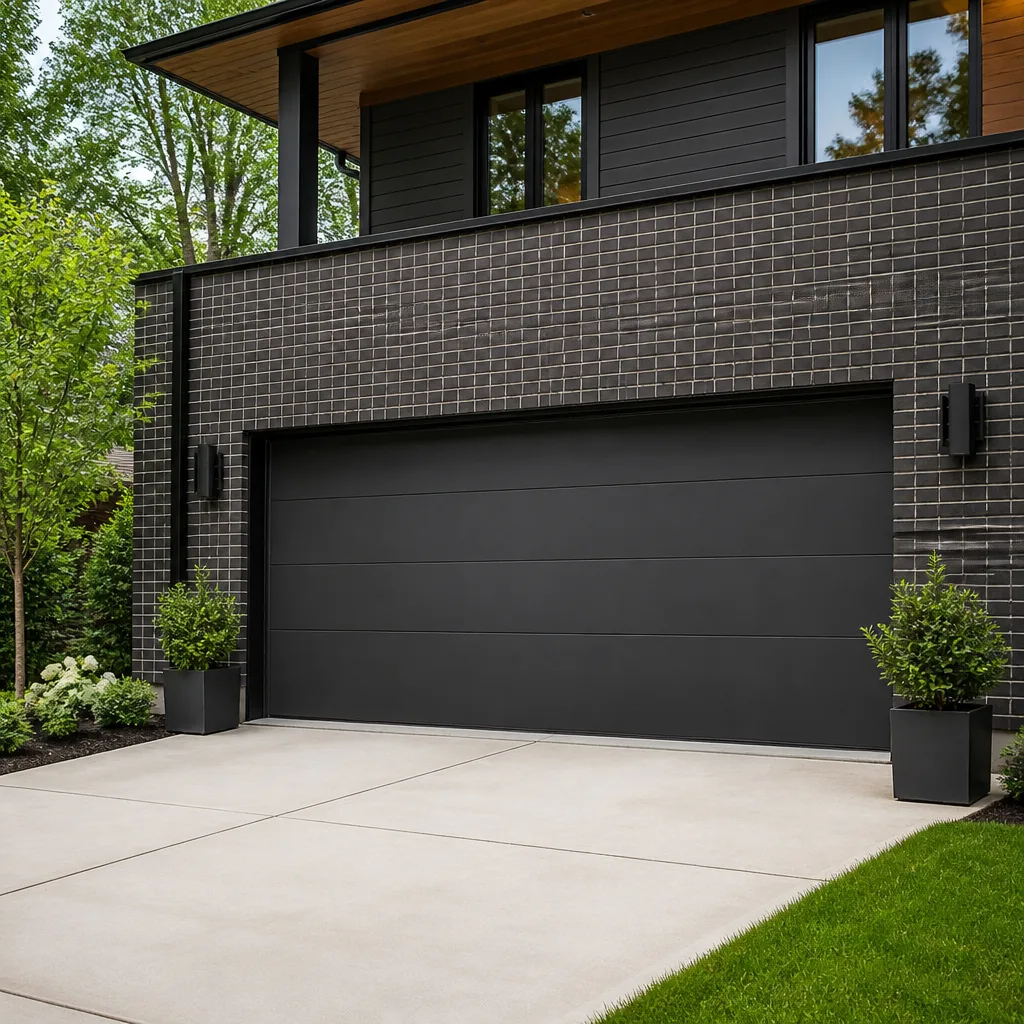 Modern flush
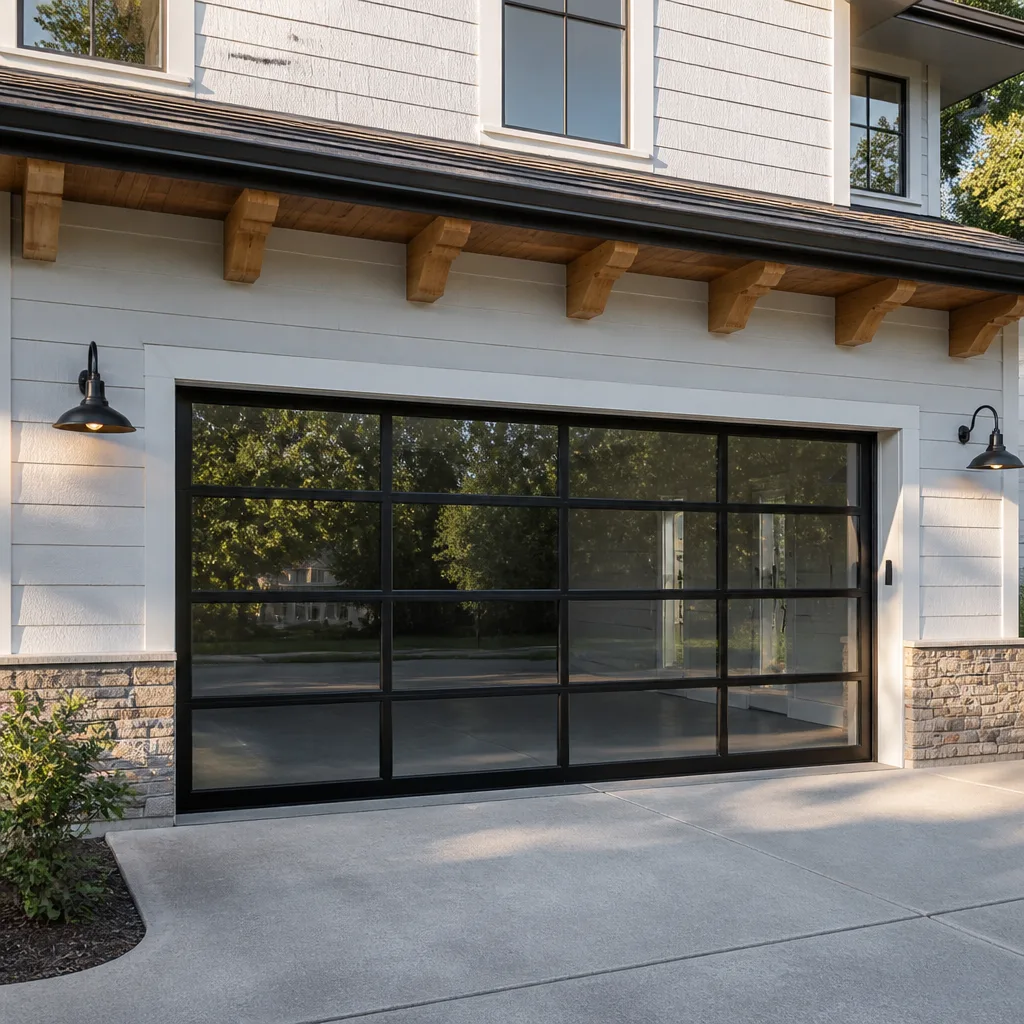 Full-view glass
 LiftMaster openers
 Chamberlain openers
Full 25-point door and opener safety check with every visit - springs, cables, rollers, tracks, and your LiftMaster or Chamberlain opener included
You get a price before we start. It does not change when the pro arrives.
Get your free estimateSeasonal Garage Door Care for Bergen-Lafayette: Year-Round Homeowner’s Guide
Bergen-Lafayette homeowners who do their garage door maintenance in spring are already six weeks behind. The damage from freeze-thaw cycles that started in late February is already set by the time March turns mild: the bottom seal has cracked, the weatherstripping has pulled loose at the corners, and the opener has been straining against a track that shifted when the ground moved. Spring is when you discover the problem, not when you prevent it. This guide walks through what each season in Bergen-Lafayette actually does to a garage door, why it happens, and which maintenance steps match each mechanism. You’ll finish knowing what to check, when to check it, and what genuinely needs a trained technician.
Quick Answer
In Bergen-Lafayette, garage door care runs on a four-season cycle: inspect and replace weatherstripping and bottom seals in late winter before the freeze-thaw window closes, adjust tracks and spring tension in summer as heat expansion causes binding, clear safety sensors and lubricate moving parts in fall before leaf debris triggers false reversals, and switch to cold-rated lubricant in winter so components don’t stiffen below freezing. Most of these checks take 20 minutes. Spring, cable, and opener repairs should go to a trained garage door specialist.
Styles & brands we work with
- Raised-panel steel
- Carriage house
- Modern flush
- Full-view glass
- LiftMaster openers
- Chamberlain openers
Table of Contents
- Why Bergen-Lafayette’s Climate Is Hard on Garage Doors
- Late Winter: The Inspection Window Most Homeowners Miss
- Spring: What to Do After the Thaw Settles
- Summer: Heat, Track Expansion, and Spring Tension
- Fall: Prepping Sensors and Seals for Leaf-Fall Season
- Winter: Cold-Weather Lubrication Protocol
- The 20-Minute Seasonal Task List
- Brand-Specific Notes: Clopay, Amarr, Wayne Dalton, Genie
Why Bergen-Lafayette’s Climate Is Hard on Garage Doors
Bergen-Lafayette sits in a part of New Jersey that gets genuine seasonal swings: cold winters with repeated freeze-thaw cycles, humid summers, and a fall season that drops a heavy load of leaves and debris. That combination puts specific stress on a garage door system, and it does so in a predictable order. Each component fails for a reason tied to the weather, not just to age.
Three mechanisms do most of the damage:
- Freeze-thaw cycling. Water gets into small gaps in weatherstripping and under the bottom seal, freezes overnight, expands, then thaws. Repeat that over a winter and rubber cracks, seals pull away from the door edge, and moisture works its way into the bottom section.
- Heat expansion. Metal tracks and door panels expand in summer heat. A track that fits perfectly in April can bind in July, and the opener has to work harder to move the door. Wood components swell with humidity at the same time.
- Debris loading. Fall leaves and grit collect around the bottom of the door and near the safety sensors. Debris in front of a sensor mimics an obstruction, and the opener reverses the door when it shouldn’t.
Understanding these three mechanisms is the whole point of seasonal care. When you know that freeze-thaw is what cracks a seal, you know to check the seal in late winter, not in May. When you know heat expansion causes binding, you know to look at track alignment and spring tension in the middle of summer. The sequence matters as much as the task.
Late Winter: The Inspection Window Most Homeowners Miss
Late winter is the right time to inspect weatherstripping and bottom seals in Bergen-Lafayette because that’s when the freeze-thaw damage is actively happening. By the time the weather turns mild, the cracks are already there. Getting eyes on the seals in February, while the cycles are still running, lets you catch a failure before water gets into the door’s bottom section.
What to check and why
- The bottom seal. Look for cracks, flat spots, and gaps between the seal and the floor. A seal that’s lost its flexibility lets cold air and moisture in. Run a hand along the bottom with the door closed; you shouldn’t feel drafts.
- Weatherstripping at the sides and top. Check for peeling, cracking, or sections that have pulled away from the frame. Freeze-thaw is the usual culprit at the corners, where water collects.
- The bottom section of the door. Look for bubbling paint, soft spots, or rust along the bottom edge. This is where moisture damage from a failed seal shows up first.
- The threshold. Water that pools at the threshold and refreezes does quiet damage over a winter. If the threshold is holding water, the seal job is only half done.
Replacing a bottom seal is a reasonable homeowner task if the door is in good shape and the seal is a standard slide-in type. Replacing full perimeter weatherstripping is fussier, especially on a wood frame that’s swelled and shrunk through the winter. If the frame itself is soft or the door bottom is damaged, that’s a repair question, not a maintenance one, and it’s worth getting an honest look before spring.
Late winter is also the time to listen to the door. A door that groans or hesitates in cold weather is telling you the lubricant has stiffened or a roller is dragging. Note the noise and where it comes from; it’s useful information for a spring tune-up or a service call.
Spring: What to Do After the Thaw Settles
Spring in Bergen-Lafayette is when you confirm what winter did. Once the ground has settled and the freeze-thaw cycles have stopped, do a full walk-around inspection of the whole system. This is the season for cleaning, testing, and deciding what needs repair before summer heat adds its own stress.
The spring inspection sequence
- Wash the door and tracks. Road grit and winter grime collect in the tracks and accelerate wear on the rollers. Wipe the tracks clean with a damp cloth; don’t hose them out.
- Test the balance of the door. Disconnect the opener (pull the release handle with the door closed), then lift the door halfway by hand. A well-balanced door stays where you put it. If it drops or rises on its own, the springs are out of adjustment.
- Test the safety reverse. Put a piece of wood flat on the floor in the door’s path and close the door. It should reverse on contact. Then test the photo-eye sensors by passing an object through the beam; the door should reverse.
- Check the rollers and hinges. Worn rollers make noise and cause the door to track poorly. Look for flat spots, cracks, or rollers that wobble in the hinge.
- Lubricate. Use a garage-door-rated lubricant on hinges, rollers, and the spring (never on the tracks; they stay clean and dry).
One caveat that matters: do not try to adjust the springs yourself. Torsion and extension springs are under extreme tension and can cause serious injury if handled wrong. A balance test tells you whether the springs need attention, but the adjustment or replacement itself belongs with a trained technician. This is one of the reasons a dedicated garage door repair visit in spring makes sense: a specialist can check the whole system, catch a failing spring before it breaks, and handle anything that needs more than a lubricant.
Spring is also when a door that’s been giving you trouble all winter is finally worth fixing. Cold weather makes small problems feel bigger, and homeowners sometimes wait out the season rather than deal with a door that’s stiff or noisy. Once it’s mild, get it looked at properly.
Summer: Heat, Track Expansion, and Spring Tension
Summer heat causes a specific set of garage door problems in Bergen-Lafayette: metal tracks and panels expand, wood components swell with humidity, and a door that ran smoothly in spring starts to bind, drag, or reverse for no obvious reason. The fix is usually a track adjustment and, sometimes, a spring tension adjustment to compensate for the expansion.
Why summer binding happens
A vertical track is anchored to the wall at a few points. When the metal expands in heat, the track can bow slightly out of alignment. The rollers then bind against the track, and the opener has to push harder to move the door. In a wood-framed door, humidity swells the panels, which can change how the door sits in the opening and put extra load on the springs.
Signs of summer binding:
- The door hesitates or jerks as it opens or closes.
- The opener motor sounds strained or runs longer than usual.
- The door reverses partway through a cycle without an obstruction.
- You can see a gap between a roller and its track, or the track looks bowed.
What a homeowner can do, and what needs a technician
You can check track alignment visually and clear any debris from the tracks. You can lubricate the hinges and rollers with a garage-door-rated lubricant. But track adjustment and spring tension adjustment are not homeowner tasks. Tracks need to be re-anchored and aligned with the right tools, and springs are under tension. If you suspect the door is binding because of alignment or tension, call a specialist. Trying to force a misaligned track or adjust a spring yourself is how people get hurt.
If your opener is struggling in summer, it could be a track problem, a spring problem, or an opener problem. A garage door opener repair call covers the opener side, but a good technician will check the whole door first. An opener that’s straining because of a mechanical problem isn’t an opener problem; replacing it won’t fix the underlying issue.
Fall: Prepping Sensors and Seals for Leaf-Fall Season
Fall is the season to prepare the opener’s safety sensors for leaf-fall, because debris is a leading cause of false-reversal failures. In Bergen-Lafayette, leaves and grit collect around the bottom of the door and in front of the sensors, and the opener reads that debris as an obstruction. The door goes back up instead of closing. This is the single most common cause of a door that “won’t close” in the fall.
Sensor prep checklist
- Find the sensors. They’re the two small units near the floor on each side of the door, one pointing at the other. One has a light that stays on when the beam is clear.
- Clear the path. Sweep leaves and grit away from both sensors. Check the area between them; a single leaf taped to the lens by wind can cause a false reversal.
- Wipe the lenses. A soft cloth removes dust and spider webs. Don’t use a wet rag on the electronics housing.
- Check alignment. The beam should hit the receiver squarely. If the light flickers as you move around, the sensors are misaligned or loose.
- Test the reverse. Pass an object through the beam; the door should reverse. Repeat after a week of leaf-fall to confirm nothing has drifted.
Fall is also the time to check the bottom seal again before the freeze-thaw season starts. A seal that’s showing wear in September will fail faster once the cycles begin. And if you’ve been putting off a repair, do it now: a door that’s working well going into winter is a door that’s less likely to leave you stuck in the cold. New doors installed in fall have time to settle before the freeze-thaw stress starts, which is one reason a garage door installation in September or October makes practical sense if the old door is at the end of its life.
If your opener has a battery backup, check it in fall too. It’s easy to forget, and it matters when the power goes out.
Winter: Cold-Weather Lubrication Protocol
Standard silicone spray gels below 20°F, which is exactly when you need the lubricant to work. In Bergen-Lafayette winters, that means the wrong lubricant turns a smooth door into a stiff one. The fix is a cold-weather-rated garage door lubricant, applied to the right parts, before the coldest stretch.
What to use and where
- Use a cold-weather-rated lubricant. Look for a product rated for low temperatures. Standard silicone spray is fine in summer but stiffens in cold. Ask your garage door supplier or a hardware store for a garage-door lubricant rated for cold weather.
- Apply to hinges, rollers, and the spring. These are the moving parts that stiffen. A light coat is enough; excess lubricant attracts dirt.
- Do not lubricate the tracks. Tracks stay clean and dry, even in winter. Lubricant in the tracks collects grit and causes binding.
- Lubricate before the first hard freeze. Applying lubricant to cold, stiff parts doesn’t work as well as applying it before the cold sets in.
Winter is also when you’ll notice a door that’s stiff, noisy, or slow. If a door that ran fine in October suddenly struggles in January, the lubricant has stiffened or a component has contracted. Re-lubricate with a cold-rated product first. If the problem continues, or if the door is binding or failing to reverse, that’s a repair call. Do not try to adjust springs or cables in cold weather yourself; the tension is high and the parts are stiff. If a door fails in winter, call; we answer 24/7, with fast dispatch from 7am to 7pm, Sunday through Friday.
The 20-Minute Seasonal Task List
This is the season-indexed list for homeowners who want thoroughness without a full afternoon. Each season’s tasks fit in about 20 minutes. Do them in the order shown and you’ll catch most problems before they become repairs.
Late winter (February)
- Inspect the bottom seal for cracks and drafts (5 minutes).
- Check side and top weatherstripping at the corners (5 minutes).
- Look at the bottom section of the door for water damage (3 minutes).
- Listen for noise and note where it comes from (5 minutes).
Spring (April)
- Wash the door and wipe the tracks (5 minutes).
- Test the balance of the door with the opener disconnected (3 minutes).
- Test the safety reverse and sensors (5 minutes).
- Inspect rollers and hinges for wear (4 minutes).
- Lubricate hinges, rollers, and spring (3 minutes).
Summer (July)
- Watch the door open and close for binding or hesitation (3 minutes).
- Check track alignment visually and clear debris (5 minutes).
- Re-lubricate hinges and rollers (3 minutes).
- Test the safety reverse (5 minutes).
Fall (October)
- Sweep leaves away from the sensors and door bottom (3 minutes).
- Wipe sensor lenses and check alignment (5 minutes).
- Test the reverse (3 minutes).
- Check the bottom seal again before freeze season (3 minutes).
- Check the opener’s battery backup, if it has one (3 minutes).
Early winter (December)
- Apply cold-weather-rated lubricant to hinges, rollers, and spring (10 minutes).
- Test the reverse and listen for stiffness (5 minutes).
- Clear any debris from the tracks (5 minutes).
If any of these checks turns up a problem you can’t solve with a cloth or a lubricant, stop there. A stiff spring, a misaligned track, or a sensor that won’t align is a job for a specialist. The 20-minute list is about catching problems early, not about doing repairs yourself.
Brand-Specific Notes: Clopay, Amarr, Wayne Dalton, Genie
Seasonal care looks the same in broad strokes across brands, but specific models have specific quirks. A few notes from the doors and openers we work on most in Bergen-Lafayette:
- Clopay doors. Many Clopay models use a specific bottom seal design. When you replace a seal, use the correct profile for your door. A universal seal that doesn’t fit the bottom section can leave gaps that freeze in winter.
- Amarr doors. Amarr builds steel and wood-look doors that respond well to seasonal care, but wood-look panels can hold moisture at the bottom if the seal fails. Pay attention to the bottom section in late winter.
- Wayne Dalton doors. Some Wayne Dalton models use a torsion system with specific spring configurations. Spring adjustment and replacement on these should only be done by a technician familiar with the brand, because the tension is high and the parts are specific.
- Genie openers. Genie openers have their own sensor and reversal behavior. If a Genie opener is reversing for no reason in fall, sensor debris and alignment are the first things to check, then the opener’s own settings.
Brand familiarity matters at maintenance time because it tells you which parts to order and which quirks to expect. If you’re not sure of your door or opener brand, check the label on the opener housing and the sticker on the door’s bottom section. When a part needs replacing, matching the brand and model means the part fits and the warranty stays intact. A universal part that “should work” is where seasonal maintenance turns into a repair.
Common Mistakes to Avoid
- Doing maintenance in spring instead of late winter. In Bergen-Lafayette, freeze-thaw damage is already set by the time spring arrives. Inspect seals and weatherstripping in February, while the cycles are happening, not in April.
- Using standard silicone spray in winter. Silicone gels below 20°F, which makes the door stiff exactly when you need it to work. Use a cold-weather-rated lubricant in winter and re-apply before the first hard freeze.
- Lubricating the tracks. Tracks stay clean and dry. Lubricant in the tracks collects grit and causes the binding you’re trying to prevent.
- Adjusting springs yourself. Torsion and extension springs are under extreme tension. A balance test tells you if the springs need attention; the adjustment itself is a job for a trained technician.
- Ignoring sensor debris in fall. Leaves and grit in front of the sensors are the leading cause of a door that “won’t close” in fall. Clear the sensor path every week during leaf-fall.
- Assuming a struggling opener is an opener problem. In summer, a strained opener is often telling you the track is binding or the springs are out of balance. Replacing the opener won’t fix a mechanical problem.
- Replacing a bottom seal with the wrong profile. A universal seal that doesn’t match your door’s bottom section can leave gaps that freeze in winter. Match the season to the part.
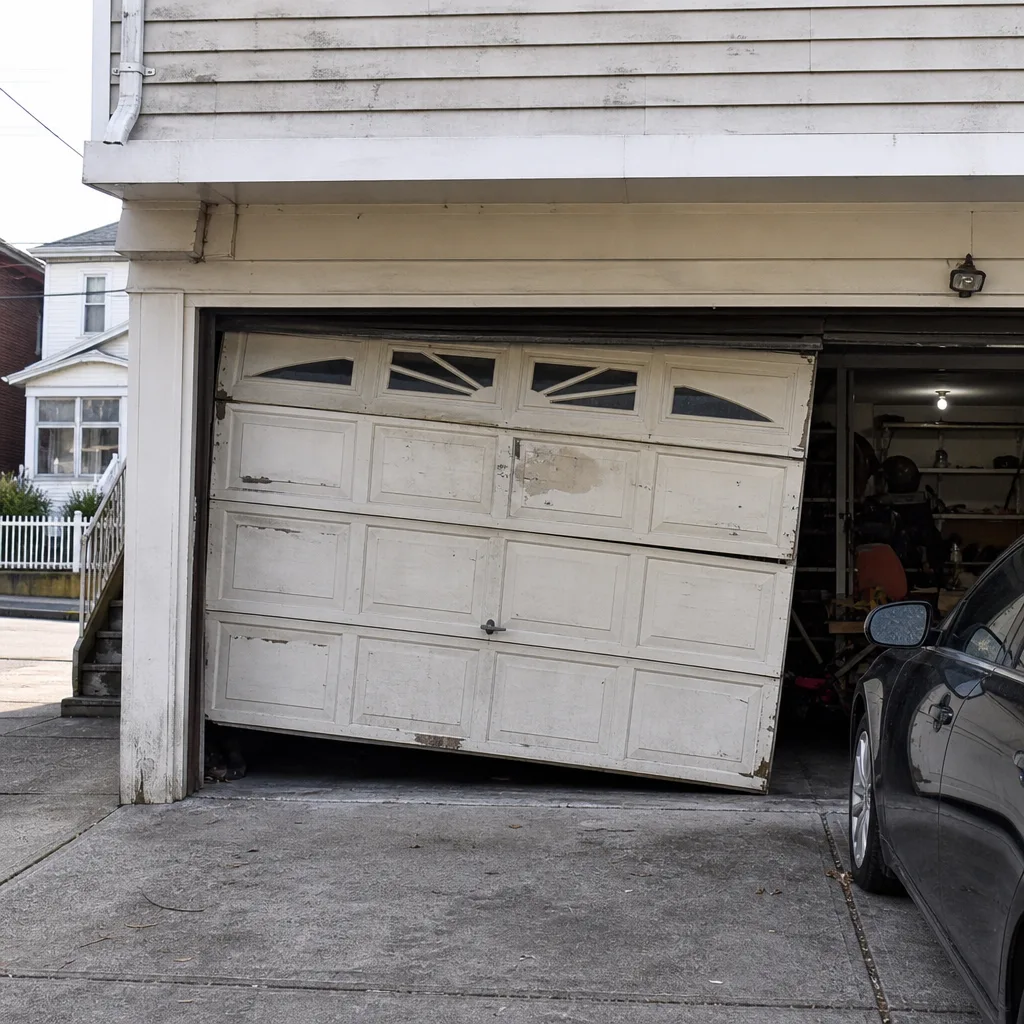
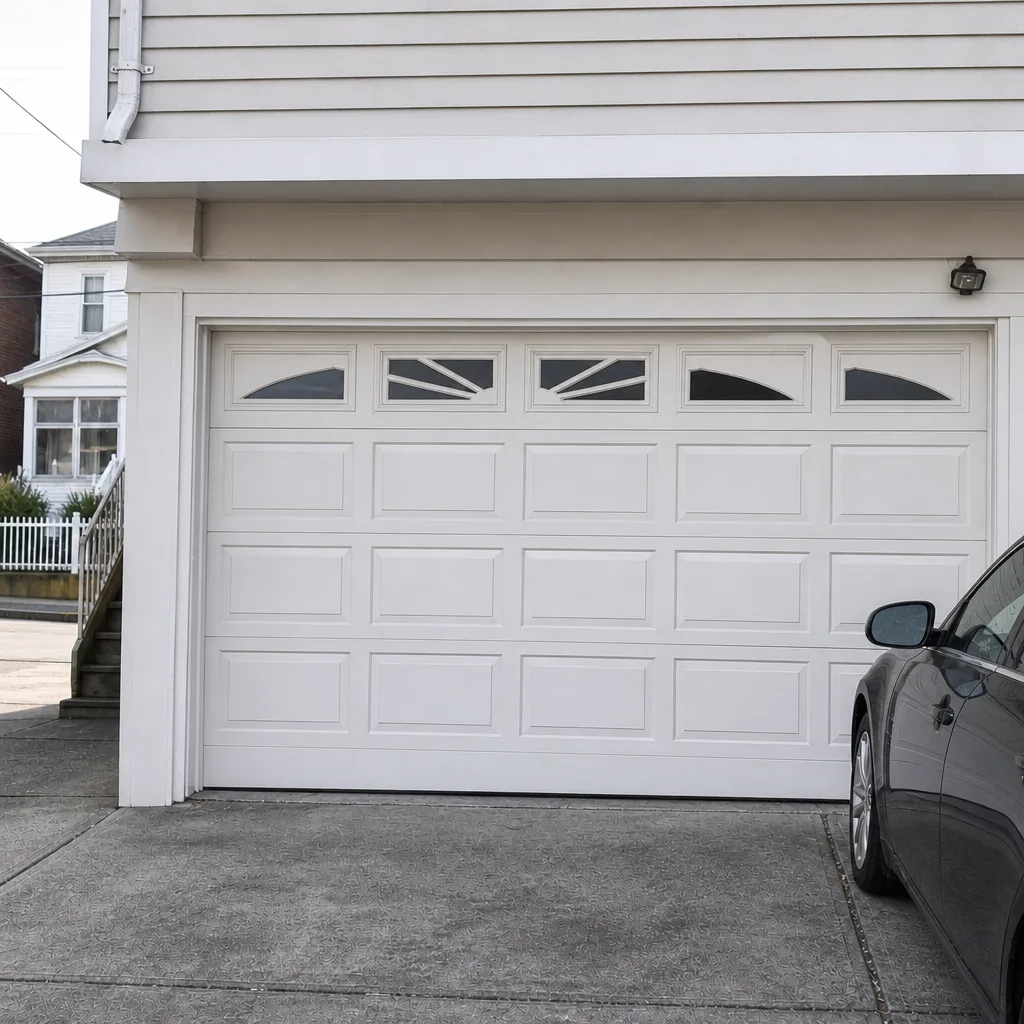
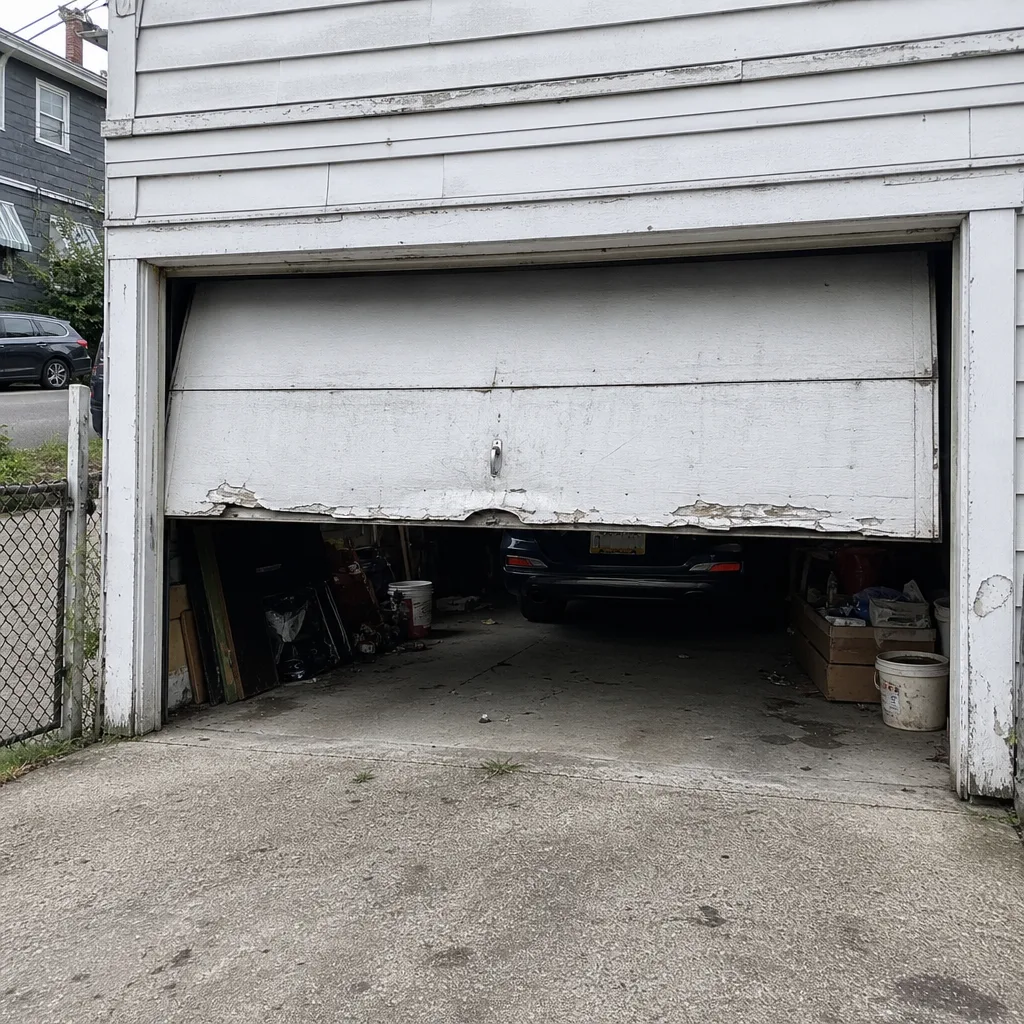
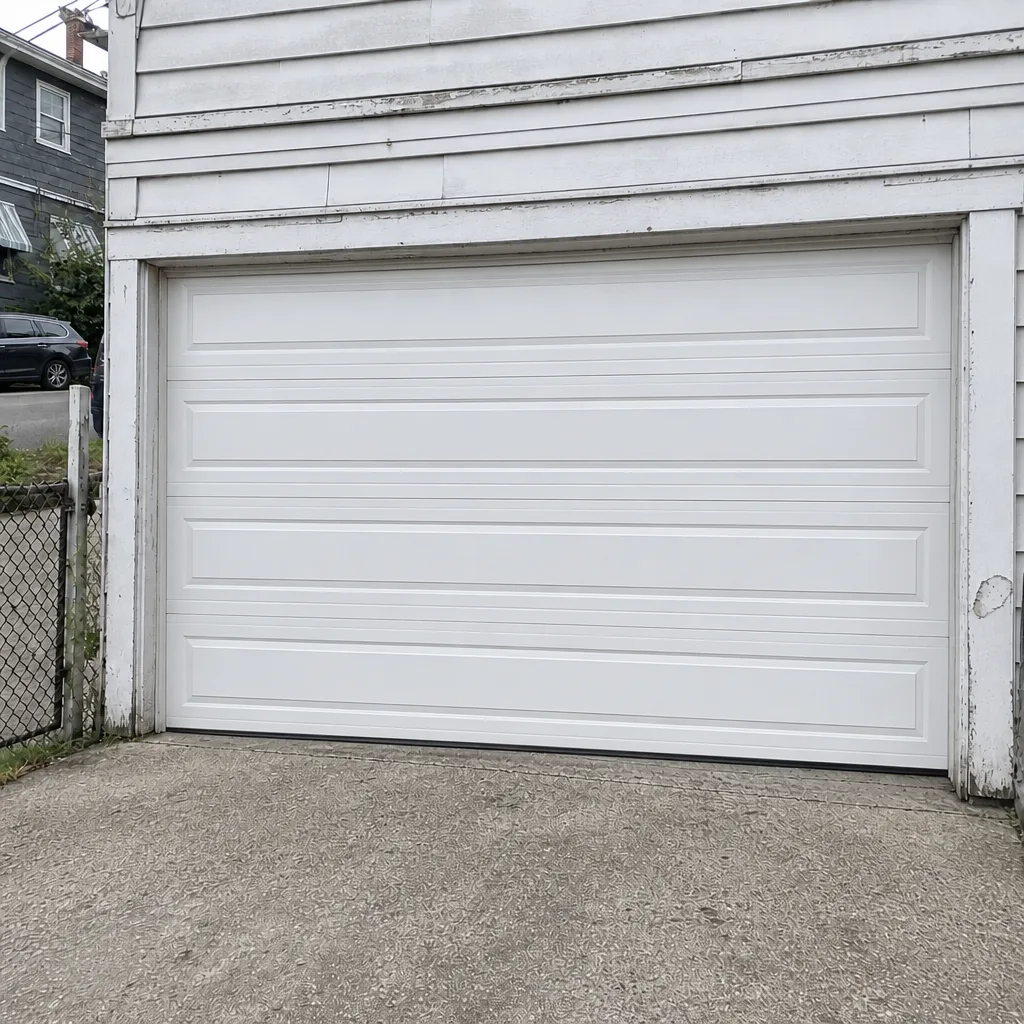
See the difference
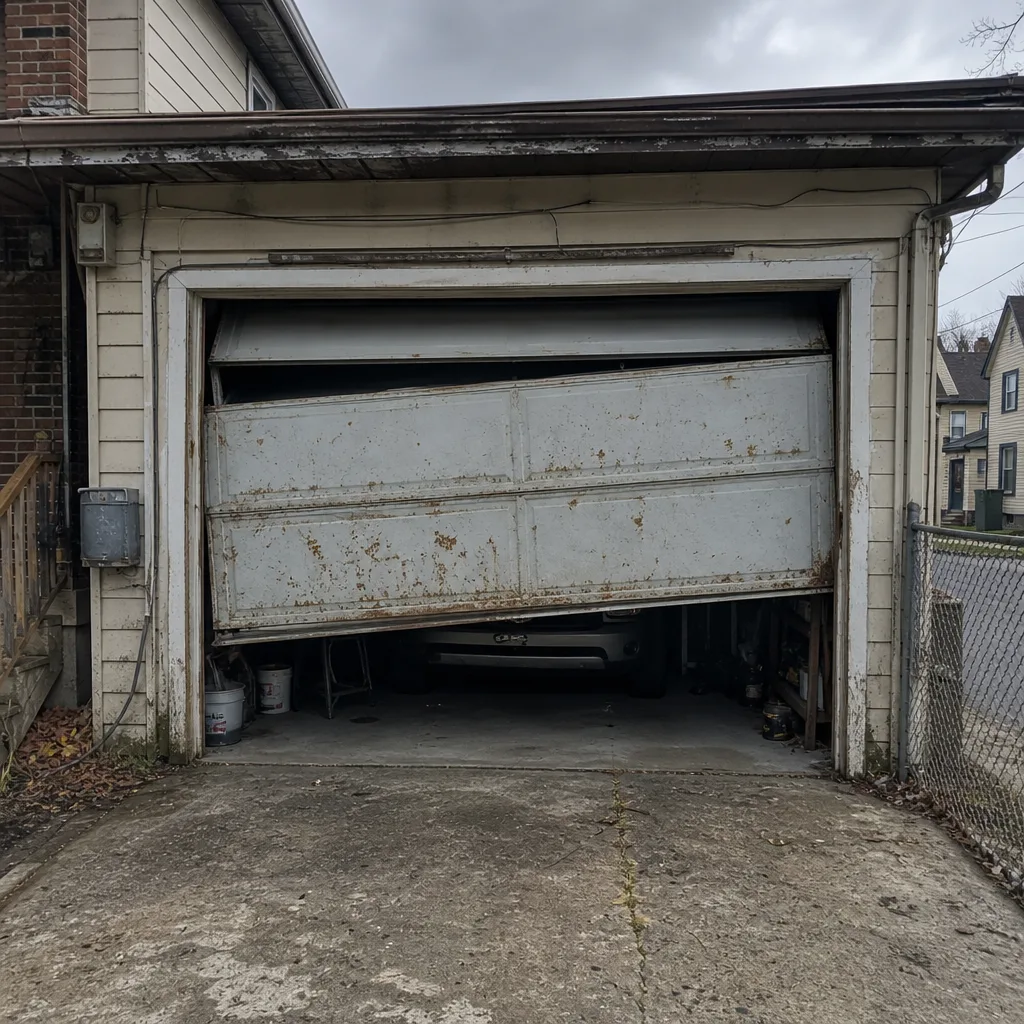 Before
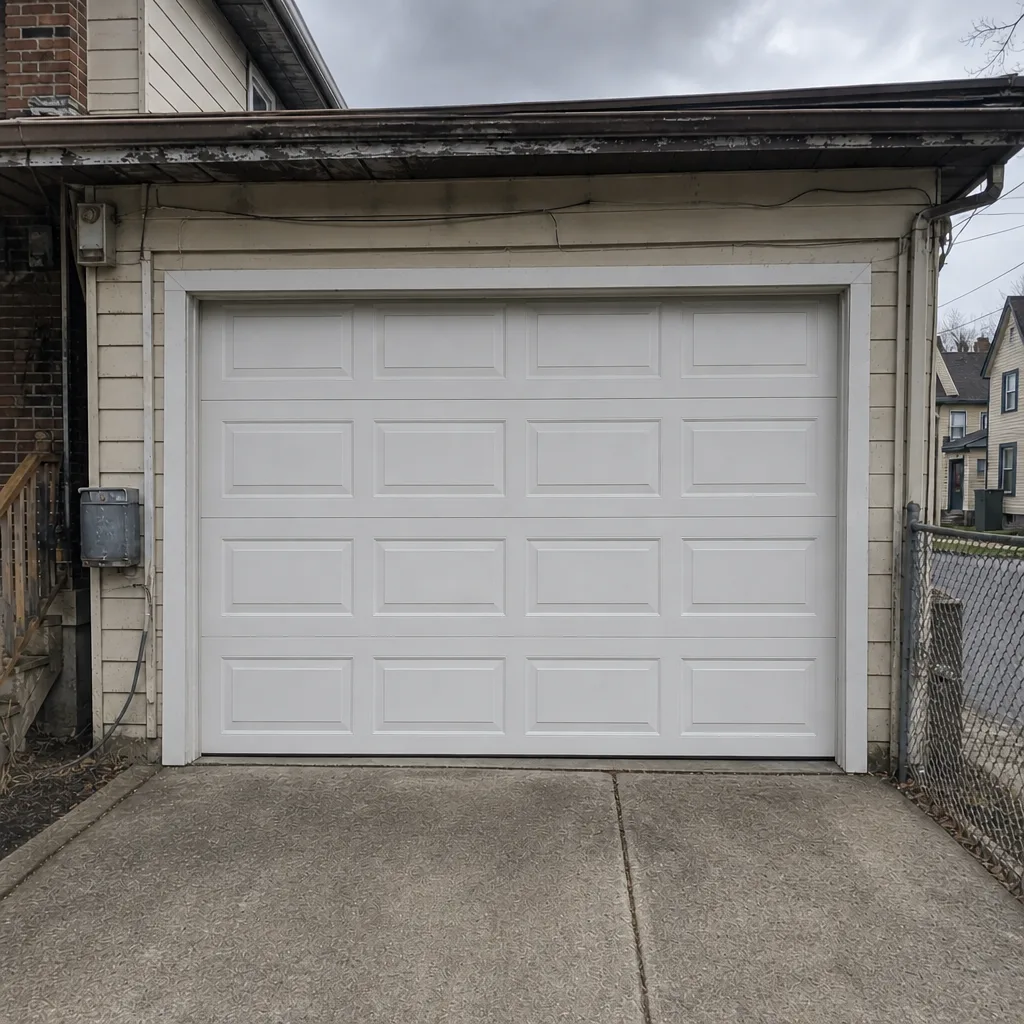 After
 Before
 After
 Before
 After
When to Call a Professional
Some seasonal tasks are homeowner work: clearing debris, wiping sensors, lubricating hinges, testing the reverse. Other issues need a trained garage door specialist. Call a professional if you notice a broken spring, a frayed or loose cable, a track that’s bent or badly misaligned, a door that binds or reverses for no reason you can find, or an opener that’s straining or failing to respond. Spring and cable work carries real injury risk and should always be handled by a technician. If your door is more than a repair job, a specialist can tell you whether it needs a panel, a full door, or a new opener.
Garage Door Repair Bergen-Lafayette offers free estimates in Bergen-Lafayette – call (844) 960-3603. We work on LiftMaster, Chamberlain, Genie, Clopay, Amarr, Wayne Dalton, Craftsman, and Raynor systems, and our technicians have up to 12 years of experience with the quirks of each. Spring replacement is a named core service, done safely, not subcontracted. If your door fails in winter, we answer 24/7 with fast dispatch from 7am to 7pm, Sunday through Friday.
Frequently Asked Questions
Four times a year, timed to the seasons. Inspect seals and weatherstripping in late winter, do a full check in spring, watch for binding in summer, and prep sensors and seals in fall. Each season’s tasks take about 20 minutes, and the timing matches the specific damage each season causes.
Because freeze-thaw damage is actively happening in late winter. Water gets into small gaps in the seal, freezes, expands, and cracks the rubber. Checking in February lets you catch the failure before spring, when the damage is already set. A seal that’s cracked in February will let moisture into the bottom section by April.
It’s usually neither on its own; it’s heat expansion in the tracks or door panels. Metal expands in summer heat, and a track that fit in April can bind in July. The fix is a track adjustment and, sometimes, a spring tension adjustment to compensate. Call a specialist to check both; replacing the opener won’t fix a mechanical problem.
Most likely, debris in front of the safety sensors. In leaf-fall season, leaves and grit collect around the sensors, and the opener reads them as an obstruction. Sweep the sensor path and wipe the lenses first. If the door still reverses, the sensors may be misaligned or the opener needs a service call.
A cold-weather-rated garage door lubricant, not standard silicone spray. Silicone gels below 20°F, which makes the door stiff. Apply it to hinges, rollers, and the spring before the first hard freeze, and never lubricate the tracks; they stay clean and dry.
No. Torsion and extension springs are under extreme tension and can cause serious injury if handled incorrectly. You can test the door’s balance with the opener disconnected, but adjustment and replacement belong with a trained technician. In Bergen-Lafayette, call (844) 960-3603 for spring work – estimates are free.
The Bottom Line
Bergen-Lafayette’s seasons stress a garage door in a specific order: freeze-thaw cracks seals in late winter, heat expands tracks in summer, and leaf debris triggers false reversals in fall. Match each maintenance task to the mechanism causing the damage and you’ll catch most problems before they become repairs. The 20-minute seasonal list covers the homeowner-safe work. Springs, cables, tracks, and opener repairs go to a specialist. Our technicians have up to 12 years of experience across the major brands, and we handle repair, installation, opener service, emergency calls, and spring replacement as a core service. Call (844) 960-3603 for a free estimate. We answer 24/7.
Written by the team at Garage Door Repair Bergen-Lafayette.