
Last updated November 21, 2026
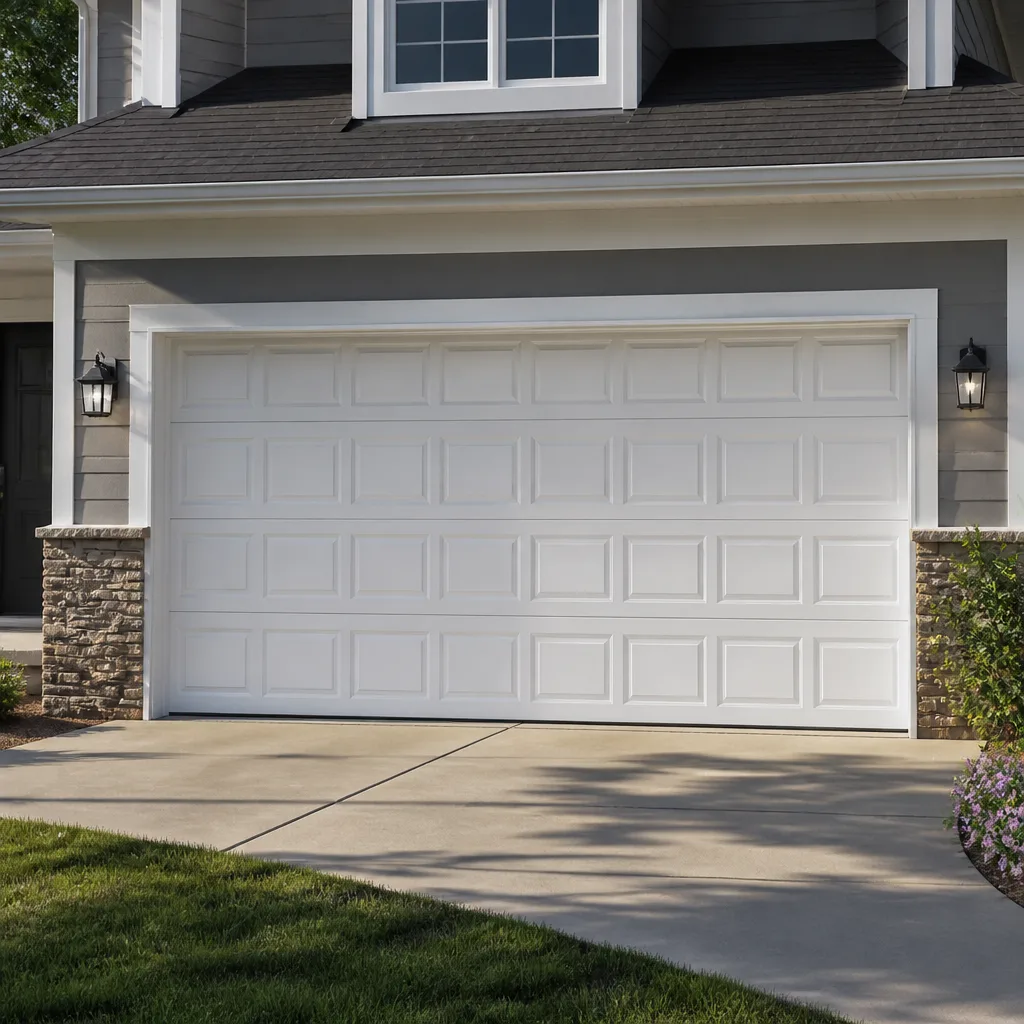 Raised-panel steel
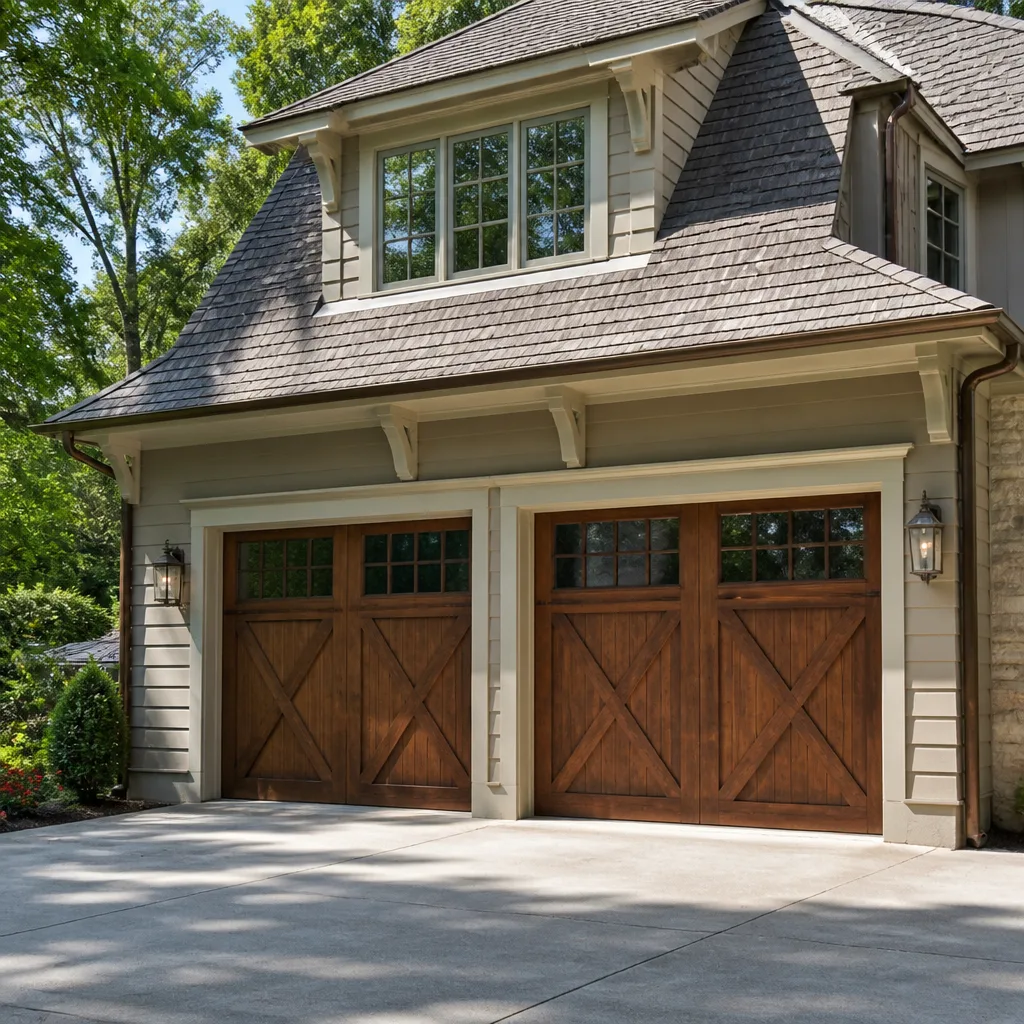 Carriage house
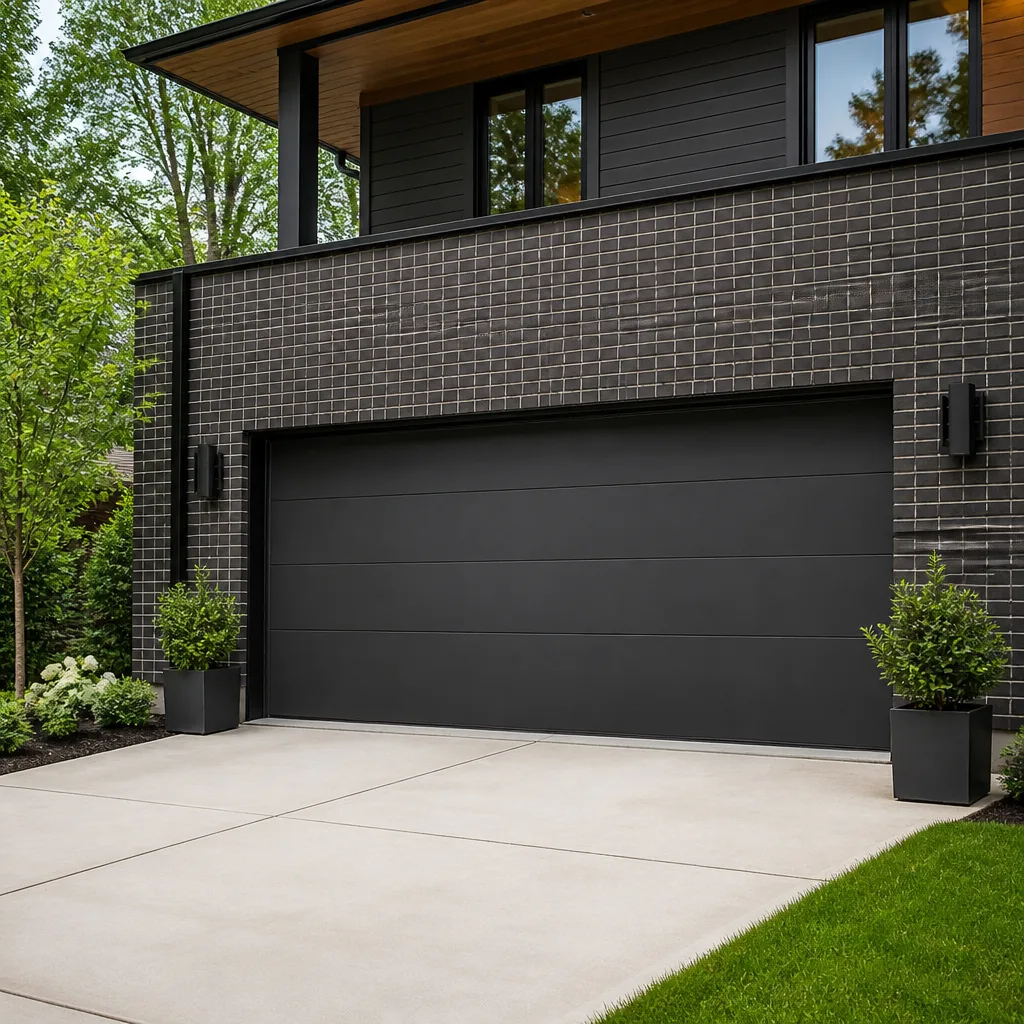 Modern flush
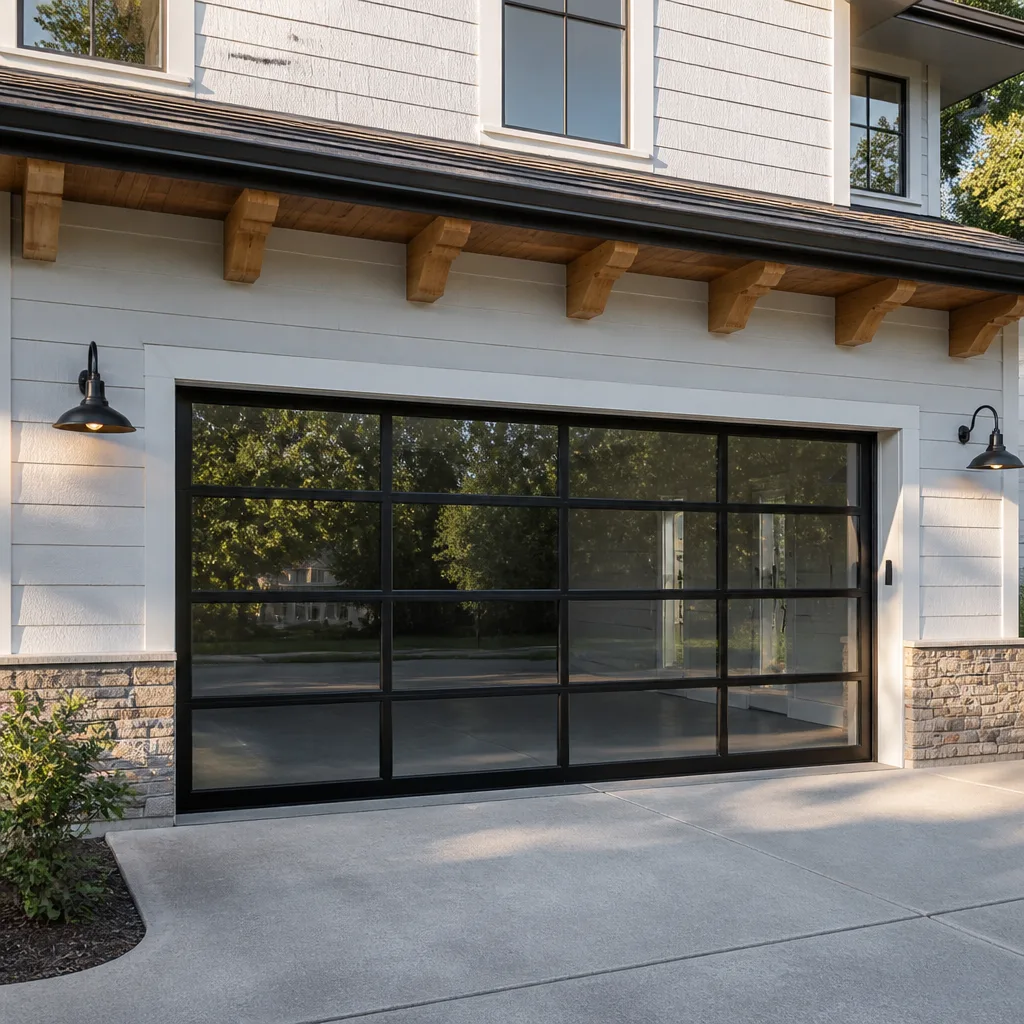 Full-view glass
 LiftMaster openers
 Chamberlain openers
Full 25-point door and opener safety check with every visit - springs, cables, rollers, tracks, and your LiftMaster or Chamberlain opener included
You get a price before we start. It does not change when the pro arrives.
Get your free estimateGarage Door Emergency Preparedness Guide for Bergen-Lafayette Homes
Most garage door emergencies aren’t caused by the door. They’re caused by the fact that nobody in the house has ever touched the manual release. Think about the first time you’d pull that cord: probably during a blackout, in the dark, holding a flashlight in your teeth, with somewhere you need to be. The mechanism isn’t complicated, but unfamiliar things get fumbled under pressure, and fumbling a release on a heavy panel is how people get hurt. This guide fixes that. You’ll learn the release procedure for the opener models most common on Bergen-Lafayette blocks, how to secure a door stuck open overnight, what to inspect after a Hudson County storm, and the two-minute prep you can do this week so the next outage doesn’t catch you cold.
Quick Answer
Garage door emergency readiness in Bergen-Lafayette comes down to three things: knowing how to disengage your specific opener by hand, knowing which failures make the door unsafe to move at all, and having a way to secure an open door overnight without damaging the panels. Do all three before the next nor’easter or power cut, and a bad night becomes an inconvenience instead of a hazard. The rest of this guide walks through each piece in the order you’d actually need it.
Styles & brands we work with
- Raised-panel steel
- Carriage house
- Modern flush
- Full-view glass
- LiftMaster openers
- Chamberlain openers
Table of Contents
- Why Bergen-Lafayette Homeowners Get Caught Off Guard
- The Manual Release: What Actually Happens When You Pull the Cord
- Release Procedure by Opener Brand
- When the Door Is Stuck Open Overnight
- Post-Storm Inspection After a Nor’easter
- Bent Track or Broken Spring: Safe to Operate or Stay Shut?
- The Two-Minute Emergency Prep Checklist
- When to Call a Professional
Why Bergen-Lafayette Homeowners Get Caught Off Guard
Bergen-Lafayette is a neighborhood of attached rowhouses, narrow driveways and detached garages tucked behind and between buildings. That layout shapes what a garage door failure actually means here. On a block where your garage faces an alley or a rear lot, a door stuck open overnight is a security question, not just a parking question. There’s no long driveway to hide behind and no side yard to buffer the opening from the street.
The housing stock adds to it. Many garage doors in Bergen-Lafayette are attached to older structures where the garage was carved out of a basement level, which means low headroom, tight clearances and opener installations that were fitted to work rather than fitted to be serviced. When something fails, the space around the door is cramped and the release hardware can be awkward to reach.
Then there’s the weather. Hudson County sits in the path of nor’easters and the high-wind events that trail behind them. Power outages during those storms are common, and an outage means your automatic opener is now a dead weight on a door you may need to open by hand. Most homeowners have never rehearsed that. The first attempt happens in the dark, under time pressure, and that’s exactly the wrong moment to learn the mechanism.
We’ve seen this pattern often enough to know it’s not carelessness. It’s just that the door works every day until it doesn’t, and nobody thinks about the manual release until they need it. The fix takes minutes, and it’s the reason for this guide.
The Manual Release: What Actually Happens When You Pull the Cord
Pulling the red release cord disconnects the door from the opener’s drive system so the door can be moved by hand. What most people don’t realize is that once it’s disconnected, the door’s weight is held entirely by the springs and by you. If a spring is broken, the door may drop. If the door is heavy and the springs are tired, it may come down faster than you expect.
That’s why the sequence matters more than the pull itself. Here’s the order that keeps you out of trouble:
- Close the door first if it’s open and the opener still works. Releasing a door that’s halfway up puts the full weight on the springs and on you at the same time.
- Stand to the side, not underneath. Reach for the cord from beside the door, never from directly below the bottom panel.
- Pull straight down and let the trolley separate. You should hear or feel it disengage. If it won’t release, don’t force it; the carriage may be under tension.
- Test the weight with one hand before lifting. A door that should lift easily with one hand but feels heavy is telling you something is wrong with the springs.
- Lift slowly and guide, don’t shove. Let the door travel up its tracks at a steady pace and stop if it binds.
One more thing worth knowing: opening the door by hand doesn’t recharge anything. When power returns, the opener won’t reconnect until you re-engage the trolley, usually by running the opener and letting the carriage catch, or by pulling the cord in the opposite direction depending on the model. Check your owner’s manual for the re-engage step before you need it. For anything involving the opener’s electronics or a door that won’t respond once power is back, our garage door opener repair page covers the diagnostics.
Release Procedure by Opener Brand
The release cord is universal in principle, but the hardware around it varies by brand and model. These are the four systems we work on most in Bergen-Lafayette, and what tends to trip people up with each.
LiftMaster
LiftMaster openers typically use a trolley with a manual release handle on a short cord. The common issue is a cord that’s been shortened or tied up out of reach. If the handle sits above head height when the door is closed, you’ll be reaching blindly during an outage. Untie it and let it hang to a comfortable grab height. Re-engaging after a manual open usually means running the opener with the door in the closed position so the carriage reconnects.
Chamberlain
Chamberlain units share much of the same trolley design as LiftMaster. The release handle is often a T-shaped grip rather than a plain cord loop. The frequent problem here is a handle that’s been caught behind the rail or pinched against the door frame, so the pull doesn’t fully disengage the carriage. Test the pull with the door closed and the opener off, then reset it.
Genie
Genie openers sometimes use a different carriage release arrangement, and on older units the release can be stiff from lack of use. A stiff release is one of the reasons we suggest testing it before you need it. Pull it once with the door closed, confirm the carriage separates cleanly, then re-engage. If it feels like it’s fighting you, don’t yank; that’s when parts bend.
Clopay Doors Paired With Any Opener
The door brand matters as much as the opener. Clopay doors come in a range of weights, and a heavier insulated panel is harder to lift by hand when the springs are tired. If your door is a Clopay and it feels heavy on manual lift, treat that as a spring signal, not a you problem. We handle spring work as a core service because it’s the part of the system most likely to fail and the part most likely to hurt someone when it does.
When the Door Is Stuck Open Overnight
A door that won’t close is the most common emergency call we get in Bergen-Lafayette, and in a dense neighborhood the concern is usually less about the car and more about the opening. Here’s what works and what doesn’t when you need to secure a door overnight.
What works:
- Close it manually if the springs are intact. If the door lifts and lowers with reasonable effort by hand, lower it fully and leave it down. A disconnected door resting closed is secure.
- Use a physical brace across the inside of the door if it must stay partly open. A length of lumber cut to fit snugly against the door and the frame prevents travel. This is a temporary hold, not a repair.
- Lock the door’s slide bolt if it has one. Many residential doors have a manual lock on the inside; engage it after lowering.
- Park a vehicle close to the opening if the door can’t be lowered. It won’t seal the gap, but it removes easy access.
What doesn’t work:
- Propping the door with something loose. A brick or a box under the bottom panel will slide or crush. It won’t hold a door that wants to move.
- Forcing the opener to close a misaligned door. If the door is binding, running the opener against it strips gears and can bend the rail.
- Pulling the door down against a broken spring. On a door that’s lost a spring, the panel can come down hard. Leave it where it is and call.
- Taping or roping the opening from outside. It looks secure and isn’t, and it can damage the finish on the panels.
If the door is stuck open and you can’t safely lower it, that’s a same-day call. We answer 24/7. Fast dispatch from 7am to 7pm, Sunday through Friday.
Post-Storm Inspection After a Nor’easter
Hudson County storms leave a recognizable pattern of garage door damage. Wind-driven rain, debris impact and power surges all hit the door system in different ways, and the inspection should follow that order. Work through these steps after any significant wind event in Bergen-Lafayette.
- Look at the panels from a distance first. Standing back shows you whether the door is sitting square in the opening or has shifted to one side. A door that’s visibly racked shouldn’t be operated.
- Check the tracks for dents and misalignment. Debris strikes bend vertical tracks near the bottom, and a bent track will pull the rollers out of line on the next cycle.
- Inspect the springs for gaps. A torsion spring that has broken shows a clean gap in the coil. Extension springs that have failed often hang loose. Either one means the door stays shut until it’s repaired.
- Test the balance by hand with the opener disconnected. Lift the door halfway and let go. A balanced door stays put. One that drops or rises on its own needs service.
- Check the safety reverse. With the door closing, pass an object under it. The door should reverse. If it doesn’t, the opener’s safety system needs attention before the door is used again.
- Look at the weather seal along the bottom. Storm debris tears seals and leaves gaps that let water into the garage on the next rain.
If any step turns up a problem, don’t run the door to “see if it fixes itself.” A door that’s out of balance or running on a damaged track does more damage with every cycle. Our garage door repair service covers the full system, tracks and panels included.
Bent Track or Broken Spring: Safe to Operate or Stay Shut?
This is the judgment call that matters most in an emergency, and it’s worth learning before you’re standing in front of the door with a decision to make. The short version: a bent track might be operable for a short trip; a broken spring almost never is.
Broken spring: keep the door shut
A torsion or extension spring carries the door’s weight. When one breaks, the door becomes far heavier than the opener is designed to lift, and on a two-spring door the remaining spring is now carrying a load it wasn’t balanced for. Running the opener against that load burns out the motor and can snap the second spring. Lifting it by hand puts the full weight on you, and the door can drop without warning. A broken spring means the door stays down until a technician replaces it. This is the one part of a garage door system we never suggest a homeowner work around, because the stored tension in a wound spring can cause serious injury. Spring replacement done safely is a job for someone trained on it.
Bent track: depends on where and how much
A small deflection near the bottom of a vertical track may let the door travel with some resistance, enough to get it closed for the night. A track that’s visibly kinked, separated from the frame, or bent where the horizontal and vertical sections meet is a different story: the rollers can jump the track and the door can come down crooked. If the door binds at any point during a manual lift, stop and leave it.
Off-track door: don’t touch it
If a roller has left the track, the door is being held by less than the full hardware. Operating it can drop a panel. Leave it in place and call.
When you’re not sure which category you’re in, the safe answer is to leave the door alone and get eyes on it. A free estimate costs you nothing and tells you exactly what you’re dealing with. Call (844) 960-3603. We answer 24/7. Fast dispatch from 7am to 7pm, Sunday through Friday.
The Two-Minute Emergency Prep Checklist
Do this now, not during the next outage. It takes about two minutes per door and it’s the difference between a calm response and a scramble.
- Find the release cord and confirm it hangs within easy reach. If it’s tied up or shortened, untie it. You should be able to grab it without a ladder.
- Test the release with the door closed and the opener off. Pull it, confirm the carriage separates, then re-engage it. This is the single most useful thing you can do.
- Learn the re-engage step for your model. Read the manual or check the opener’s label, and know how the carriage reconnects after a manual open.
- Note whether your door has a manual lock and where it is. In a blackout, an engaged slide bolt will stop the opener from working when power returns, and you’ll want to know that before you start troubleshooting.
- Store a flashlight and a sturdy brace near the garage. A cut-to-fit length of lumber and a working light turn a stuck-open door into a manageable night.
- Write down your opener’s brand and model. LiftMaster, Chamberlain, Genie and the rest each have their own quirks, and the model number saves time on any call.
That’s it. Two minutes, once, and you’re prepared for the kind of night that catches most Bergen-Lafayette homeowners flat-footed.
Common Mistakes to Avoid
- Never testing the manual release until you need it. The first pull shouldn’t happen in the dark during a blackout. Test it once with the door closed and the opener off, then re-engage it, so your hands already know the motion.
- Pulling the release while the door is open. Releasing a raised door puts the full weight on the springs and on you at once. Close it first if the opener still works, then release.
- Running the opener on a door with a broken spring. The motor isn’t built to lift the door’s full weight, and forcing it strips gears and can snap the remaining spring. A broken spring means the door stays down.
- Forcing a door that binds in the track. If it catches during a manual lift, stop. Pushing through a bind is how rollers jump the track and panels come down crooked.
- Assuming a power outage means the door is broken. Most “dead” openers after a storm are just disconnected from the drive. Check the release and the re-engage step before you assume a repair is needed.
- Propping an open door with something loose. A brick or a box under the bottom panel won’t hold a door that wants to move. Use a fitted brace or lower the door manually if the springs are intact.
- Skipping the post-storm balance check. A door that lifts and lowers but won’t stay put halfway is out of balance, and running it that way wears the opener and the springs faster with every cycle.
See the difference
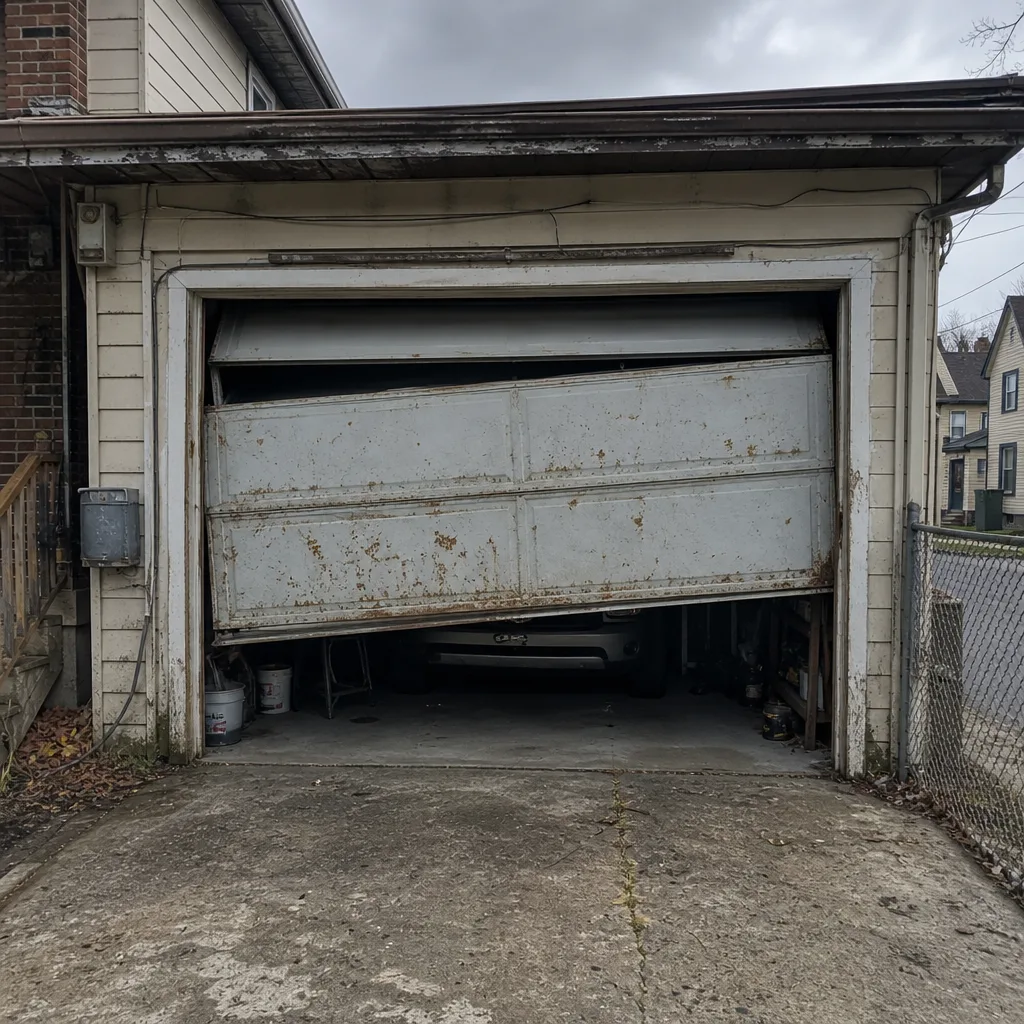 Before
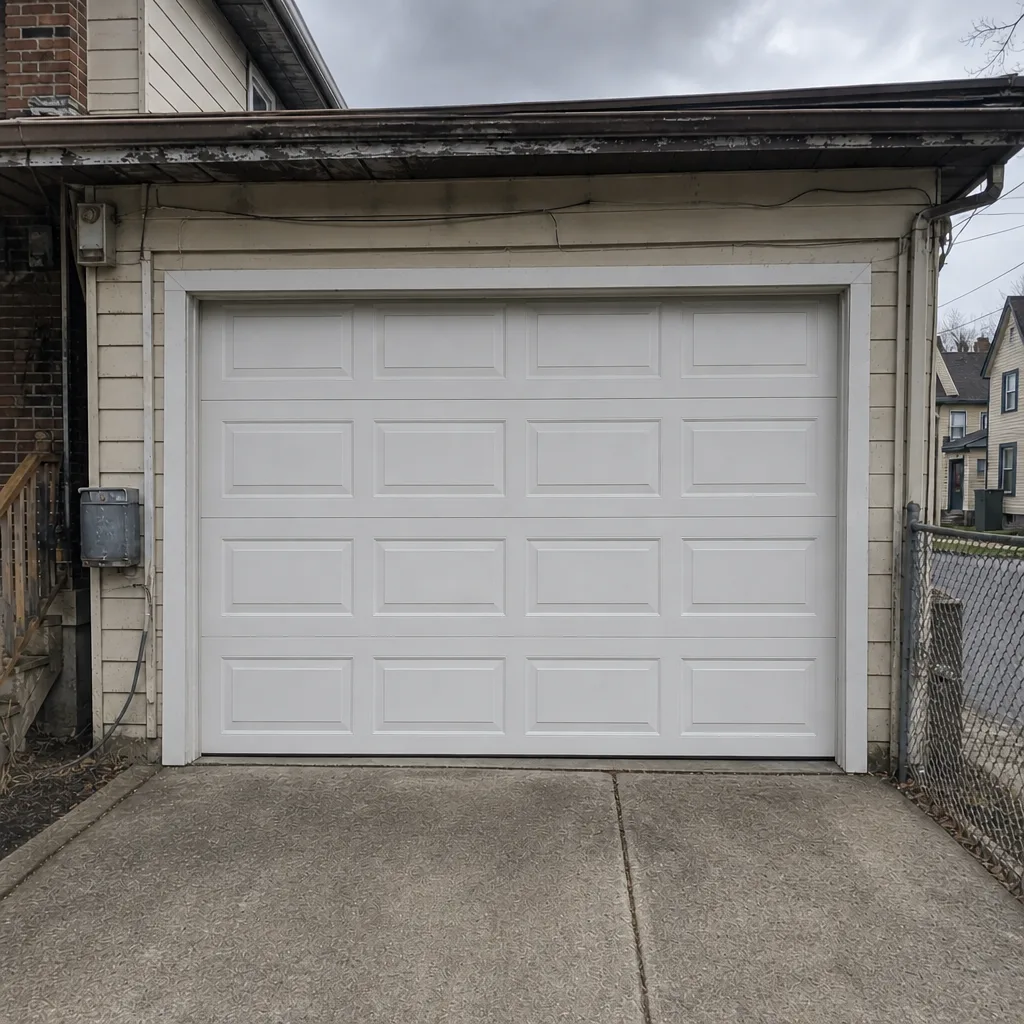 After
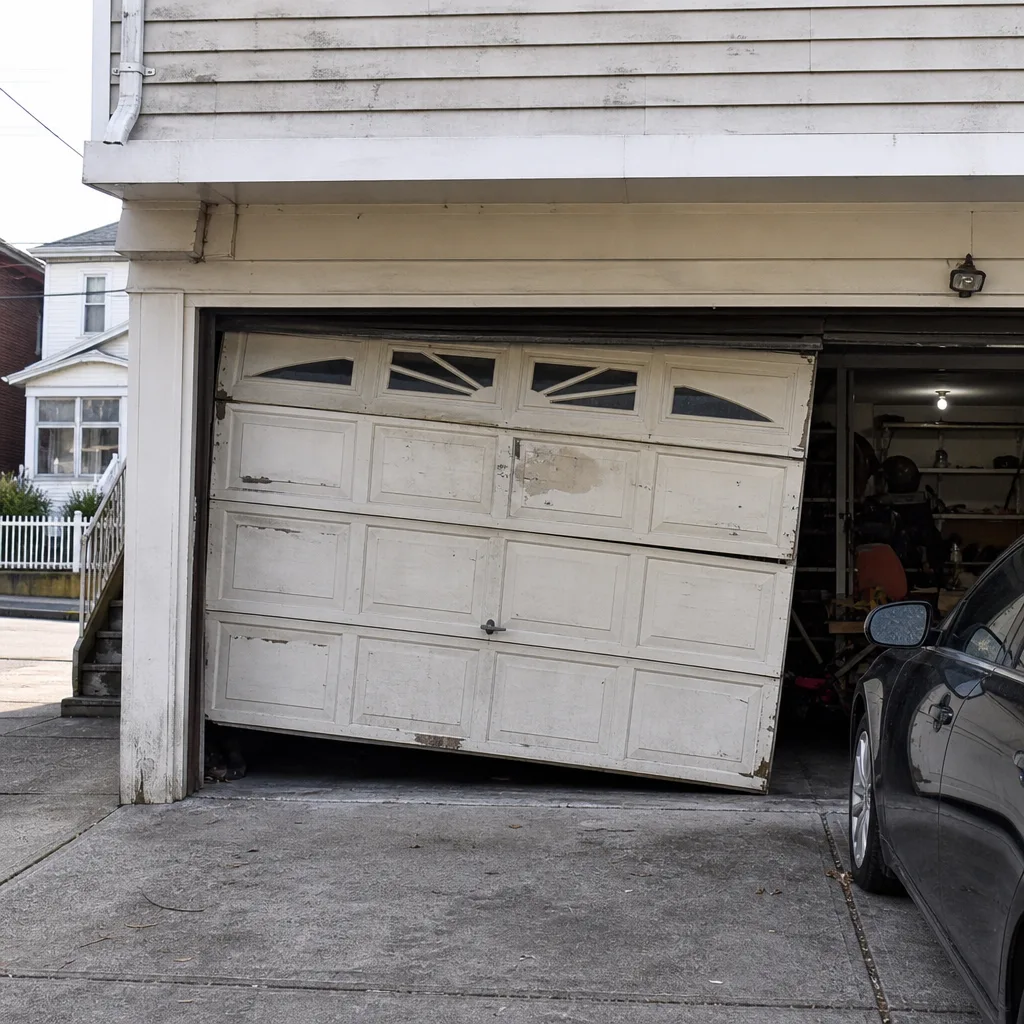 Before
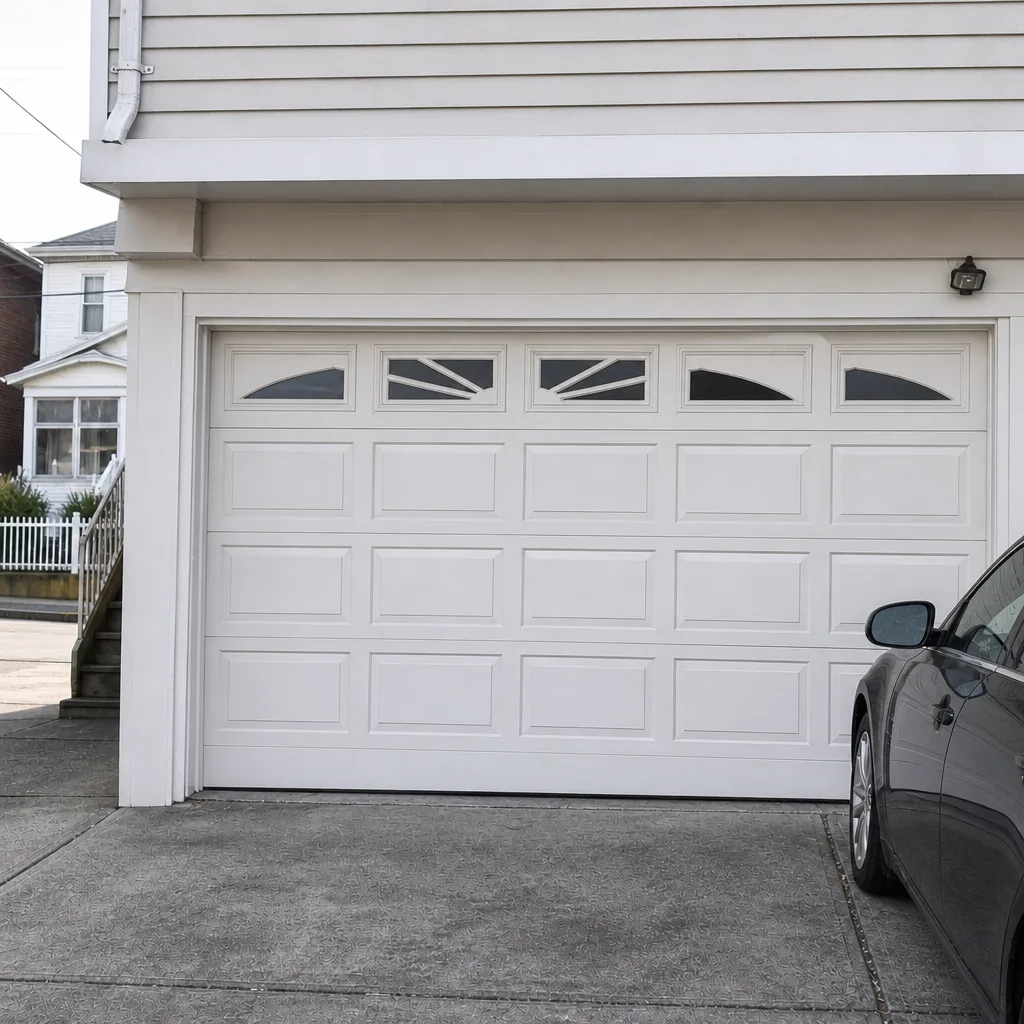 After
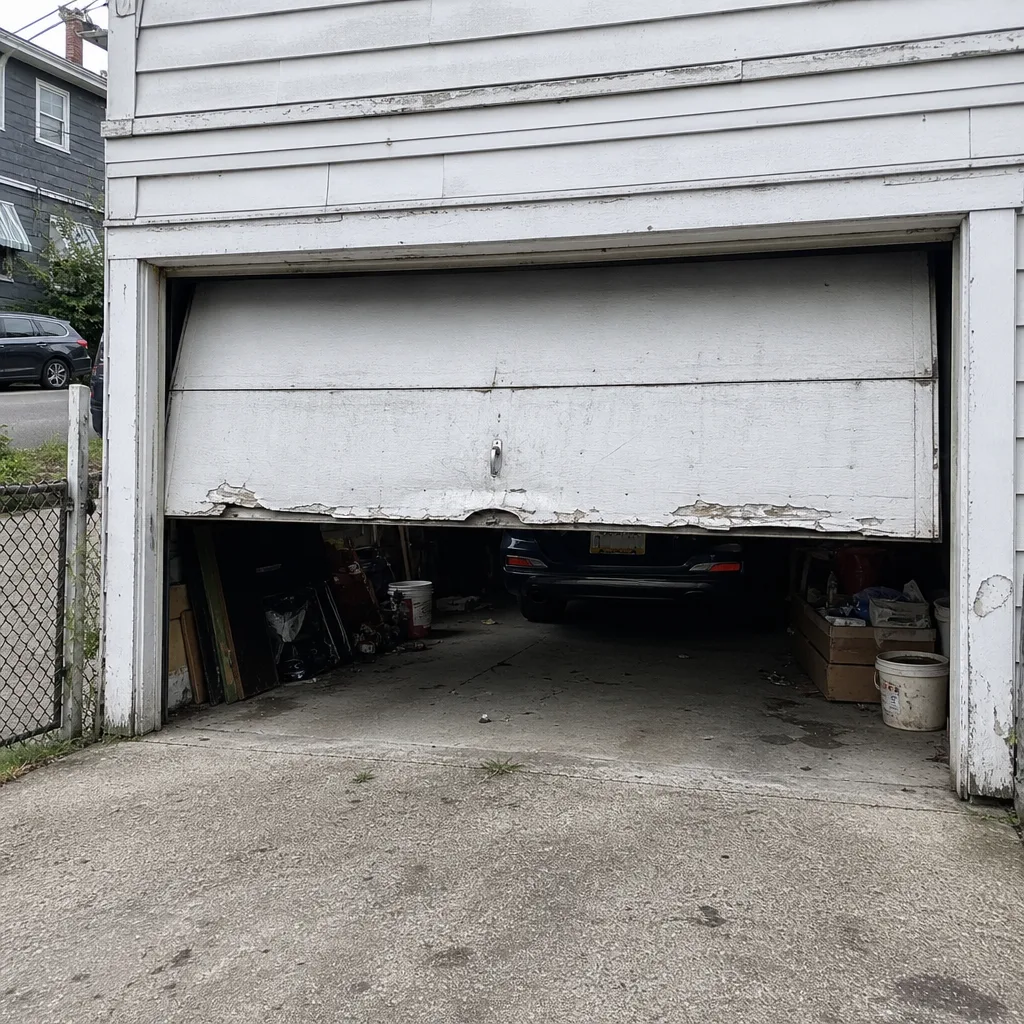 Before
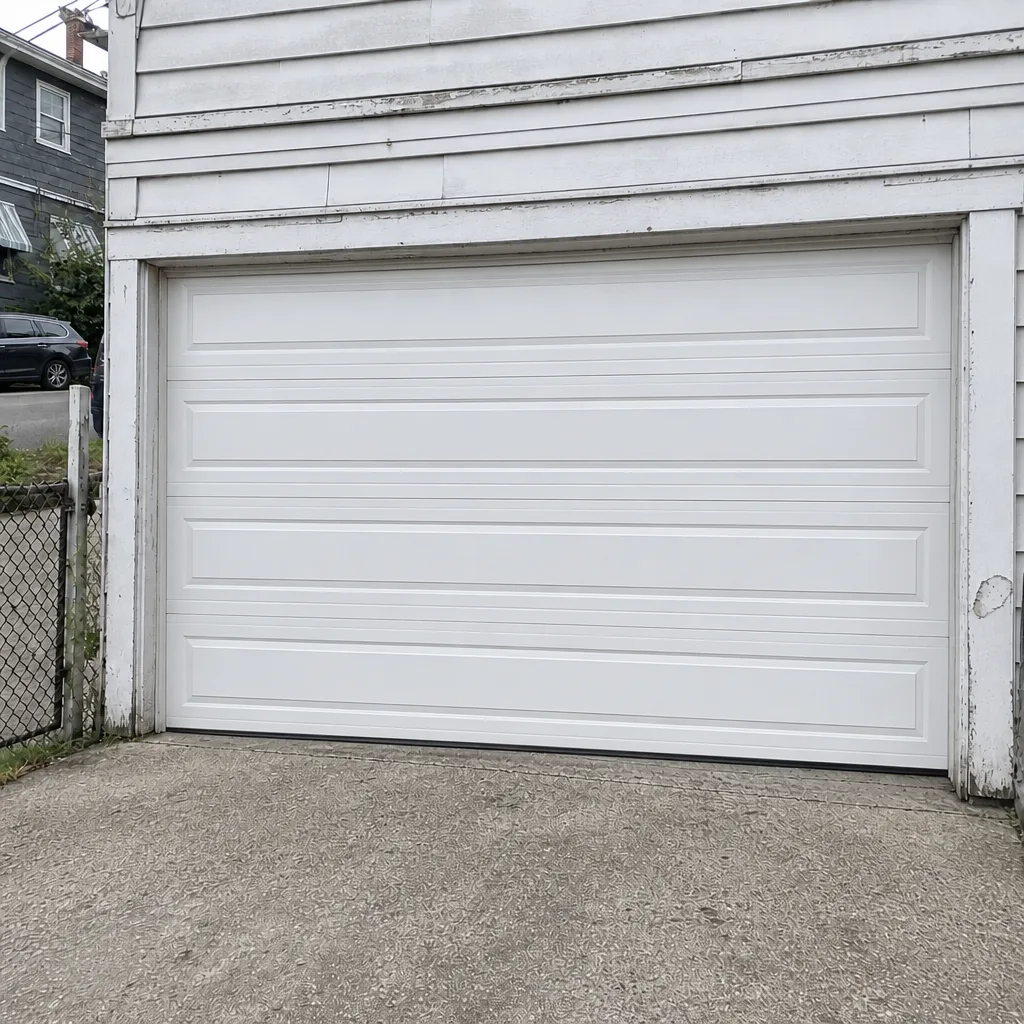 After
When to Call a Professional
Call us when a spring has broken, when a door is off its track, when a panel has dropped or the door is visibly racked in the opening, and when the opener runs but the door doesn’t move. Those are the situations where operating the door yourself does more harm than good. Call us when a door is stuck open overnight in Bergen-Lafayette and you can’t safely lower it, or when a post-storm inspection turns up a bent track, a failed safety reverse or a balance problem you can’t explain. A garage door is a weighted, spring-loaded system, and the parts that fail under stress are the ones that can hurt someone. We’re garage door specialists, which means the whole system, from opener to panel, is what we work on every day, across the brands most homes here actually have. Garage Door Repair Bergen-Lafayette offers free estimates in Bergen-Lafayette. Call (844) 960-3603. We answer 24/7. Fast dispatch from 7am to 7pm, Sunday through Friday.
Frequently Asked Questions
Pull the red manual release cord to disconnect the door from the opener, then lift the door slowly from the side, never from underneath. Test the weight with one hand first; if it feels heavy, a spring may be failing and the door should stay shut. Re-engage the carriage once power returns.
No. A door with a broken spring is far heavier than the opener is designed to lift, and on a two-spring door the remaining spring is carrying an unbalanced load. Running the opener can burn out the motor or snap the second spring, and lifting by hand can let the door drop. Keep it down and call for spring repair.
If the springs are intact and the door lowers with reasonable effort, close it by hand and engage any manual lock. If it can’t be lowered safely, brace it across the inside with a fitted length of lumber and park a vehicle close to the opening. Call (844) 960-3603. We answer 24/7. Fast dispatch from 7am to 7pm, Sunday through Friday.
Check panels for racking, vertical tracks for dents, springs for clean gaps in the coil, and the door’s balance by lifting it halfway with the opener disconnected. A balanced door stays put; one that drops or rises on its own needs service. Test the safety reverse before using the door normally again.
Usually not. A bent track can often be straightened or replaced on its own, and the door panels stay. It depends on where the bend is and whether the rollers have been damaged, which is why an in-person look matters. Our garage door repair service handles track and panel work without replacing the whole system.
Yes. We handle complete garage door installation across the major brands, including Clopay and Amarr, from hardware through opener integration. Installation is measured, ordered and scheduled, so the first step is a free measure and a written price rather than a same-day fix.
The Bottom Line
Emergency readiness for a Bergen-Lafayette garage door isn’t a repair skill, it’s a habit. Know how your specific opener releases by hand, test it once before you need it, understand that a broken spring means the door stays shut, and keep a flashlight and a fitted brace near the garage. Those four things cover the vast majority of the nights that go wrong. The rest is knowing when to stop and call: broken springs, off-track doors, dropped panels and stuck-open nights you can’t safely secure. Do the two-minute checklist this week, and the next storm is an inconvenience instead of an emergency.
If your door needs attention now, call Garage Door Repair Bergen-Lafayette at (844) 960-3603 for a free estimate. We answer 24/7. Fast dispatch from 7am to 7pm, Sunday through Friday.
Written by the team at Garage Door Repair Bergen-Lafayette.